
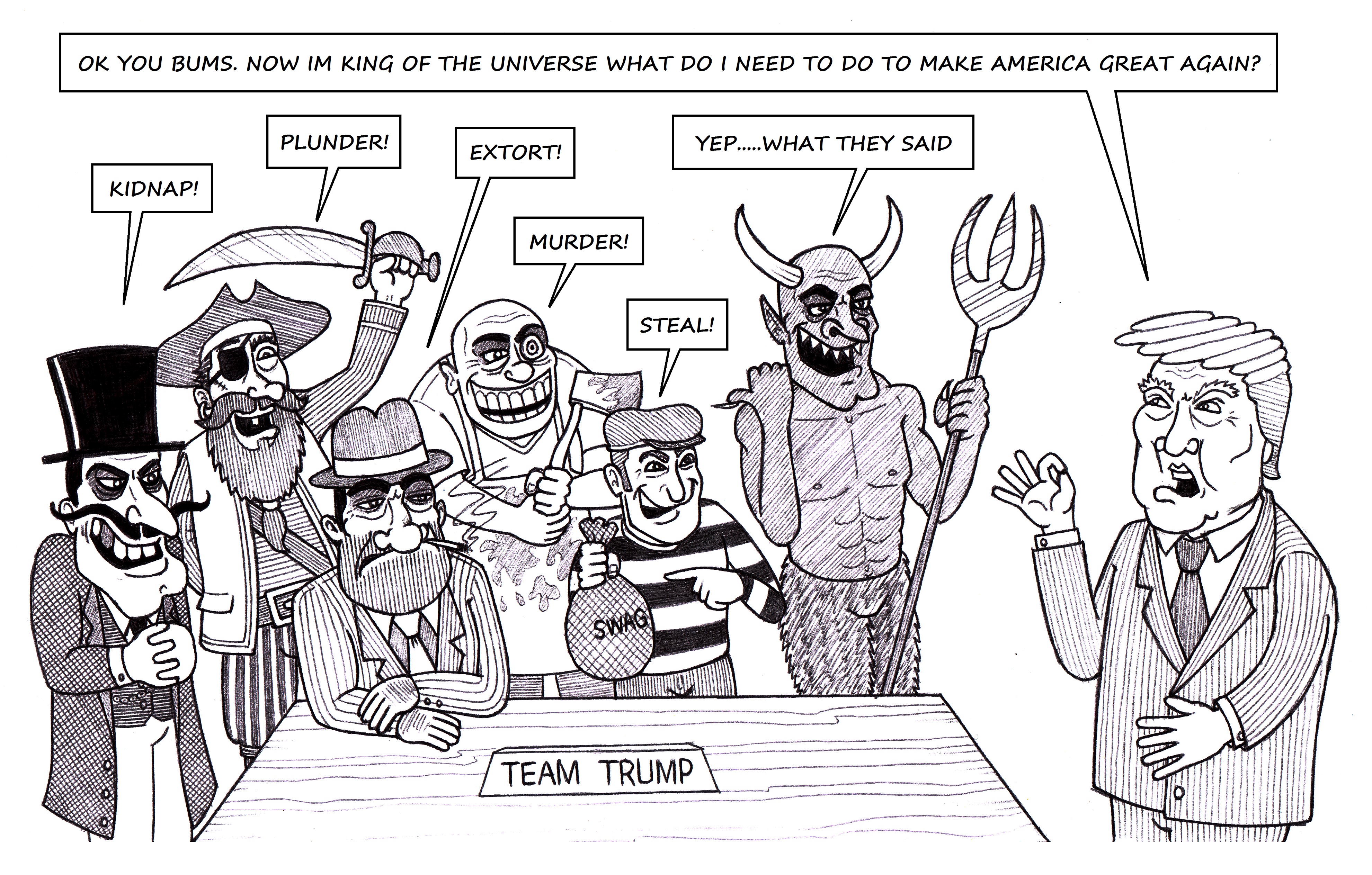
Day two of a presidency is when the campaign confetti gets vacuumed up and the real-world group project begins. In President Donald Trump’s second term (sworn in January 20, 2025), day twoJanuary 21wasn’t just about headlines, speeches, or executive orders. It was about staffing the federal government’s most powerful “adult jobs”: the Trump cabinet.
And here’s the thing: you can’t run the world’s largest bureaucracy on vibes alone (even if you have very strong vibes). You need confirmed leaders, signed ethics agreements, functioning chains of command, and enough Senate votes to make it official. So while the public saw a new administration taking the stage, Washington saw something more specific: a high-speed attempt to turn a list of cabinet nominees into a governing machine.
Day Two in Washington: The Lights Are On, Now Who Has the Keys?
January 21, 2025 had the unmistakable energy of “first day at a new job” except the job is running the federal government and your inbox contains words like “debt limit,” “national security,” and “please don’t break anything important.”
On day two, the cabinet story wasn’t “who is Trump nominating?”that had largely been decided during the transition. The real day-two question was: how quickly can the administration get its top team confirmed, sworn in, and operating? That process matters because every unfilled position creates a gap that must be handled by acting leadership, career deputies, or temporary arrangements under federal vacancy rules.
In other words, day two is when a presidency stops being a brand and starts being a staffing chart. And staffing charts do not care about your slogans.
How a President “Assembles a Cabinet” (It’s Not a Group Text)
The phrase “assembling the cabinet” sounds like you open a box, unfold some instructions, and discover you’re missing one tiny screw labeled “AGREEABLE SENATOR #51.” In reality, it’s a multi-step process with legal guardrails, political negotiation, and a lot of paperwork that could put a librarian to sleepuntil you realize it’s about power.
Step 1: The Transition Draft (a.k.a. Hiring Season, But With Hearings)
By the time day two arrived, many of Trump’s major cabinet picks had already been announced during the transition. That’s normal: presidents-elect want to signal priorities earlyforeign policy, immigration, energy, the economyand reassure allies and markets that someone is holding the wheel.
In the second Trump administration, the early slate mixed politicians, governors, and high-profile figures from business and mediapeople who could defend the administration on TV, manage large organizations, or both. This “visibility + loyalty + message discipline” approach shaped the cabinet’s public identity from the start.
Step 2: Paperwork That Actually Matters
Before nominees can glide into confirmation hearings, they typically face background checks, financial disclosures, and ethics agreements. This stage is where nominations can slow down, not because the Senate is being dramatic (though it certainly can), but because modern government is loaded with potential conflicts: investments, consulting ties, speaking fees, board seats, and the occasional “Wait… you own what?” moment.
This is also where nominees learn a valuable lesson: “I didn’t think that would matter” is not a legal strategy.
Step 3: Senate Confirmation Hearings (the Public Job Interview)
The heart of the process is the hearing. Senators question nominees in committees that match each department: Foreign Relations for State, Armed Services for Defense, Judiciary for Attorney General, and so on. The hearing is part vetting, part messaging war, and part audition for who can stay calm while being asked the political equivalent of “So why did you leave your last job?”
Step 4: Votes, Swearing-In, and the “Okay, Now Do the Work” Phase
Once a nominee clears committee, the Senate leadership schedules a floor vote. After confirmation, there’s a swearing-inand then the real test begins: running a massive department with tens (or hundreds) of thousands of employees, under intense scrutiny, with the president’s agenda in one hand and federal law in the other.
Day Two’s Headliners: Who Moved First and Why
On January 21, the cabinet story wasn’t about the whole lineup landing at once. It was about momentumwho was already confirmed, who was in hearings, and which nominations were being pushed toward fast-track votes.
State Department: Rubio Turns a Confirmation Into a Sprint
The clearest sign of day-two momentum: Marco Rubio. Confirmed unanimously on Inauguration Day, Rubio was sworn in the next day as Secretary of State making him the administration’s first fully installed cabinet secretary, with the kind of bipartisan vote that’s rare in the modern Senate.
Why does that matter? Because State is an outward-facing department. Allies, adversaries, and global markets watch the first diplomatic signals closely. Getting a secretary in place early says: “Yes, the U.S. still answers emails.”
Veterans Affairs: Doug Collins’ Hearing Signals a Domestic Priority
Day two also featured a key confirmation hearing for Doug Collins to lead the Department of Veterans Affairs. VA is one of the largest federal agencies, and it touches everything from health care access to benefits processing. The fact that VA was on the day-two calendar underscored a practical reality: if you want policy wins, you need managers in place to implement them.
It’s also political math. Veterans policy can attract bipartisan attention, and moving quickly on VA can be framed as competence rather than ideologyan early, useful message for any administration.
Treasury: Scott Bessent Clears Committee as the Debt Limit Looms
If State was about diplomacy, Treasury was about gravity. On day two, the U.S. hit its statutory debt limit and the government leaned on “extraordinary measures” to keep paying its obligations. At the same time, Trump’s Treasury pick, Scott Bessent, was advancing through the Senate process, clearing a key committee step.
This is where “assembling the cabinet” stops being a political storyline and becomes a fiscal one. Treasury isn’t just a department; it’s the nation’s financial plumbing. You want a confirmed secretary when Congress starts talking about deadlines, risk, and the economic equivalent of “don’t touch that wire.”
The Early Lineup: What Trump’s Cabinet Picks Suggested About His Governing Priorities
A cabinet is a policy roadmap in human form. Even before confirmations, nominees communicate intent: what the administration will emphasize, where it will pick fights, and how it wants to be perceived.
National Security: A Preference for Hard Edges and Public Messaging
Trump’s defense pick, Pete Hegseth, drew intense debate and a razor-thin Senate result. Regardless of where you land politically, the strategic signal was clear: the administration wanted a Pentagon leader aligned with its cultural and institutional priorities, not just its budget spreadsheet.
That choice also reinforced a theme: in a media-heavy era, the ability to communicate aggressively is treated as a governing skill, not a side hobby.
Justice Department: Loyalty, Independence, and a Spotlight the Size of the Capitol Dome
After an earlier attorney general nominee withdrew during the transition, Trump selected Pam Bondia long-time ally. Her confirmation vote reflected sharp partisan tension, with supporters highlighting her prosecutorial background and critics warning about independence and potential politicization.
The broader cabinet lesson: certain departments aren’t just policy engines; they’re legitimacy engines. DOJ, especially, carries an expectation of institutional distance from political retribution. Any new attorney general gets measured against that standard, whether they like it or not.
Homeland Security: Immigration Enforcement as a Centerpiece
Kristi Noem at DHS matched one of Trump’s most durable governing priorities: immigration enforcement and border policy. DHS is sprawlingcovering FEMA, TSA, Secret Service, immigration services, and morebut in Trump-world, the border tends to become the department’s public face.
Installing leadership quickly at DHS is the operational counterpart to campaign promises. You can’t “clamp down” on anything with an empty org chart.
Energy and Interior: “Energy Dominance” Versus Climate Concerns
The pairing of Doug Burgum at Interior and Chris Wright at Energy signaled a renewed emphasis on fossil fuel production, permitting, and a pro-drilling posture. Supporters saw it as a cost-and-security play: more domestic energy, more leverage, fewer price spikes. Critics viewed it as a rollback of climate-forward policy and a boost for industry.
Either way, the cabinet point is the same: energy policy gets implemented through permits, leases, regulations, and enforcementmeaning leadership choices at Interior and Energy are policy choices.
Commerce and Treasury: Tariffs, Trade, and the Business of Pressure
With Howard Lutnick at Commerce and Bessent at Treasury, the economic posture leaned toward aggressive leverageespecially around tariffs and trade negotiations. That doesn’t automatically mean results; it means the administration is choosing a toolset that treats economic policy as strategic pressure, not just accounting.
Why Cabinet Confirmations Can Move Fastor Crawl Like It’s Stuck Behind a Tractor
The Senate’s Calendar Is a Weapon (and Also a Bottleneck)
Even when a nominee has support, confirmations take time: committee scheduling, document production, questions for the record, and floor time. And floor time is scarce. The Senate can move quickly when leadership wants a winor slowly when it wants leverage.
Ethics and Disclosures: The Boring Guardrails That Prevent Chaos
Modern cabinet nominations operate under intense ethics scrutiny. Financial disclosure forms and ethics agreements don’t make great cable news, but they matter because cabinet secretaries influence contracts, regulations, enforcement priorities, and spending decisions.
Translation: if you run a department, you can’t look like you’re using it as a personal Etsy shop.
Withdrawn Nominations: The Political Reality Check
Not every nomination survives contact with the Senate. During the transition, Trump’s initial attorney general pick Matt Gaetz withdrew, and the slot moved to Bondi. That switch wasn’t just a staffing changeit was a reminder that even strong presidents face constraints: senators vote, and senators love reminding everyone they vote.
Cabinet Snapshot: Key Roles, Confirmation Dates, and Vote Margins
Day two was about momentum, but the cabinet story is ultimately about outcomes. Below is a snapshot of several major cabinet posts in Trump’s second administrationwho got the nod and how it landed in the Senate.
| Department | Nominee | Hearing (Key Date) | Senate Confirmation | Vote |
|---|---|---|---|---|
| State | Marco Rubio | Jan 15, 2025 | Jan 20, 2025 | 99–0 |
| Defense | Pete Hegseth | Jan 14, 2025 | Jan 24, 2025 | 51–50 |
| Treasury | Scott Bessent | Jan 16, 2025 | Jan 27, 2025 | 68–29 |
| Homeland Security | Kristi Noem | Jan 17, 2025 | Jan 25, 2025 | 59–34 |
| Justice | Pam Bondi | Jan 15, 2025 | Feb 4, 2025 | 54–46 |
| Health & Human Services | Robert F. Kennedy Jr. | Jan 29–30, 2025 | Feb 13, 2025 | 52–48 |
| Interior | Doug Burgum | Jan 16, 2025 | Jan 30, 2025 | 80–17 |
| Energy | Chris Wright | Jan 15, 2025 | Feb 3, 2025 | 59–38 |
| Transportation | Sean Duffy | Jan 16, 2025 | Jan 28, 2025 | 77–22 |
| Veterans Affairs | Doug Collins | Jan 21, 2025 | Feb 4, 2025 | 77–23 |
If you’re wondering why this matters for “day two,” here’s the punchline: day two is when the dominoes start tipping. Hearings, committee votes, and early confirmations set the pace for everything that followspolicy rollouts, agency directives, enforcement shifts, and budgets.
What Day Two Told Us About Trump’s Governing Style
1) The Cabinet as a Message Machine
Trump has long treated personnel as policy, and day two underscored that logic. Nominees weren’t chosen only for resumes; they were chosen for what they symbolize: toughness, disruption, loyalty, and a willingness to fight in public. In a media-saturated presidency, Cabinet secretaries can function as both administrators and amplifiers.
2) Big Departments Need Operators, Not Just Spokespeople
At the same time, day two highlighted a reality that every administration eventually learns: you can’t spin your way through staffing shortages. The government runs on processgrants, procurement, enforcement, litigation, benefits, and the constant low hum of “someone needs to sign this.”
That’s why the early push to move nominees through committeesespecially for State, Treasury, and VAwas consequential. It was the administrative version of getting your laptop connected before the meeting starts.
3) A Presidency Is Also a Deadline Factory
The debt limit issue landing on day two was a perfect example of how governing doesn’t wait politely. A president can arrive with an agenda, but Washington arrives with a calendarfiscal deadlines, international crises, court schedules, agency obligations, and emergencies that do not care about inauguration photos.
Conclusion: Day Two Was the Blueprint, Not the Finish Line
“Assembling the cabinet” on day two of Trump’s presidency wasn’t a ceremonial checklistit was the beginning of a sprint to turn campaign promises into administrative capacity. The early moves were about speed (get State and key posts moving), credibility (prove the government can function), and direction (show what the administration intends to prioritize).
By the end of that second day, the outlines were visible: a cabinet shaped for conflict-ready messaging, aggressive policy execution, and fast alignment with Trump’s second-term goalsespecially on immigration, energy, and the economy. Whether you view that as decisive leadership or high-voltage disruption, the mechanics are the same: nominations, hearings, confirmations, and a federal workforce waiting for orders that are both legal and clear.
And if you ever needed proof that day two matters, remember this: the country doesn’t run on slogans. It runs on signatures.
Experience Notes: What “Cabinet Week” Feels Like (and Why Day Two Is the Real Test)
Even if you’ve never set foot in a Senate hearing room, you probably know the feeling day two represents: you’ve just started something big, the adrenaline is still there, and now you have to build the team that will carry the plan. The posters are up. The speeches are done. Somebody asks, “Okay, who’s in charge of the actual work?” and suddenly everyone looks at their shoes.
Day two is where a presidency becomes a management story. Think of it like opening a new restaurant. Opening night is glamorous. Day two is when you realize the dishwasher is leaking, the delivery showed up early, and the chef needs a second set of hands right now. The kitchen may have a head chef (the president), but without sous-chefs (cabinet secretaries) you’re serving “policy concept à la carte” and hoping customers don’t notice the smoke.
The experience of assembling a cabinet is basically assembling a leadership culture under pressure. In a normal hiring process, you can take your time, run a few interviews, call references, and “circle back.” In Washington, day two doesn’t let you circle anythingbecause the deadlines are already parked in your driveway with the engine running. When the debt limit hits, when agencies need direction, when international counterparts want signals, you feel the difference between “we announced someone” and “someone is actually in the chair.”
If you’ve ever watched a team form in real time, you know the early choices create momentum: people copy the tone at the top. A cabinet that’s built for discipline and process tends to value careful implementation. A cabinet built for confrontation tends to value speed and narrative control. Neither approach magically guarantees results. But both have a “feel” that spreads fastespecially inside giant organizations where employees are trying to figure out what the new leadership rewards and what it punishes.
Another day-two reality is that “acting leadership” can keep the lights on, but it can’t always change the wiring. Acting officials often avoid big long-term moves because their authority is temporary and politically vulnerable. That’s why confirmed secretaries matter. Confirmation is not just a résumé stamp; it’s permission to make durable decisionsreorganize teams, set enforcement priorities, redirect budgets, and tell the workforce, “Yes, this is the plan, and yes, it’s going to stick.”
From the outside, cabinet assembly looks like names and votes. From the inside, it’s a daily flood of tradeoffs: Do you push the easiest nominee first to rack up wins? Do you fight for the controversial pick because the president wants that symbol? Do you prioritize agencies with immediate deadlineslike Treasury during debt limit “extraordinary measures” or agencies that will drive the signature political agendalike Homeland Security for immigration enforcement? There isn’t one right answer. There’s only the clock.
So if day one is the “welcome speech,” day two is the “who’s covering the shift” meeting. That’s why it’s so revealing. It shows what the president believes government is: a machine that needs skilled operators, a megaphone that needs loyal messengers, orusuallysome chaotic mix of both. And once those choices are made, they echo through every press briefing, every regulation, every lawsuit, and every agency memo that follows.












