
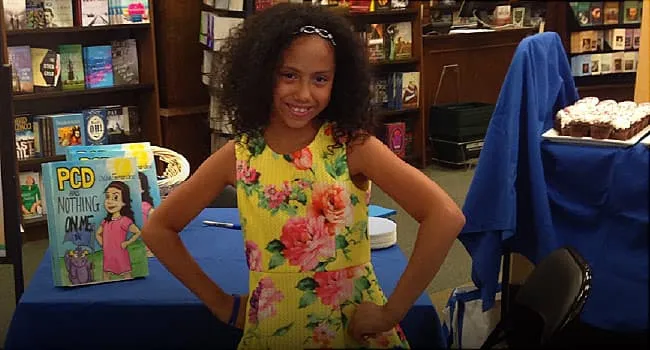
Most 10-year-olds are busy mastering multiplication tables, negotiating bedtime extensions, and wondering why broccoli has such a strong opinion about being served. Chloe Fernandez was doing something much bigger: using her voice to help children living with a rare lung condition feel less alone.
Her story is not simply about a young author publishing a book. It is about turning fear, hospital visits, breathing treatments, and isolation into a message of courage. Chloe’s illustrated book, PCD Has Nothing on Me!, helped shine a light on primary ciliary dyskinesia (PCD), a rare genetic disorder that affects the body’s tiny mucus-clearing structures called cilia.
For families living with chronic illness, her journey offers something more valuable than a motivational poster with a sunset behind it: proof that a child can be a patient, a storyteller, an advocate, and still just a kid with dreams far larger than a diagnosis.
Story verification:
From Hospital Journals to an Inspiring Children’s Book
Chloe Fernandez was diagnosed with primary ciliary dyskinesia when she was 6 years old. The condition caused serious respiratory challenges, repeated infections, medical treatments, and hospital stays that no child should have to fit around homework and birthday parties.
During those difficult years, Chloe wrote down her thoughts in journals. She documented what it felt like to be sick, to miss activities other children took for granted, and to wonder why her life required so much medical attention. Those personal notes eventually became the foundation for PCD Has Nothing on Me!, a 47-page illustrated children’s book about living with a chronic illness.
She published the book in 2016 when she was 9, with support from Make-A-Wish. By age 10, she had become a nationally recognized advocate for children with rare diseases and received a WebMD Health Hero award. So while the headline celebrates her work as a 10-year-old advocate, the book itself was a remarkable accomplishment she completed even earlier.
Her inspiration came from a frustrating but familiar experience: searching for a book that reflected her life and finding almost nothing. Hospital libraries may contain dragons, detectives, sports heroes, and enough talking animals to fill a small zoo, but Chloe found little that explained PCD in a way children could understand.
Instead of accepting that empty shelf, she created the book she wished she had found.
That decision mattered. A child who sees their experience represented in a story may feel less isolated. A sibling may finally understand why their brother or sister needs treatments. A classmate may realize that chronic illness is not contagious, lazy, dramatic, or a reason to treat someone differently. In a few illustrated pages, a book can do the emotional work of a very patient conversation.
Story details and publication timeline:
What Is Primary Ciliary Dyskinesia?
Primary ciliary dyskinesia, often called PCD, is a rare inherited condition that affects microscopic hair-like structures known as cilia. These cilia line parts of the respiratory tract, including the nose, sinuses, ears, and lungs.
Think of healthy cilia as a microscopic cleanup crew. They move in a coordinated wave-like pattern to help sweep mucus, dust, bacteria, and other unwanted guests out of the airways. In people with PCD, those cilia may move poorly, move in the wrong pattern, or not function normally at all. The cleanup crew is still technically on the payroll, but the brooms are having a very confusing day.
When mucus and germs are not cleared effectively, they can build up in the airways. That can lead to repeated respiratory infections, chronic coughing, persistent congestion, sinus problems, and ear infections. Over time, untreated or poorly controlled infections may damage the airways and contribute to bronchiectasis, a condition in which the airways become widened and scarred.
Common Signs of PCD in Children
Symptoms vary from person to person, but primary ciliary dyskinesia often begins early in life. Some babies have breathing difficulties shortly after birth. As children grow, they may experience year-round nasal congestion, a daily wet cough, frequent sinus infections, repeated ear infections, hearing concerns, or recurring chest infections.
Some people with PCD also have organs arranged differently inside the body. For example, the heart may be on the right side instead of the left, a condition known as situs inversus. This can sound alarming, but organ placement alone does not always cause additional health problems. It does, however, give doctors an important clue when combined with respiratory symptoms.
Why PCD Can Be Difficult to Diagnose
PCD can be challenging to diagnose because many symptoms overlap with more common conditions, including asthma, allergies, recurrent viral infections, chronic sinusitis, cystic fibrosis, and immune disorders. A child with a chronic cough may be told they simply have sensitive lungs, frequent colds, or an unfortunate relationship with pollen.
Specialists may use a combination of medical history, physical exams, nasal nitric oxide testing, genetic testing, and studies of cilia structure or movement. No single test works perfectly for every patient, which is why evaluation at an experienced pediatric pulmonology or PCD center can be important.
Medical background:
How PCD Is Managed: A Long-Term Team Effort
There is currently no cure for primary ciliary dyskinesia, but treatment can help protect lung function, prevent complications, and improve day-to-day quality of life. Care plans are individualized because PCD is not a one-size-fits-all condition, and neither are children. Anyone who has tried to buy one “universal” backpack for every kid already understands this principle.
Management often focuses on clearing mucus from the lungs, recognizing infections early, treating respiratory or sinus infections when needed, monitoring breathing function, and addressing ear or hearing concerns. Many children use airway-clearance techniques, which may involve breathing exercises, devices, chest physical therapy, inhaled treatments, or other approaches recommended by their medical team.
Regular follow-up with specialists can help monitor lung health and identify changes before they become bigger problems. Some families also benefit from support from physical therapists, nurses, social workers, genetic counselors, school staff, and rare-disease advocacy organizations.
For a child with PCD, the routine can be demanding. Treatments may happen before school, after school, during illness, on weekends, and at precisely the moment everyone else is ready to leave for pizza. Still, a consistent plan can make an enormous difference in helping children participate in school, friendships, hobbies, and family life.
Diagnosis and management verification:
Why Chloe’s Book Matters Beyond PCD Awareness
Chloe’s book did not promise that being sick is easy. It did something more honest: it showed that a child can feel scared, frustrated, embarrassed, tired, hopeful, and determinedall before lunchtime.
That honesty is important in stories about pediatric chronic illness. Children are often praised for being “brave,” but bravery should not mean pretending everything is fine. Real bravery can look like asking questions at a doctor’s appointment, doing a treatment when it is annoying, explaining a condition to classmates, or admitting that a hospital stay was frightening.
By writing about her experience, Chloe turned a private struggle into public education. She gave children with chronic illness a language for their feelings. She gave adults a reminder that kids understand far more than people sometimes assume. And she gave healthy peers a chance to learn empathy without being lectured like they had been caught passing notes in science class.
Her title, PCD Has Nothing on Me!, is especially powerful because it does not deny the seriousness of the illness. PCD can affect daily life in significant ways. Instead, the title rejects the idea that a diagnosis gets to decide a child’s entire identity.
A child can have PCD and also be funny, artistic, impatient, competitive, imaginative, stubborn, kind, messy, fashionable, curious, and deeply unimpressed by adult attempts to make kale exciting. Illness is part of a person’s life. It is not the whole biography.
How Parents, Teachers, and Friends Can Support Children With Rare Lung Conditions
Stories like Chloe’s can inspire meaningful support at home, in classrooms, and in communities. The goal is not to make a child with PCD the “inspiration kid” every hour of every day. The goal is to make life more accessible, informed, and normal.
Listen Without Rushing to Fix Everything
Children with chronic conditions may want to talk about symptoms, fears, missed activities, or feeling different. Adults do not always need a perfect answer. Sometimes the most helpful response is, “That sounds really hard,” followed by genuine listening.
Make School Plans Flexible
Medical appointments, treatments, fatigue, and infections can interrupt attendance. A thoughtful school plan may include make-up work, flexible deadlines, remote participation when appropriate, and clear communication between families, teachers, and health professionals.
Encourage Age-Appropriate Independence
Children can gradually learn how to describe their condition, recognize symptoms, ask for help, and participate in their own care. This builds confidence without expecting them to become tiny medical administrators carrying a clipboard and running staff meetings.
Protect Privacy While Building Understanding
Some children want classmates to know about their condition; others prefer privacy. Families should let the child guide those decisions whenever possible. When education is shared, it should focus on facts, respect, and inclusionnot pity.
Experiences Related to a Child Writing About a Rare Lung Condition
Living with a rare lung condition can make everyday experiences feel different. A school field trip, a sleepover, a cold-weather recess, or a crowded birthday party may require extra planning. For a child with PCD, the question is not always “Do I want to go?” It may be “Will there be enough time for my treatment?” “What happens if I start coughing?” or “Will anyone understand why I need to sit down?”
Those experiences can be lonely, especially when the illness is invisible to classmates. A child may look fine during morning math but feel exhausted after a difficult night of coughing. They may miss school for appointments and return to find that everyone else has moved on to a new chapter, a new inside joke, or a group project that somehow already has three leaders and no one assigned to do the actual work.
Writing can help children make sense of those moments. A journal does not require perfect grammar, profound wisdom, or a fountain pen that costs more than a bicycle. It can be a notebook filled with questions, doodles, complaints, funny observations, and lists of things that helped on hard days. Over time, these entries can become a record of resilience.
For some young patients, creative work offers a sense of control. Medical routines can make a child feel like adults are always deciding what happens next: take this medicine, attend that appointment, skip this activity, rest now. A story gives the child a chance to become the narrator. They get to choose what matters, what feels unfair, what made them laugh, and what they want others to understand.
A child author can also change family conversations. Parents may learn things their child has not said aloud. Siblings may better understand why treatments take so much time. Grandparents may realize that a chronic illness is not “just a cough.” Friends may become more thoughtful after reading a story written in a voice they recognize.
There is also something powerful about a child seeing their book in another child’s hands. It says, “My experience matters enough to be read.” For a young person who has spent many hours being examined, tested, monitored, or treated, becoming an author reverses the usual direction of attention. Instead of being the subject of everyone else’s questions, they become the person with something important to teach.
Chloe Fernandez’s experience shows that advocacy does not have to begin with a microphone, a stage, or a giant campaign budget. It can begin with one honest story. It can begin with a child saying, “I wish there were a book about this.” It can begin with a parent taking that thought seriously.
For children living with PCD or another rare disease, the goal is not to force them to become advocates. Some may prefer art, sports, gaming, science, music, private journaling, or simply being left alone to watch cartoons without discussing their medical history. All of those choices are valid. But when a child does want to share their story, adults should make room for that voice.
Rare diseases can make families feel like they are navigating without a map. Stories create landmarks. They remind people that someone else has taken a similar road, felt similar fears, and found ways to keep moving. The path may still be difficult, but it no longer feels quite so empty.
Conclusion: A Diagnosis Is Not the Whole Story
Chloe Fernandez’s journey from hospital journals to children’s book author is a powerful example of pediatric chronic illness advocacy. Her story raises awareness of primary ciliary dyskinesia while giving children with rare lung conditions something equally important: recognition.
PCD may require lifelong care, regular treatments, and extra vigilance around respiratory infections. But a diagnosis does not erase imagination, humor, ambition, or identity. Chloe’s book reminds readers that children are more than their symptoms, more than their appointments, and more than the hardest thing that has happened to them.
For families facing a rare lung disease, the message is clear: ask questions, seek specialized care, build a support network, and let children tell their stories in the way that feels right for them. Sometimes the most inspiring voice in the room belongs to the person everyone assumed was too young to have one.
Ongoing-care and support context:












