
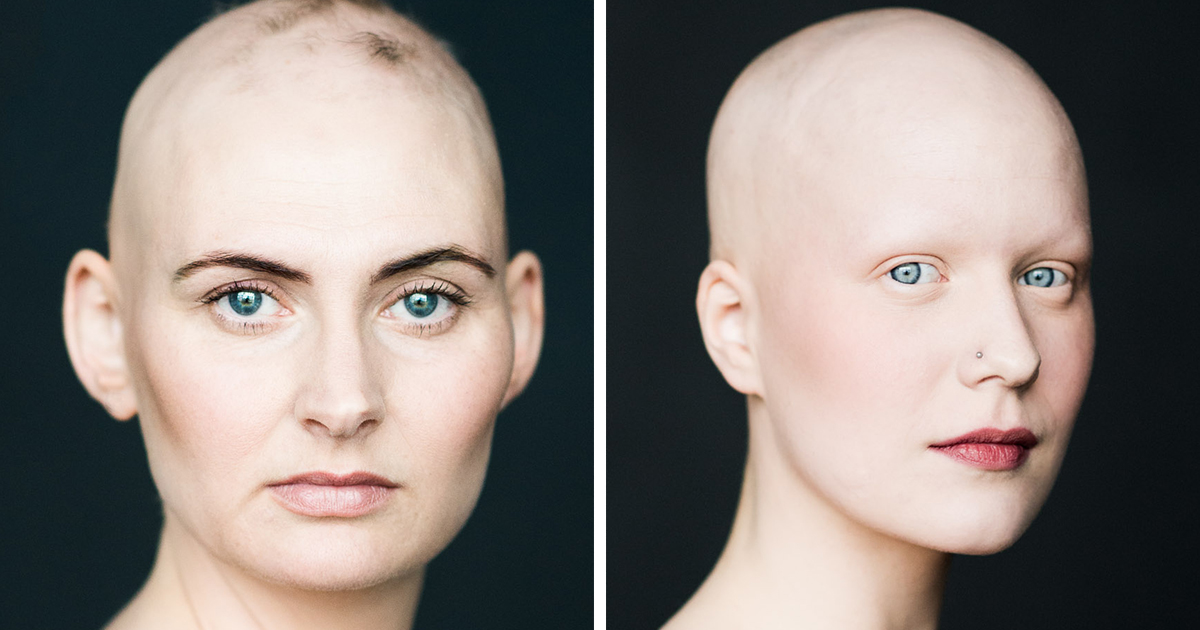
Some photo series whisper. Baldvin walks into the room, removes the wig society handed it, and says, “Let’s talk.” That is exactly why the project still matters. In a culture that treats hair like a woman’s permanent résumé, Icelandic photographer Sigga Ella’s Baldvin portraits do something quietly radical: they show women with alopecia as powerful, stylish, individual, and fully themselves. Not tragic. Not “brave” in a patronizing way. Not unfinished.
The project centers women living with alopecia, an autoimmune condition that can cause partial or extensive hair loss. On paper, that sounds clinical. In real life, it collides with beauty rules, gender expectations, and the exhausting public habit of deciding what femininity is supposed to look like before a woman even says hello. That is where Baldvin hits its mark. It is not simply about baldness. It is about who gets to be read as feminine, beautiful, strong, desirable, professional, and normal.
And let’s be honest: society has long behaved as if hair were the final exam for womanhood. Long hair? Feminine. Thick hair? Healthy. Styled hair? Put together. No hair? Suddenly everyone becomes an amateur philosopher, medical detective, and stereotype machine. Baldvin interrupts that nonsense with portraits that replace assumption with presence.
What Is Baldvin?
Baldvin is a portrait project Sigga Ella created with an Icelandic association also called Baldvin, a name that translates to “strength.” The series features seven women who wanted to raise awareness about alopecia. That detail matters, because the photographs were not built around a voyeuristic “look at this unusual thing” premise. They were made with the subjects, not simply about them. The result feels collaborative rather than extractive.
That difference changes everything. Too often, images of women with visible differences are framed through pity, shock, or inspirational overkill. You know the formula: dramatic lighting, solemn mood, and a caption that basically screams, “Can you believe she went outside?” Baldvin does the opposite. It gives the women visual dignity. The portraits are calm, direct, elegant, and emotionally grounded. They do not ask viewers to feel sorry for the subjects. They ask viewers to reconsider their own assumptions.
That makes the project bigger than a set of striking images. It becomes a visual argument. It suggests that the problem is not women with alopecia. The problem is the narrow script that says womanhood must arrive with a full head of hair, preferably glossy, preferably effortless, preferably approved by shampoo advertising and half the internet.
Why Hair Carries So Much Gender Meaning
Hair is biological, yes. But it is also social theater. For women especially, hair is often treated as evidence of youth, desirability, health, and self-discipline. It is one of the first things people notice and one of the quickest ways they sort strangers into categories. A man can shave his head and get called rugged, athletic, or decisive. A woman loses her hair and suddenly people start attaching stories to her body that she never volunteered.
When baldness is read differently on men and women
This double standard is one reason Baldvin feels so sharp. Male baldness has long been normalized, commercialized, joked about, and folded into mainstream masculinity. Female baldness, by contrast, is still treated like a disruption. For many people, a bald woman reads as unexpected, and that surprise reveals the stereotype. It exposes how deeply the culture equates hair with femininity.
That equation is fragile, outdated, and surprisingly bossy. It tells women that beauty is not simply about expression; it is about compliance. Wear your hair long enough, smooth enough, feminine enough, and maybe you will be recognized as legible. Step outside that script, whether by illness, choice, age, or identity, and people start projecting. Are you sick? Are you angry? Are you making a statement? Are you “still” feminine? The questions themselves are the problem.
Hair loss becomes social meaning, not just a medical condition
Alopecia is a medical condition, but the experience of it is never only medical. The physical symptom may be hair loss, but the social symptom is often misreading. Women with alopecia are frequently pushed into a strange public role where their appearance invites unsolicited commentary, curiosity, or silence. People stare. They speculate. They decide that hair loss is either cosmetic and unimportant or emotionally devastating and defining. Both responses flatten the person.
Baldvin fights that flattening by making individuality impossible to ignore. Each portrait says: this is a woman, not a stereotype. She is not the generic symbol of “hair loss.” She is a person with a face, a gaze, a style, and a presence that does not need hair to become intelligible.
What Alopecia Really Is, Beyond the Simplified Headlines
Alopecia areata is an autoimmune disease in which the immune system attacks hair follicles, leading to hair loss that can appear in patches or become more extensive. It can affect the scalp, face, and other parts of the body. For some people, hair regrows. For others, the condition returns unpredictably or becomes more severe over time. That unpredictability is one reason the condition can feel so emotionally disruptive. It is not just hair loss; it is uncertainty wearing a very visible outfit.
In the United States, nearly 7 million people have had, have, or will develop alopecia areata. That number should instantly destroy the idea that alopecia is rare in some cinematic, museum-glass way. It is not an oddity. It is a real condition affecting people across ages, genders, and racial and ethnic backgrounds. Yet public understanding still lags far behind the reality.
That gap between prevalence and understanding creates social friction. Many people still assume alopecia is just a cosmetic issue, something minor, something vanity-adjacent. Research shows the opposite. Studies have found real emotional burden, negative self-perception, and stigma among people living with alopecia. Other work has shown that laypeople often attach more stereotypes and greater social distance to people as alopecia becomes more visible. In other words, the cultural reaction can become part of the injury.
This is exactly why representation matters. It does not cure the condition. It does something different: it reduces ignorance. And ignorance, frankly, has terrible bedside manners.
How Photography Changes the Conversation
Photography has always helped shape beauty standards. It can narrow them, or it can widen them. It can reinforce the old script, or it can hand the audience a better one. Baldvin belongs to the second category.
It replaces pity with visibility
One of the smartest things about the series is that it does not ask for permission to show bald women as beautiful. It simply does it. That is more effective than a lecture. A viewer arrives expecting difference and leaves confronting elegance, humanity, and style. The visual experience does the rhetorical work.
This approach also matters because people with alopecia are often shown in educational or medical contexts first. Those contexts are important, but they can unintentionally reduce the subject to diagnosis. Artistic portraiture restores complexity. It says a woman with alopecia can be medically real and visually iconic at the same time.
It gives women control over their own image
There is also power in choosing to be seen. For many women with alopecia, appearance management can become daily labor: wigs, scarves, eyebrow makeup, eyelashes, lighting choices, strategic angles, and endless decisions about disclosure. Portraiture can reverse that dynamic. Instead of hiding, the subject defines how she appears. Instead of anticipating judgment, she authors the image.
That is why projects like Baldvin resonate far beyond art circles. They are not only aesthetically compelling; they are socially corrective. They help create a visual archive in which women with alopecia are present on their own terms, not filtered through stereotypes about illness, deficiency, masculinity, or loss.
The Emotional Reality Behind the Images
Pretty pictures alone would not explain the force of this topic. The deeper reason Baldvin matters is that alopecia often affects identity in ways that outsiders underestimate. Hair may not define a person, but a culture obsessed with hair can absolutely affect how a person moves through the world.
Confidence, grief, adaptation, and reinvention can all coexist
Women with alopecia often describe a mix of emotions rather than a single clean narrative. There may be grief for the version of themselves they expected to see in the mirror. There may be anxiety about dating, work, photos, or social situations. There may also be relief, creativity, humor, and reinvention. That complexity is important. Not every bald woman is devastated. Not every bald woman is instantly empowered either. Real life is messier and more honest than either stereotype.
Beauty publications and personal essays have documented how alopecia can shape emotional well-being, relationships, work experiences, and everyday routines. Some women speak about learning makeup techniques to recreate brows and lashes. Others discuss deciding when to wear wigs and when to go without them. Some find freedom in baldness after years of trying to hide. Others continue to wrestle with visibility. None of these responses are wrong. They are evidence that alopecia is lived, not simply diagnosed.
The public gaze is often the hardest part
For many women, the most exhausting element is not the condition itself but other people’s reactions. Staring in grocery stores. Overly personal questions. Workplace assumptions. The subtle but constant message that a woman’s appearance is community property. Hair loss can become a social Rorschach test where strangers project everything from illness to rebellion onto a person they do not know.
That makes a portrait project like Baldvin more than beautiful. It is useful. It teaches viewers a better way to look. Not in the patronizing “let’s all learn a lesson” sense, but in the practical sense that representation reduces the shock of difference. The more often people see women with alopecia presented without apology, the less power stereotypes have.
Why Baldvin Still Matters in the Beauty and Media Landscape
Beauty culture has improved, but it still has a long way to go. Mainstream campaigns now talk more about diversity, but hair remains one of the final frontiers of acceptable sameness. Bald women are still underrepresented unless their image is attached to a dramatic backstory. Too often, visibility arrives only when someone can be turned into a headline, a trend piece, or a temporary symbol of empowerment.
Baldvin pushes against that by offering representation without spectacle. It does not scream. It stays. It reminds viewers that women with alopecia do not need to be translated into something more familiar before they can be seen as beautiful.
It also broadens the conversation around gender stereotypes in a meaningful way. Breaking stereotypes is not only about allowing women to have short hair, shave their heads, or reject beauty norms by choice. It is also about honoring women whose bodies place them outside those norms without asking them to earn acceptance through perfection, charisma, or “inspiration.” A woman should not have to become a symbol just to be seen as fully herself.
That is the quiet brilliance of Baldvin. It does not beg the viewer to redefine beauty. It simply shows beauty already there, waiting for the stereotype to get out of the way.
Experiences Related to “Baldvin: I Photograph Women With Alopecia To Break Gender Stereotypes”
If you gather the lived experiences often shared around alopecia, a pattern emerges that makes Baldvin feel even more emotionally accurate. Many women describe the beginning not as a dramatic movie moment, but as a small private panic: extra hair in the shower, a widening part, a bald patch found in the mirror, or the sinking feeling that something has changed and may keep changing. Then comes the second wave, which is often harder: figuring out what the world will do with that change.
Some women talk about becoming hyperaware of ordinary places. The office suddenly feels brighter. The gym feels less anonymous. Wind becomes annoying in a new and very specific way. Hair appointments can become emotional minefields. Family gatherings invite questions people think are kind but often are not. Even compliments can get weird. “You’re so brave” is not always heard as supportive when what a person really wants is to buy groceries in peace.
Others describe the labor of presentation. Wigs can be empowering, expressive, and fun, but they can also be expensive, hot, time-consuming, and emotionally complicated. Scarves can feel protective one day and restrictive the next. Makeup for brows and lashes can become part of a creative routine, but it can also feel like unpaid emotional overtime before breakfast. There is no single “right” way to navigate it, which is why honest representation matters so much. A woman with alopecia should not have to choose between invisibility and becoming a public education campaign.
There are also stories of reinvention. Some women describe the first time they went out without a wig and realized the sky did not fall, even if a few jaws nearly did. Some speak about discovering style in a new way, leaning into earrings, bold lipstick, strong tailoring, or simply the relief of no longer trying to look like a version of themselves that felt increasingly exhausting to maintain. Confidence, when it arrives, is often less like fireworks and more like muscle memory slowly returning.
And then there is community. That may be the most moving part of all. Whether through support groups, essays, beauty features, photography exhibitions, or social media, women with alopecia keep creating spaces where baldness is not treated as a failure of femininity. It becomes one form of it. They share practical tips, yes, but also something bigger: permission. Permission to be visible. Permission to be complicated. Permission to have bad days without surrendering self-worth. Permission to look different without becoming lesser.
That is why Baldvin lands so deeply. It does not invent strength out of thin air. It recognizes the strength already present in the daily experiences of women living with alopecia. The portraits feel powerful because the lives behind them already are. What the camera does is finally give that power a frame.
Conclusion
Baldvin is memorable not because it photographs hair loss, but because it photographs women beyond the stereotypes attached to hair loss. Sigga Ella’s series invites viewers to stop reading baldness as absence and start seeing it as reality, identity, and beauty without apology. In doing so, it challenges one of culture’s most stubborn myths: that femininity must come with hair attached.
That challenge is overdue. Alopecia is common, emotionally complex, and widely misunderstood. Research shows stigma is real. Personal accounts show the burden is real. But projects like Baldvin show something else is real too: dignity, style, humor, adaptability, and self-definition. The women in these portraits do not look like symbols of lack. They look like what they are: complete people.
And maybe that is the most important lesson of all. The goal is not to pretend hair does not matter. For many people, it matters deeply. The goal is to stop pretending that hair is the gatekeeper of gender, beauty, or worth. Baldvin understands that. It breaks the stereotype not with slogans, but with faces. Sometimes that is the most persuasive language art has.












