
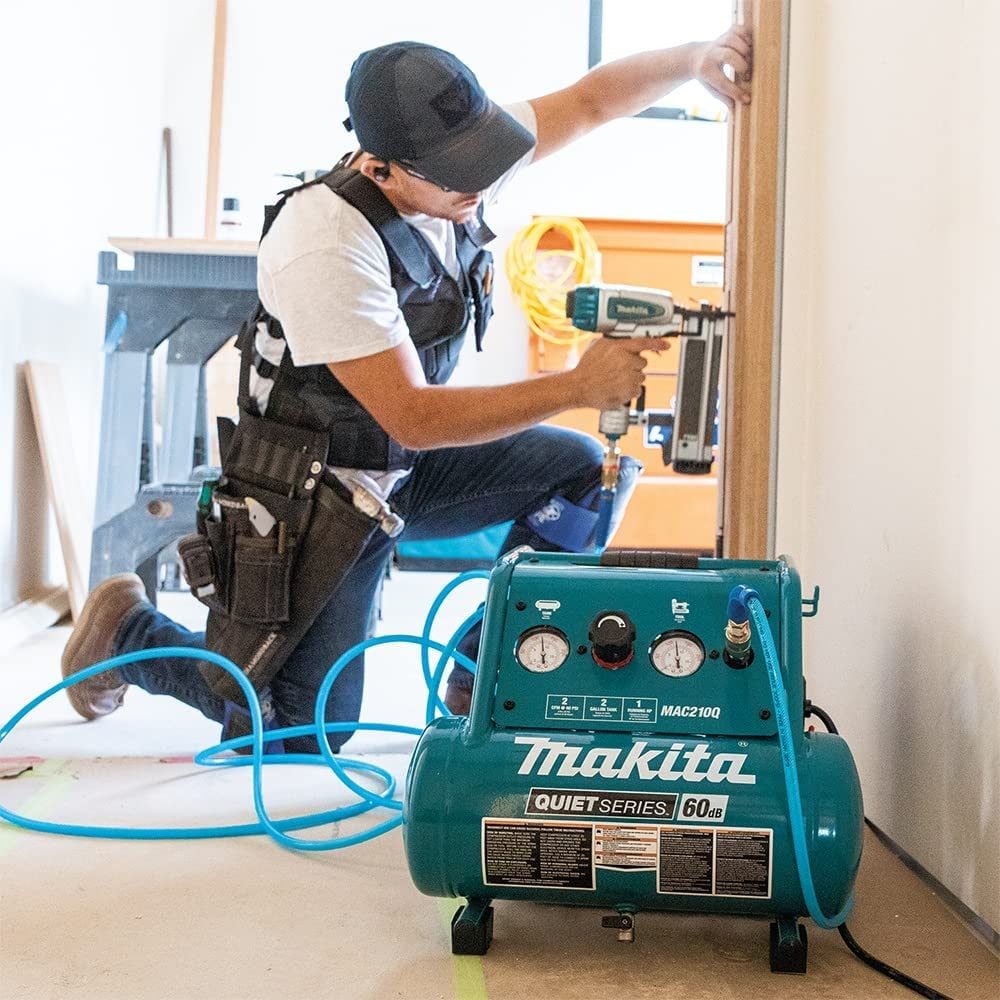
Buying an air compressor sounds simple until the product page starts throwing around PSI, SCFM, gallons, horsepower, oil-free pumps, duty cycles, and enough abbreviations to make a mechanic sigh into his coffee. The good news? You do not need to become a compressed-air engineer to pick the right machine. You just need to know what you want to power, how often you will use it, and whether your ears can survive another loud garage appliance pretending to be a jet engine.
The best air compressors are not always the biggest or most expensive. A six-gallon pancake compressor can be perfect for nail guns and tire inflation. A quiet 8-gallon unit may be better for indoor work. A 10-gallon compressor can make a small workshop feel dramatically more capable. The wrong compressor, however, will either run constantly, trip breakers, annoy the household, or fail to keep up with your tool. In other words, it will become a very heavy lesson.
This guide breaks down eight of the best air compressors for homeowners, DIYers, garage users, and light professional work. The picks below are based on real-world usefulness, common U.S. availability, published specifications, value, portability, noise level, and tool compatibility.
How to Choose the Best Air Compressor
Look at CFM First, Not Just PSI
PSI, or pounds per square inch, tells you how much pressure the compressor can produce. CFM, or cubic feet per minute, tells you how much air it can deliver. For most air tools, CFM at 90 PSI is the key number. Nailers and staplers need short bursts of air, so they can run well on smaller compressors. Sanders, grinders, impact wrenches, and paint sprayers need more continuous airflow, which means a larger compressor with stronger CFM output.
Tank Size Matters, But It Is Not Everything
A bigger tank stores more compressed air, so the motor cycles less often. That helps when using tools for longer stretches. However, tank size does not magically create airflow. A 20-gallon compressor with weak CFM may still struggle with demanding tools. Think of the tank as the pantry and CFM as the grocery delivery. You need both if you plan to cook a feast.
Consider Noise Level
Traditional compressors can be loud enough to make your dog file a formal complaint. If you work indoors, in a shared garage, or in a neighborhood where everyone knows who owns the loud tools, look closely at decibel ratings. Ultra-quiet compressors around 60 to 70 dBA are much more pleasant than typical units in the high 70s or 80s.
Oil-Free vs. Oil-Lubricated
Oil-free compressors are popular because they require less maintenance and are easy for beginners. Oil-lubricated compressors often run smoother and may last longer under heavy use, but they require periodic oil checks and changes. For most homeowners, oil-free is convenient. For serious workshop use, oil-lubricated models still deserve respect.
Quick Comparison: 8 Best Air Compressors
| Rank | Air Compressor | Best For | Tank Size | Max PSI | Airflow at 90 PSI |
|---|---|---|---|---|---|
| 1 | DEWALT DWFP55126 Pancake Compressor | Best overall | 6 gallons | 165 PSI | 2.6 SCFM |
| 2 | Craftsman CMEC6150K Pancake Compressor | Best value starter kit | 6 gallons | 150 PSI | 2.6 SCFM |
| 3 | California Air Tools 8010 | Best quiet home compressor | 8 gallons | 120 PSI | About 2.2 CFM |
| 4 | Makita MAC2400 Big Bore | Best rugged jobsite compressor | 4.2 gallons | 130 PSI | 4.2 CFM |
| 5 | Metabo HPT EC914S The Tank | Best high-output pancake compressor | 6 gallons | 200 PSI | 4 CFM |
| 6 | Porter-Cable C2002 | Best budget pancake compressor | 6 gallons | 150 PSI | 2.6 SCFM |
| 7 | Rolair JC10 Plus | Best quiet trim compressor | 2.5 gallons | 125 PSI class | 2.4 CFM |
| 8 | California Air Tools 10020C | Best larger workshop compressor | 10 gallons | 125 PSI class | 5.3 CFM |
1. DEWALT DWFP55126 Pancake Compressor: Best Overall
The DEWALT DWFP55126 is one of the safest recommendations for homeowners and DIYers because it balances power, portability, reliability, and price. Its 6-gallon pancake tank is stable on the floor, and its 165 PSI maximum pressure gives it a little more stored-air advantage than many basic 150 PSI units.
With 2.6 SCFM at 90 PSI, this compressor is a strong match for brad nailers, finish nailers, staplers, tire inflation, blow guns, and general garage tasks. It is not the right machine for continuous sanding or full-car painting, but that is like blaming a pickup truck for not being a bulldozer. For everyday use, it does the job beautifully.
The oil-free pump reduces maintenance, and the dual couplers make it practical for two users or two tools. It is still loud enough that you will know it is running, but it is manageable compared with many older compressors. For most people searching for the best air compressor for home garage use, this is the starting point.
Best for:
DIY projects, trim work, tire inflation, garage tasks, and general home use.
Skip it if:
You need continuous airflow for sanders, grinders, or larger spray guns.
2. Craftsman CMEC6150K: Best Value Starter Kit
The Craftsman CMEC6150K is the kind of compressor that makes sense for someone who wants to stop borrowing tools from a neighbor named Gary. It offers a 6-gallon tank, 150 max PSI, and 2.6 SCFM at 90 PSI, which puts it in the sweet spot for nail guns, inflation, and basic air-tool work.
Its biggest advantage is value. Craftsman often sells this model in kit form, making it appealing for beginners who need the compressor plus accessories. The oil-free pump keeps maintenance simple, and the pancake design is compact enough to store in a garage corner without requiring a formal zoning permit.
Like most budget-friendly pancake compressors, it is not whisper-quiet. It can sound enthusiastic, which is a polite way of saying loud. But for occasional use, that is usually a fair trade-off. If you are building shelves, installing trim, inflating tires, or using a brad nailer on weekend projects, this Craftsman is a dependable choice.
Best for:
Beginners, value shoppers, DIY trim work, and occasional household tasks.
Skip it if:
You need a quiet compressor for apartments, indoor workshops, or late-night projects.
3. California Air Tools 8010: Best Quiet Home Compressor
The California Air Tools 8010 is popular for one excellent reason: it is quiet. Rated around 60 dBA, it is much easier to live with than a typical pancake compressor. If your workspace is attached to the house, or if you enjoy hearing your own thoughts while working, this compressor deserves serious attention.
It has an 8-gallon tank, a 1.0 HP motor, wheels for easier movement, and an oil-free dual-piston pump. The airflow is suitable for inflation, brad nailers, finish nailers, light stapling, airbrushing, and cleaning work. It is not the most powerful compressor on this list, but it may be the most pleasant one to use.
The 8010 is especially useful for hobbyists, small-shop owners, and homeowners who want a compressor that does not make every project feel like a construction site. It rolls around easily, stores neatly, and keeps noise down. That alone can be worth the price.
Best for:
Indoor projects, quiet garages, hobby work, airbrushing, and light pneumatic tools.
Skip it if:
You need high airflow for demanding automotive tools or continuous-use equipment.
4. Makita MAC2400 Big Bore: Best Rugged Jobsite Compressor
The Makita MAC2400 Big Bore is built like it expects trouble and brought a roll cage just in case. This 4.2-gallon twin-stack compressor uses an oil-lubricated pump and a 2.5 HP motor, delivering 4.2 CFM at 90 PSI. That is a major step up from standard pancake compressors.
Its cast-iron pump and lower RPM operation help with durability and smoother performance. The MAC2400 is well suited for framing nailers, roofing nailers, finish nailers, and tougher intermittent tool use. It can handle more serious work than smaller homeowner models, making it a favorite among pros and ambitious DIYers.
The trade-off is weight. At roughly 77 pounds, this is not the compressor you casually carry upstairs while also holding coffee and pretending everything is fine. It is portable in the jobsite sense, not the featherweight sense. If durability and airflow matter more than easy carrying, the Makita MAC2400 is a beast.
Best for:
Contractors, serious DIYers, framing, roofing, and heavier pneumatic nailer use.
Skip it if:
You want a lightweight compressor or do not want to maintain an oil-lubricated pump.
5. Metabo HPT EC914S The Tank: Best High-Output Pancake Compressor
The Metabo HPT EC914S, known as The Tank, is what happens when a pancake compressor drinks a protein shake. It has a 6-gallon tank like many compact compressors, but it pushes up to 200 PSI and delivers 4 CFM at 90 PSI. That is impressive output for its size.
This model is designed for users who want more performance without moving into large vertical-tank territory. It can run multiple nailers better than standard 2.6 SCFM pancake compressors and is especially appealing for framing, siding, roofing, and finish crews who need compact power.
Despite its extra muscle, it remains reasonably portable at about 42 pounds. That makes it heavier than some basic pancake units but much easier to handle than many larger compressors. If you like the compact footprint of a pancake compressor but hate waiting for recovery, this is one of the best air compressors to consider.
Best for:
Framing nailers, roofing nailers, siding, finish work, and users who need more airflow in a compact body.
Skip it if:
You only need a compressor for occasional tire inflation and light household use.
6. Porter-Cable C2002: Best Budget Pancake Compressor
The Porter-Cable C2002 has been a familiar garage and jobsite staple for years. It offers a 6-gallon pancake tank, 150 max PSI, and 2.6 SCFM at 90 PSI. Those numbers are not flashy anymore, but they remain very useful for common homeowner tasks.
This is a practical compressor for people who want basic performance without paying for features they will not use. It can inflate tires, run brad nailers, power finish nailers, handle staplers, and help with general garage clean-up. The oil-free pump keeps ownership simple, and the compact shape makes it easy to store.
The C2002 can be loud, and it is not built for continuous high-demand tools. But as an affordable entry into pneumatic tools, it is hard to ignore. For many homeowners, it is the compressor that starts the journey from “I should fix that someday” to “Look at me, I own air fittings now.”
Best for:
Budget buyers, first-time compressor owners, tire inflation, nail guns, and light DIY work.
Skip it if:
You want quiet operation or stronger airflow for demanding tools.
7. Rolair JC10 Plus: Best Quiet Trim Compressor
The Rolair JC10 Plus is a compact, quiet compressor designed for finish work, trim carpentry, and users who value calm over chaos. Its 2.5-gallon tank is smaller than the pancake compressors above, but it delivers about 2.4 CFM at 90 PSI and runs at around 60 dBA.
That makes it excellent for interior work. If you are installing trim, building cabinets, attaching molding, or using a brad nailer indoors, the JC10 Plus is far more pleasant than a screaming budget compressor. It is not meant to be a high-volume garage monster. It is more like a polite specialist with very good manners.
The oil-less design lowers maintenance, and the compact frame is easy to position in tight spaces. It is heavier than it looks, but still manageable. For finish carpenters and serious hobby woodworkers, the Rolair JC10 Plus is one of the most enjoyable compressors to use.
Best for:
Trim carpentry, cabinet work, indoor projects, finish nailers, and quiet job sites.
Skip it if:
You need a larger tank for long sessions or stronger airflow for bigger tools.
8. California Air Tools 10020C: Best Larger Workshop Compressor
The California Air Tools 10020C is the best choice here for users who want more tank capacity and airflow without jumping to a massive stationary shop compressor. It has a 10-gallon tank, a 2.0 HP motor, and about 5.3 CFM at 90 PSI. That gives it enough muscle for more demanding garage and workshop tasks.
It is also quiet for its size, operating around 70 dBA. That is a big advantage if you spend long hours in the shop. The oil-free pump reduces maintenance, and the wheels make it easier to move than its size suggests.
This compressor is a strong match for users who have outgrown basic pancake models. It can support more serious pneumatic tools, though buyers should still check each tool’s required CFM. It is not a replacement for a 60-gallon professional shop compressor, but for many home garages, it is a major upgrade.
Best for:
Workshops, garage projects, moderate automotive work, longer tool runtime, and users who want quiet power.
Skip it if:
You need ultra-portability or only plan to inflate bicycle tires twice a year.
Best Air Compressor by Use Case
Best Air Compressor for Home Garage
The DEWALT DWFP55126 is the best overall home garage choice because it is portable, powerful enough for common tools, and easy to maintain. If noise matters more, choose the California Air Tools 8010.
Best Air Compressor for Nail Guns
For occasional nailer use, the Craftsman CMEC6150K or Porter-Cable C2002 is enough. For framing, roofing, or running multiple nailers, the Metabo HPT EC914S or Makita MAC2400 is the better pick.
Best Quiet Air Compressor
The California Air Tools 8010 and Rolair JC10 Plus are both excellent quiet compressors. Choose the 8010 for general home use and the Rolair for trim-focused work.
Best Air Compressor for a Small Workshop
The California Air Tools 10020C is the strongest workshop pick in this list because it offers a larger tank, higher airflow, wheels, and relatively quiet operation.
Air Compressor Safety Tips
Compressed air is useful, but it is not a toy. Always wear eye protection when using blow guns, nailers, or air tools. Never point compressed air at your skin or another person. Drain the tank after use to reduce moisture buildup and help prevent corrosion. Check hoses for cracks, use proper fittings, and set the regulator to match your tool’s requirements.
Also, do not use high-pressure compressed air to clean clothing or skin. It may look harmless, but compressed air can drive debris into eyes or skin and create serious injuries. Treat your compressor like a powerful tool, not like a garage party trick.
Real-World Experience: What Actually Matters After You Buy One
On paper, every air compressor looks like it is ready to revolutionize your garage. In real life, the little details decide whether you love it or quietly resent it every time you need to inflate a tire. The first thing you notice is noise. A loud compressor may be acceptable outside at noon, but inside a garage at 8 p.m., it suddenly feels like you started a motorcycle in a library. If you share walls with family, roommates, or neighbors, a quiet compressor is not a luxury. It is domestic diplomacy.
The second thing you notice is recovery time. A compressor with limited CFM can still be useful, but you will hear it cycle often when running nailers or blow guns. For short tasks, that is fine. For longer projects, waiting on the compressor becomes annoying. It breaks your rhythm. One minute you are confidently installing trim; the next minute you are standing there listening to the tank refill like it is thinking about its life choices.
Portability also matters more than many buyers expect. A 30-pound pancake compressor sounds manageable until you carry it across a yard, up stairs, or around a cluttered garage. A 77-pound rugged compressor may be powerful, but you will not want to move it often. Wheels are wonderful. Handles matter. Cord storage matters. Hose storage matters. These are boring details until the day you are untangling a hose from a bicycle pedal while holding a nail gun.
Tank draining is another habit worth building. Compressors collect moisture as they run. If you ignore the drain valve, water sits in the tank, encouraging rust and reducing the life of the unit. Draining the tank takes less than a minute, but many people skip it because the job is finished and dinner is calling. Do not be that person. Future you, the one who still wants a working compressor, will appreciate it.
Accessories can also change the experience. A good rubber or hybrid air hose is easier to manage than a cheap stiff hose that behaves like a frozen garden snake. Quick-connect fittings save time. A tire inflator with a gauge is almost mandatory for garage use. For woodworking, a small blow gun is handy for clearing dust, though it should be used carefully with eye protection. For nailers, keep the correct fasteners and tool oil nearby if your pneumatic tool requires it.
The biggest lesson is to buy for your actual projects, not imaginary future projects where you suddenly restore classic cars every weekend. If you mostly inflate tires and use a brad nailer, a compact 6-gallon compressor is plenty. If you are building decks, framing walls, or using multiple nailers, buy more airflow. If you work indoors, buy quieter. If you want a real workshop upgrade, look at 10 gallons or more with stronger CFM.
A good air compressor should make projects easier, faster, and cleaner. It should not make you dread plugging it in. Choose the compressor that fits your tools, your space, and your patience level. Your garage will thank you. Your ears will thank you. Your neighbor Gary may even stop saying, “You know, you could have borrowed mine.”
Final Verdict
The best air compressor for most people is the DEWALT DWFP55126 because it offers the right blend of power, portability, and everyday usefulness. Budget shoppers should consider the Craftsman CMEC6150K or Porter-Cable C2002. If quiet operation matters, the California Air Tools 8010 is the easiest recommendation. For more serious work, the Makita MAC2400 and Metabo HPT EC914S provide stronger airflow. For workshop users ready to step up, the California Air Tools 10020C is the most capable choice on this list.
In the end, the best air compressor is the one that matches your tools. Check the required CFM, leave yourself a performance cushion, consider noise, and be honest about how portable you need it to be. Do that, and you will end up with a compressor that earns its space instead of becoming an expensive garage sculpture.
Note: Product specifications and buying guidance were reviewed from current U.S. manufacturer pages, major retailer listings, and reputable home-improvement buying resources. No source links are included in the article body so the content remains clean for web publishing.











