
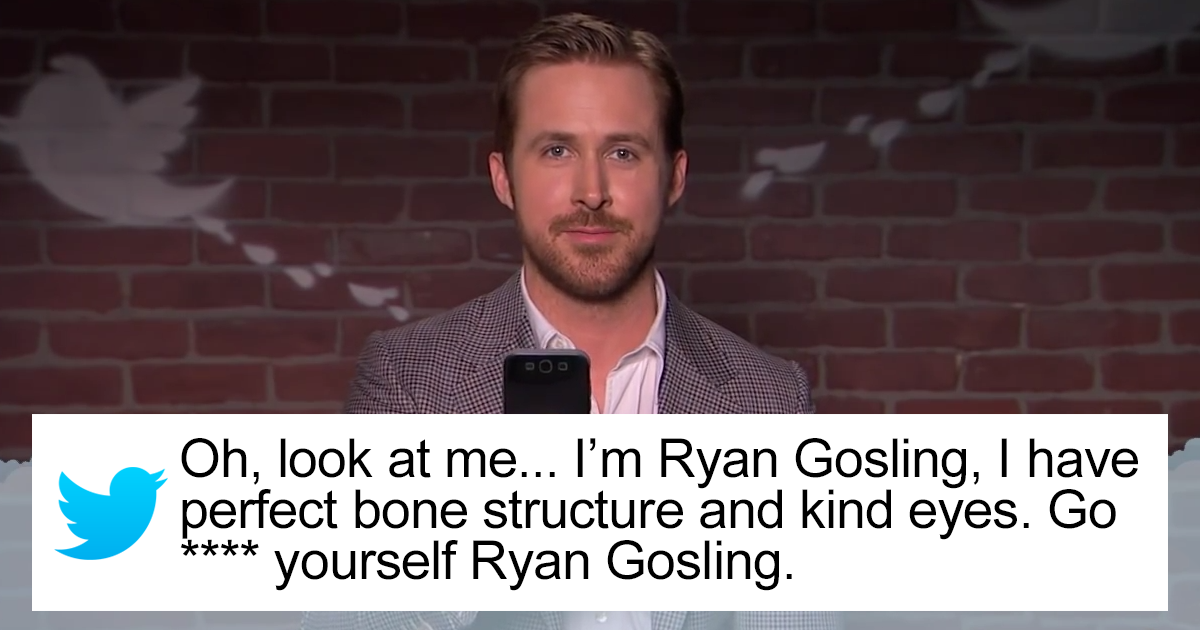
Celebrity culture usually arrives polished to a mirror shine: designer outfits, perfect lighting, carefully rehearsed interviews, and publicists standing nearby with the alertness of airport security. Then came a comedy segment with a beautifully simple planhand famous people the rudest things strangers had written about them and ask them to read those insults on camera.
The result was Celebrities Read Mean Tweets, a recurring Jimmy Kimmel Live! feature that transformed online cruelty into compact comedy. Actors, musicians, athletes, television personalities, and even political leaders have stared into the camera while reading comments questioning their talent, appearance, personality, career choices, and occasionally their entire reason for existing.
A collection featuring 192 of these brutal celebrity tweets captures what made the idea so addictive. The insults can be absurd, strangely poetic, unnecessarily specific, and occasionally so vicious that the celebrity needs a moment to process what just happened. Fortunately, the reactions are often funnier than the original posts.
How Mean Tweets Became a Celebrity Comedy Institution
The first Mean Tweets installment appeared in 2012, featuring comedians and actors reading genuine social media attacks directed at them. The setup was deliberately plain. A celebrity sat against a simple background, held a phone, read an insult, and reacted while R.E.M.’s dramatically mournful “Everybody Hurts” played underneath.
That contrast did most of the comedic heavy lifting. A ridiculous comment about somebody’s face was treated with the emotional seriousness of a prestige drama. The music suggested tragedy. The tweet suggested that a stranger had spent ten minutes inventing a new way to compare an Oscar winner to an irritated household appliance.
The concept was developed by Jimmy Kimmel Live! co-head writer Molly McNearney. According to behind-the-scenes reporting, participating celebrities eventually began requesting a place in the segment because it offered a rare opportunity to look relaxed, humorous, and willing to laugh at themselves. The production team excluded threats, keeping the selected material within the territory of insults rather than credible danger.
That boundary matters. A joke about an actor resembling a confused bird may be childish, but it can be converted into comedy. A threat cannot. The segment worked best when the insult was sharp enough to surprise the celebrity but ridiculous enough that nobody needed to contact law enforcement afterward.
Why 192 Brutal Celebrity Tweets Are So Hard to Stop Reading
The insults are weirdly creative
Ordinary criticism is boring. Saying an actor is “bad” provides no imagery, rhythm, or delightful evidence that the writer should probably have gone to bed two hours earlier. The most memorable mean tweets behave like tiny comedy sketches. They build a visual comparison, add an unnecessary detail, and finish with the confidence of a person who believes the world urgently needs this opinion.
George Clooney has faced jokes about his face. Jennifer Garner has encountered animal-based comparisons. Daniel Radcliffe has been evaluated against one of nature’s less glamorous creatures. Benedict Cumberbatch has inspired comments so visually specific that readers may briefly forget they are insulting a human being and not reviewing experimental architecture.
These remarks are memorable because they are not merely negative. They are miniature roast jokes written by people who may or may not realize they are auditioning for a comedy writers’ room from the couch.
Famous people suddenly look wonderfully human
Celebrity marketing is designed to create distance. Stars are photographed behind velvet ropes, followed by security teams, and interviewed in places where the furniture probably costs more than a used car. Mean Tweets removes that distance for a few seconds.
A celebrity squints at a phone. Their smile disappears. They reread one word. They look toward someone off camera as though asking, “Did a real adult type this?” That reaction is instantly recognizable. Anyone who has opened a comment section after posting something harmless understands the feeling.
The audience is not necessarily laughing because the celebrity has been hurt. It is laughing because fame has briefly failed to protect someone from the same bizarre internet behavior experienced by everyone else.
The reactions create the real punchlines
A mean tweet is only half a joke. The celebrity’s response completes it.
Some stars stare silently into the camera. Others laugh before finishing the sentence. A few respond with a devastating comeback. Zendaya famously answered a comment about her allegedly unpleasant-smelling feet by checking her shoe and declaring that it “smells like success.” Kim Kardashian reacted to one wildly unpleasant suggestion by calmly encouraging the poster to proceed with it. Jennifer Lawrence, known for energetic and unfiltered interviews, turned her insult into an opportunity for an even more aggressive joke.
Deadpan delivery can be just as effective. A respected actor reading a childish insult with Shakespearean seriousness creates a perfect collision between high status and low discourse. It is the internet equivalent of asking a symphony orchestra to perform the notification sound from a microwave.
The Most Popular Targets in Celebrity Mean Tweets
Appearance-based attacks
Many of the harshest tweets focus on physical appearance. Faces are compared to animals, vegetables, household objects, forgotten cartoon characters, and things discovered behind refrigerators during apartment moves.
Maisie Williams was once described as looking like a remarkably young grandmother. Shaquille O’Neal read a food-related joke about his size and admitted that it was good. Trae Young laughed at a comparison between his hair and a lollipop dropped on a carpet, then asked what flavor the lollipop might be. The best responses do not deny the insult; they absorb it and return it with interest.
However, appearance-based jokes also reveal one of the format’s uncomfortable truths. Much online commentary treats a public figure’s body as communal property. The segment makes that behavior look ridiculous, but the underlying habit is real and far more widespread than one television sketch.
Talent and career criticism
Musicians receive complaints about their voices, songs, stage personas, and alleged ability to ruin an otherwise peaceful car ride. Actors are told they cannot act. Comedians are informed they are not funny, often by people whose own masterpiece is a fourteen-word post ending in three laughing emojis.
Music editions have featured stars such as Britney Spears, Katy Perry, Lady Gaga, Ariana Grande, Drake, Billie Eilish, Lizzo, Green Day, John Mayer, Chance the Rapper, and Cardi B. Their reactions range from wounded disbelief to delighted approval when an insult is clever enough.
There is something uniquely funny about a globally successful performer reading a declaration that their music has personally destroyed a stranger’s afternoon. The celebrity has platinum records. The critic has a profile picture of a truck wearing sunglasses. The battle is somehow presented as even.
Sports stars and the world’s angriest fans
Athletes are ideal participants because sports criticism already operates at maximum emotional volume. A missed shot is not merely a mistake; according to social media, it is an unforgivable betrayal of a city, a family, and the basic principles of geometry.
NBA and NFL editions have included stars such as Stephen Curry, Shaquille O’Neal, Chris Paul, Kobe Bryant, Magic Johnson, Trae Young, Terrell Owens, Michael Strahan, Clay Matthews, and many others. The tweets attack hairstyles, names, bodies, performance, and occasionally the athlete’s entire bloodline because someone failed to cover the point spread.
Athletes often handle the insults particularly well. They are accustomed to heckling, hostile crowds, sports radio, and strangers explaining professional basketball strategy from folding chairs. Still, hearing the exact insult aloud can produce a pause that says, “I have played in front of twenty thousand screaming people, but this account named PizzaWizard42 has surprised me.”
Politicians enter the roast
The format eventually expanded beyond entertainment and sports. Barack Obama participated while serving as president, reading posts that mocked his appearance, clothing, policies, and performance in office. The segment worked because presidential dignity collided with the casual disrespect of social media.
Obama’s participation also demonstrated how widely recognizable the format had become. Mean Tweets was no longer merely a recurring late-night sketch. It had developed into a pop-culture rituala controlled setting where public figures acknowledged criticism, reacted to it, and often reclaimed the final word.
What Makes a Mean Tweet Funny Instead of Merely Cruel?
Not every insult deserves a television audience. The strongest examples generally contain several ingredients.
Specificity
“I dislike this actor” is an opinion. “This actor looks like the substitute teacher who lost the class hamster” creates an image. Specific comparisons surprise the reader and give the celebrity something to perform.
Absurdity
The insult should be exaggerated beyond ordinary criticism. A ridiculous comparison signals that the post belongs closer to a roast than a serious attack. Nobody reasonably believes an actress was assembled from spare parts at a garden center. That is precisely why the image can be funny.
Rhythm
The best posts are short enough to land quickly. They establish a target, introduce an unexpected comparison, and finish before the idea becomes exhausted. Social media’s original character limit unintentionally encouraged a form of compressed joke writing.
A target who can answer
The format becomes satisfying when celebrities respond. Their comeback reverses the power dynamic. A stranger may have written the insult from a safe distance, but the target now controls the performance, the camera, and the final punchline.
This reversal explains why celebrities often appear stronger after reading something terrible. The tweet is no longer whispering about them from the internet’s basement. It has been dragged into bright studio lighting and asked to justify itself.
The Serious Side of Online Mockery
It would be easy to treat all online insults as harmless because famous adults sometimes laugh at them on television. Real-world research tells a more complicated story.
A Pew Research Center survey found that 41% of American adults had experienced at least one measured form of online harassment, while one-quarter reported more severe forms such as sustained harassment, stalking, sexual harassment, or physical threats. Social media was the most commonly reported location for these encounters. Research on young people has also linked cyberbullying victimization with anxiety, depression, loneliness, and other serious mental-health effects.
Fame does not eliminate emotional responses. Celebrities may have money, assistants, stylists, and suspiciously white teeth, but they still process humiliation through a human nervous system. Research involving public figures and influencers has found that online harassment can cause emotional injury and lead targets to block accounts, close comments, seek support, consult legal professionals, or contact authorities.
The comic segment succeeds partly because it provides consent and context. Participants agree to appear. Producers select the material. The celebrity can respond, edit, laugh, object, or walk away. Ordinary harassment offers none of those protections.
Why People Become Online Trolls
The convenient explanation is that trolls are a separate species of permanently angry internet goblin. Research suggests the reality is less comforting.
Studies of online discussions indicate that ordinary people can become more likely to post hostile material when they are in a negative mood or when they have already been exposed to trolling by others. In one widely discussed study, bad mood and a hostile conversational environment significantly increased antisocial posting behavior. Cruelty can therefore spread through a comment section like someone microwaving fish through an office ventilation system.
Distance also reduces accountability. The person writing a joke about a celebrity’s body may experience the target as a character rather than a human being. The screen hides facial expressions, removes immediate social consequences, and makes an audience of followers feel more important than the person receiving the comment.
Mean Tweets cleverly restores the missing face. Viewers see the celebrity read the words. Even when the reaction is humorous, the segment reminds everyone that posts travel beyond timelines and notifications. Eventually, a person may read them.
Why Celebrities Agree to Read Brutal Tweets
Participating offers several advantages. First, it demonstrates confidence. A star who can laugh at an insult appears less fragile and more approachable. Second, it provides a controlled response to criticism without requiring a serious press release beginning with the phrase “After careful reflection.”
Third, the segment is excellent publicity. A performer can promote a movie, television series, album, or sporting event while creating a highly shareable video. The audience sees personality rather than a rehearsed promotional answer about how “everyone became a family on set.”
Most importantly, participation gives the celebrity ownership. The insult may have been written by a stranger, but the reaction belongs to the star. A raised eyebrow, one-word comeback, or perfectly timed pause can turn an ugly post into career-enhancing comedy.
Occasionally, the show reportedly struggles to find suitable insults for an especially well-liked guest. Jimmy Kimmel once joked that researchers could not locate enough mean posts about Leslie Odom Jr. This may be the internet’s highest possible honor, approximately equivalent to receiving a lifetime achievement award from people who argue about sandwich ingredients.
What the 192 Mean Tweets Reveal About Celebrity Culture
The collection is entertaining, but it also functions as a strange archive of public obsession. Celebrities are criticized for being too attractive, not attractive enough, overexposed, invisible, successful, unsuccessful, confident, awkward, thin, muscular, aging, or apparently refusing to age correctly.
Many tweets reveal more about the writer than the target. An elaborate insult requires attention. It may even require affection in disguise. Someone who truly feels nothing about a celebrity rarely spends fifteen minutes comparing that person’s hairstyle to an abandoned craft project.
The posts also show how fame creates a sense of imaginary access. Audiences watch actors, musicians, and athletes so frequently that they begin to feel familiar. That familiarity can become parasocial intimacythe feeling that a public figure is part of one’s life despite no mutual relationship. Social media intensifies the illusion by placing celebrities and ordinary users inside the same feed.
Suddenly, an actor is not a distant figure on a movie screen. The actor is another account available for tagging before breakfast. The emotional distance collapses, but the actual relationship does not exist. That gap produces admiration, entitlement, criticism, and sometimes astonishingly inventive nonsense.
Experiencing the Mean Tweets Phenomenon as a Viewer
The typical viewing experience begins with curiosity. A recognizable celebrity appears, phone in hand, while the melancholy music starts. The viewer already understands the rules: something awful is coming, but the person reading it has agreed to join the joke.
The first reaction is often laughter at the absurd language. A stranger has assembled words that should never have met. A movie star’s forehead is compared to municipal infrastructure. A singer’s voice is described as an emergency siren trapped inside a blender. The comparison is clearly unfair, yet the unexpected mental image arrives before good judgment has time to put on its shoes.
Then the celebrity reacts, and the viewer’s attention shifts. Some participants laugh immediately, suggesting they have heard much worse. Others stop halfway through the sentence and stare at the phone. That pause can be funnier than any prepared comeback because it reveals authentic surprise. The audience can almost see the star mentally reviewing every career decision that led to this exact moment.
The most satisfying reactions occur when the celebrity improves the joke. A confident comeback turns the original poster into an unpaid setup writer. The stranger delivered the first line; the celebrity owns the punchline. Watching that reversal creates a small feeling of justice. The person who was supposed to be embarrassed becomes the funniest person in the clip.
After several videos, however, the experience changes. Repeated jokes about bodies, age, gender, and appearance begin to blur together. The viewer may notice how frequently women are criticized for how they look, while athletes are mocked for physical traits and performers are attacked as though disliking a song were a personal emergency.
That awareness does not necessarily destroy the comedy. It adds context. The segment becomes a lesson in how presentation changes meaning. A nasty post sent directly to someone can be harassment. The same post, selected with consent and performed inside a comedy format, can become a roast. The words may be similar, but the power structure is completely different.
There is also a recognizable personal discomfort in laughing. Most viewers have posted something overly dramatic, sarcastic, or unkind at some point. Seeing a celebrity read a stranger’s comment aloud creates an uncomfortable question: How would this sentence sound if the person it described were sitting three feet away?
That question may be the segment’s hidden value. It makes online speech physical again. The words are no longer floating text. They have a voice, a recipient, a facial reaction, and an audience.
The experience is funniest when the celebrity appears genuinely amused and the insult is ridiculous rather than dehumanizing. It is less enjoyable when the material depends entirely on humiliation. The best entries feel like a consensual roast among strangers. The weakest ones feel like cruelty receiving studio lighting.
For viewers, the lasting appeal comes from unpredictability. A famously intimidating actor may giggle. A wholesome performer may deliver a brutal comeback. A professional comedian may be left speechless by a teenager with eight followers and an anime avatar. Status becomes irrelevant for twenty seconds, and everyone is simply trying to survive the comment section.
Watching all 192 examples in one sitting would be a major emotional and logistical commitmentsomething between a comedy marathon and a court-ordered social media awareness course. Yet the collection remains compelling because every entry offers the same suspense: Will the celebrity laugh, look wounded, fight back, or quietly reconsider having internet access?
Lessons for Posting Without Becoming the Next Mean Tweet
Before publishing a joke about a real person, imagine that person reading it aloud while looking directly into a television camera. If the sentence still feels clever rather than cruel, it may survive the test.
Criticizing public work is reasonable. Audiences can dislike a movie, performance, interview, song, or athletic decision. The line becomes clearer when criticism shifts from the work to someone’s body, family, identity, health, or right to exist.
A useful rule is to aim upward at image, power, behavior, or public choicesnot downward at vulnerabilities someone cannot control. Satire can be sharp without behaving like a middle-school hallway with unlimited Wi-Fi.
And remember: celebrities sometimes answer. The comeback may be broadcast to millions of people, including your employer, your relatives, and the person you told you were “taking a break from social media.”
Conclusion: The Internet Roasted Celebrities, but Celebrities Got the Last Laugh
192 Of The Most Brutal Tweets About Celebrities That They Were Asked To Read Themselves represents more than a collection of savage one-liners. It captures a major change in the relationship between fame and the public.
Social media placed celebrities inside the same chaotic conversation as everyone else. Mean Tweets took that chaos, added sad music, professional editing, and excellent reaction shots, then transformed it into one of late-night television’s most recognizable formats.
The funniest moments are not necessarily the cruelest insults. They are the moments when a celebrity refuses to be reduced by the insultlaughing, responding, or turning the stranger’s words into a better joke. The troll may type the opening line, but the star controls the ending.
Still, the collection carries a useful warning. Words do not become harmless simply because they fit inside a post. Behind every famous account is a person capable of reading what appears beneath it. Comedy is strongest when everyone involved can laugh, not when one person becomes entertainment without consent.
So enjoy the savage comparisons, awkward pauses, fearless clapbacks, and expressions of total disbelief. Just think carefully before writing the next one. You never know when your eleven-follower account might appear on national television beneath the face of an Academy Award winner who has prepared a much better comeback.
Research note: This article synthesizes documented material and reporting from ABC, the official Jimmy Kimmel Live! video archive, Vanity Fair, Time, People, Pitchfork, CBS News, CBS Sports, Pew Research Center, the American Psychological Association, the National Institutes of Health, Stanford University researchers, ABC-owned local news outlets, and related entertainment reporting.












