
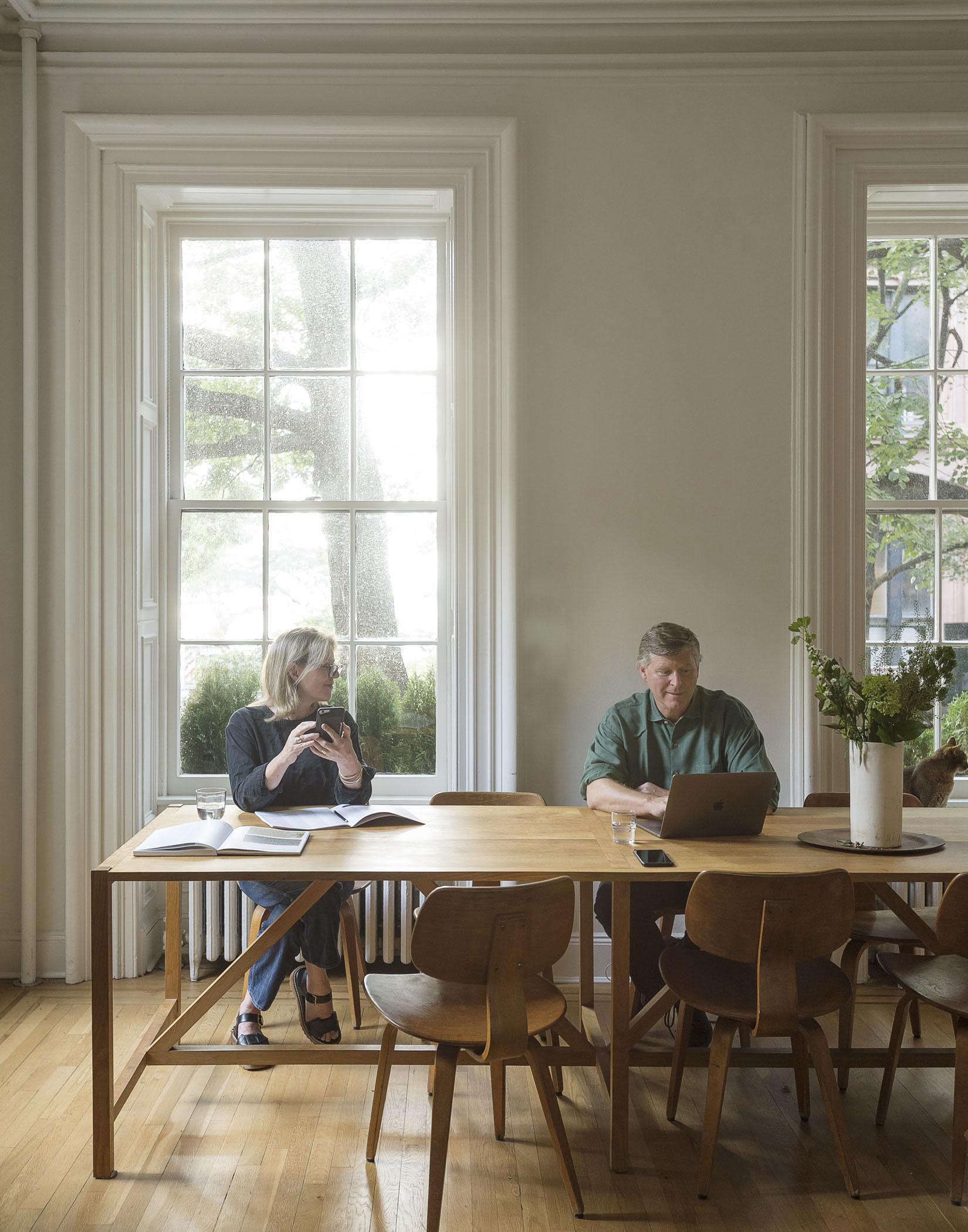
What happens when the people who spend their days examining beautiful homes turn the design questions on themselves? You get an unusually revealing mix of practical renovation advice, obscure shop recommendations, inherited art, crisp sheets, vintage hardware, and at least one kitchen utensil that deserves a promotion.
In a special edition of Remodelista’s recurring “Quick Takes” series, the publication’s editors answered the same rapid-fire questions usually posed to designers, artists, architects, and other creative figures. Their responses offered more than a list of favorite things. Together, they formed a compact guide to the Remodelista design philosophy: value usefulness, notice small details, learn from old buildings, buy deliberately, and never underestimate what a better lampshade can do for a room.
The resulting portrait is refreshingly human. These are design experts, but they are not floating through spotless showrooms wearing white gloves. They live with children, inherited kitchens, unfinished plans, yellowing switch plates, sentimental paintings, and furniture dreams that may need to wait until the kids stop climbing everything.
A Rare Look Behind the Remodelista Curtain
Published as a summer special edition in July 2024, “Quick Takes With: The Remodelista Editors” featured answers from members of the editorial team, including Julie Carlson, Annie Quigley, Fan Winston, Margot Guralnick, and Alexa Hotz. The questions moved quickly between decorating, travel, entertainment, clothing, shopping, entertaining, and everyday household habits.
That breadth matters because Remodelista has never treated interior design as an isolated activity. Its editorial world connects architecture with cookware, travel, gardens, textiles, art, storage, and domestic rituals. The site describes itself as a sourcebook for the “considered home,” and its books similarly combine inspiring houses with remodeling guidance, sourcing information, and approachable ideas readers can adapt rather than merely admire.
The editors’ answers reflect that same blend. A home is not presented as a collection of impressive purchases. It is a place shaped by memory, touch, weather, routine, and the occasional object that makes no logical sense but brings enormous joy.
What the Editors’ Answers Reveal About Good Design
Design Is Personal Before It Is Photogenic
One of the most memorable themes is the relationship between interiors and personal history. When asked about a film or television aesthetic that stayed with them, Fan Winston recalled being captivated as a child by the warm, open, distinctly American-looking apartment seen in reruns of The Bionic Woman. The attraction was not simply about a 1970s color palette. The apartment represented independence and the thrilling idea of eventually controlling one’s own space.
Margot Guralnick chose the Danish period drama Seaside Hotel, noting the carefully observed details of its guest rooms and seaside setting. Her answer demonstrates a distinctly Remodelista habit: watching the room almost as closely as the plot. Some viewers wonder who committed the crime. A design editor wonders whether the washbasin is original.
These responses explain why meaningful interiors rarely emerge from copying a trend board item by item. A room feels convincing when it contains evidence of the person who lives there. Childhood memories, favorite films, family objects, travel discoveries, and long-running obsessions can all become design material.
Small Changes Can Carry Surprising Weight
The editors’ favorite home improvements ranged from major investments to wonderfully modest interventions. Fan favored real wood floors for their appearance and physical feel. Solid hardwood can offer exceptional longevity and may be refinished repeatedly, while engineered wood is generally easier to install and more stable in changing humidity. The correct choice depends on budget, location, moisture, and how long the homeowner expects the floor to remain in service.
Julie Carlson described replacing discolored plastic switch plates with vintage brass covers. It is the sort of change that sounds almost comically minor until every switch in the room suddenly looks intentional. Hardware works like punctuation: rarely the main subject, but noticeably wrong when neglected.
Margot celebrated a corner banquette built where a second kitchen sink had once been planned. That decision turned underused space into a comfortable place to eat, talk, work, and linger. Built-in banquettes are especially effective in compact rooms because they can require less circulation space than separate chairs and may provide storage under the seats.
Annie’s lighting upgrade was even simpler: replacing an unattractive track fixture over the dining table with a paper shade. The lesson is not that every dining room requires the same pendant. It is that one visually dominant object can affect the mood of an entire room. Fixing that object first may be more effective than buying six decorative accessories and hoping they distract from it.
Comfort Is a Legitimate Design Standard
Design conversations often become preoccupied with appearance, yet the editors repeatedly returned to how things feel and function. Annie preferred sheets with a crisp, audible texture. Percale is known for its light, breathable construction and matte, cool feel, making it particularly appealing in warm weather or to sleepers who dislike silky bedding. Independent textile testing has likewise highlighted L.L.Bean’s Pima cotton percale among leading options for people who prefer traditional crispness.
She also offered an elegantly low-effort summer bedding idea: use an empty duvet cover as a lightweight coverlet. No special seasonal purchase is required, no decorative layering formula must be memorized, and nobody needs to wrestle a thick insert into a duvet while the temperature is 88 degrees.
Julie named kitchen tongs as a dependable everyday utensil, particularly for summer salads. This response may not cause a stampede at a furniture fair, but it captures an important truth: a well-designed home is supported by ordinary objects that perform reliably. The beautiful bowl matters. The tool that gets dinner into the bowl matters too.
Good Taste Is Often a Form of Attention
The Remodelista editors do not appear united by one rigid decorating style. Their individual preferences include modernist architecture, block-printed clothing, sculptural furniture, old hardware, handmade ceramics, paper lighting, family art, and functional kitchenware.
What connects those choices is attention. They notice the patina on a bronze windbell, the exact hand of a cotton sheet, the proportions of a chair, and the difference between a floor that merely looks like wood and one that feels right underfoot. Cosanti’s bronze windbells, for example, are individually made by artisans and treated as visual sculptures as well as sound-producing objects. That combination of craft, irregularity, and usefulness explains their appeal in a considered interior.
This kind of attention can be practiced at any budget. It does not require recognizing every designer chair at fifty paces. It begins with asking better questions: Does this material improve with age? Is the object pleasant to handle? Can it be repaired? Will I still appreciate it after its social-media moment has passed?
The Remodelista Approach to Shopping
Shop Like a Researcher, Not a Sprinter
The editors’ favorite stores include destinations in Marseille, London, Tokyo, and San Francisco. These recommendations reveal a preference for shops with strong points of view rather than warehouses of interchangeable merchandise. A memorable design store teaches visitors how objects relate to one another. Even someone who buys nothing can leave with a clearer understanding of proportion, material, display, and domestic usefulness.
Remodelista’s broader travel coverage follows the same principle, directing readers toward design-focused hotels, restaurants, workshops, and stores around the world. Travel becomes a form of visual education rather than a frantic effort to acquire souvenirs.
The editors also mix new objects with vintage finds and family possessions. That is important. A room assembled entirely from one season’s catalog can look polished but curiously unrooted. A vintage switch plate, inherited painting, worn table, handmade bell, or book acquired during a trip brings time into the room.
Let Some Desires Remain Desires
The editors were candid about what they wanted but had not purchased. Annie dreamed of replacing an inherited, dated kitchen with something cleaner and more efficient. Alexa admired a pair of sculptural Spaghetti chairs but acknowledged that they might not be compatible with family life at the moment.
That hesitation is perhaps the most useful shopping advice in the entire feature. Admiration does not create an obligation to buy. Some objects can remain on a wish list until the room, budget, or household is ready. Waiting is not a design failure. Frequently, it is what prevents an expensive one.
How to Apply the Editors’ Ideas at Home
Begin With the Irritation You Notice Every Day
Before planning a full renovation, identify the element that consistently bothers you. It may be a harsh ceiling light, insufficient seating, a cluttered counter, an awkward drawer, or hardware that makes the room feel tired. Solving one repeated annoyance can improve daily life more than adding a decorative object that serves no purpose.
Invest Where the Body Meets the House
Floors, sheets, handles, seating, work surfaces, towels, and lighting affect people physically. These categories deserve careful consideration because they are touched, walked on, leaned against, or used every day. A glamorous vase can wait. The dining chair that makes everyone’s legs numb should probably not.
Use Vintage Pieces as Accents
A house does not need to become a historical reenactment to benefit from old objects. Vintage hardware, mirrors, lamps, stools, frames, and small tables can add individuality without overwhelming a contemporary room. The contrast between old and new often makes both look more interesting.
Create Space for Conversation
Margot’s corner banquette is a reminder that the best home upgrades influence behavior. A welcoming seat encourages someone to stay for coffee. A generous work surface invites cooking together. A lamp placed beside a chair makes reading more likely. Design succeeds when it quietly supports the life residents want to live.
Allow Useful Objects to Be Visible
Not everything needs to disappear behind cabinetry. Attractive tongs, cutting boards, baskets, books, linens, and ceramics can remain accessible when they contribute texture and character. The goal is not to expose every possession. It is to avoid treating all evidence of daily life as visual contamination.
Choose One Detail That Is Purely Delightful
A windbell with an unusual patina, an inherited painting, a striped duvet, or pastries brought to a dinner host may not be necessary in the strictest sense. Yet houses composed only of necessities can feel more like efficient waiting rooms than homes. A little delight is functional in its own way.
Experience Notes: Living Like a Remodelista Editor for a Week
To understand the appeal of the Remodelista approach, imagine conducting a seven-day experiment. The rule is simple: buy almost nothing, observe everything, and make one thoughtful improvement each day.
On the first morning, walk through the house without attempting to clean it. Instead, note where your movements become awkward. Perhaps the coffee mugs are stored across the kitchen from the coffee maker. Maybe the bedroom lamp cannot be switched off from bed, requiring a nightly expedition that feels increasingly unreasonable after 11 p.m. These inconveniences are easy to accept because they are familiar. Writing them down makes them visible again.
The first change might be as small as moving the mugs. The kitchen will not appear in a magazine afterward, but breakfast becomes smoother immediately. That modest success changes the tone of the experiment. Home improvement begins to feel less like demolition and more like editing.
On the second day, examine the room’s largest visual distraction. In many homes, it is the ceiling fixture. Replacing it may not be possible that afternoon, but testing a softer bulb or adjusting the lamp arrangement can reveal how strongly light shapes color and atmosphere. Suddenly, the beige wall looks warm rather than weary. The wooden table regains some depth. Everyone appears slightly better rested, even if nobody is.
Day three is devoted to touch. Open drawers, sit in chairs, walk barefoot across the floor, and handle the linens. The objective is not to judge whether everything is luxurious. It is to identify textures that feel pleasant and those that seem oddly hostile. A rough towel may have served faithfully for years, but loyalty has limits. A loose cabinet knob can be tightened in two minutes. The repaired knob will then provide a tiny burst of satisfaction approximately eight times a day.
On day four, bring one personal object out of storage. Choose a family photograph, child’s drawing, travel sketch, inherited bowl, or strange flea-market object that makes you smile. Give it breathing room instead of surrounding it with eleven unrelated decorations. The room begins to tell a story rather than display inventory.
Day five involves rearranging rather than acquiring. Move a chair toward the window. Pull a small table beside it. Add the lamp that had been stranded in another room. A neglected corner becomes a reading place with no construction required. This is the moment when other household members may ask why the furniture is migrating. Remain calm. Design history is full of misunderstood pioneers.
On the sixth day, improve a ritual. Set out a tray for morning coffee, create a practical landing place for keys, place kitchen tongs where they can be reached with one hand, or prepare a bedside stack containing a book and lip balm. These arrangements are not elaborate, but they reduce friction. A considered home is often simply a home that has anticipated what happens next.
The final day is for restraint. Review the items you considered buying during the week and remove anything chosen mainly to complete a “look.” Keep the purchase that solves a real problem or creates lasting pleasure. Delay the rest for thirty days. Desire tends to become more accurate when given time.
By the end of the experiment, the house may not look dramatically transformed in photographs. Living in it, however, feels different. Objects are easier to use. Lighting is calmer. one forgotten possession has become meaningful again. A previously useless corner now has a purpose. The most important result is a sharper awareness of the relationship between design and routine.
That is the larger experience suggested by the Remodelista editors’ answers. Good interiors are not created in one triumphant shopping trip. They develop through curiosity, observation, patience, repair, experimentation, and a willingness to care about details other people might overlook.
Conclusion: A Considered Home Is Never Really Finished
“Quick Takes With: The Remodelista Editors” succeeds because it removes the distance between professional taste and ordinary domestic life. The editors may know the best design shops, historic references, and hard-to-find objects, but their most persuasive ideas are accessible: change the light, improve the seating, buy materials you enjoy touching, display something meaningful, and think before purchasing.
The common thread is not minimalism, luxury, or devotion to one visual era. It is discernment. A considered home can contain modern chairs, old brass, children’s belongings, family art, crisp cotton, and a kitchen awaiting renovation. Perfection is unnecessary. Attention is not.
Perhaps that is why the Remodelista perspective remains so appealing. It gives us permission to treat the home as an evolving record of real lifeone floorboard, paper shade, inherited painting, and extremely useful pair of kitchen tongs at a time.












