
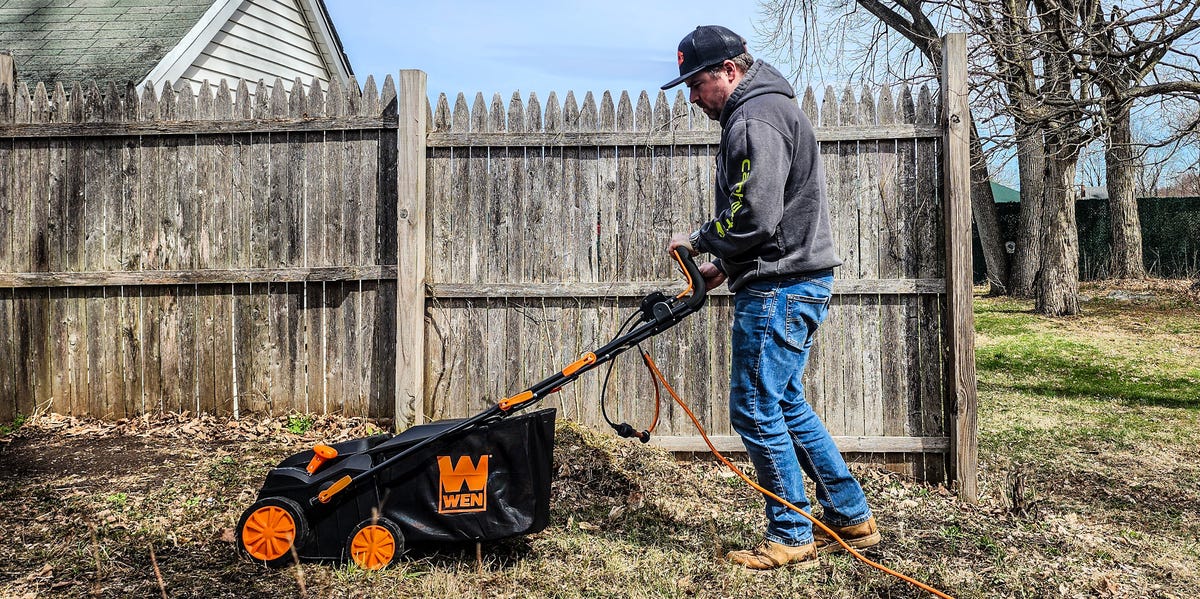
A lawn can look green from the sidewalk while quietly hiding a dense, spongy layer of stems, roots, and stubborn organic material underneath. That layer is called thatch, and when it becomes excessive, water and nutrients may struggle to reach the soil. The WEN DT1516 promises to tackle the problem without making you spend an entire Saturday wrestling with a manual rake.
This corded machine combines a spring-tine dethatcher with a bladed scarifier, adds a powerful 15-amp motor, and clears a generous 16-inch path. On paper, it sounds like a tiny lawn-renovation monster. In practice, it is powerful, lightweight, affordable, and occasionally messyrather like a golden retriever discovering a mud puddle.
This WEN 16-inch electric 2-in-1 lawn dethatcher and scarifier review examines its specifications, assembly, performance, weaknesses, ideal yard size, and the real-world experience homeowners can expect.
WEN DT1516 Review: The Quick Verdict
The WEN DT1516 is an excellent value for homeowners with small or medium-size lawns and a conveniently located electrical outlet. Its 15-amp motor delivers enough power to lift surprising amounts of dead material without bogging down, while the 16-inch working width covers ground faster than many narrower residential machines.
The dethatching head is the star of the show. It removes loose thatch, dead grass, and surface debris efficiently, and the lightweight body is easy to push. The scarifying reel adds useful versatility for opening the soil surface, cutting through moss, or preparing an established lawn for overseeding.
Its compromises are predictable. You must manage an extension cord, the plastic-heavy construction does not feel commercial-grade, and the collection bag fills quickly and may capture only part of the debris. Those drawbacks are annoying rather than fatal. For occasional seasonal lawn maintenance, the DT1516 offers an appealing balance of price, power, and convenience.
WEN DT1516 Specifications
| Model | WEN DT1516 |
|---|---|
| Power source | 120-volt corded electric |
| Motor | 15 amps |
| No-load speed | Up to 3,300 RPM |
| Working width | 16 inches |
| Dethatching reel | 24 steel tines |
| Scarifying reel | 20 blades |
| Depth positions | +1/4, -1/8, -1/4, -3/8, and -1/2 inch |
| Machine weight | Approximately 29.5 pounds |
| Collection system | Detachable fabric thatch bag |
| Warranty | Two-year limited warranty for qualifying home use |
The official manual lists overall dimensions of approximately 40.9 by 23.6 by 40.9 inches when assembled. Retail listings may show a higher packaged or shipping weight, so buyers should not be surprised by small differences between published numbers.
What Does the WEN 2-in-1 Design Actually Do?
The dethatching reel
The 24-tine reel uses flexible steel tines to comb through the turf and lift loose organic material toward the surface. It is the gentler of the two attachments and the one most homeowners will use for routine thatch removal.
Despite the familiar phrase “dead grass,” true thatch is not simply a pile of lawn clippings. It is a tightly woven layer of slowly decomposing stems, crowns, roots, and other plant tissue between the green grass and the soil. University lawn-care guidance generally considers a thin layer beneficial, but management may be needed when it becomes roughly one-half inch thick or more. Threshold recommendations vary somewhat by turf type and local conditions.
The scarifying reel
The second reel uses 20 straight blades that reach more aggressively through the turf and into the upper soil surface. It can cut shallow grooves, loosen moss, expose soil for seed contact, and address material that spring tines may glide over.
Scarifying should not be confused with true core aeration. A core aerator removes plugs of soil to relieve compaction deeper in the root zone. The WEN scarifier disturbs the surface but does not pull soil cores. A compacted lawn with standing water and heavy foot traffic may need core aeration even after it has been dethatched.
Assembly and Initial Setup
The DT1516 arrives partially disassembled, primarily because its handle is divided into sections for shipping. Assembly involves attaching the lower, middle, and upper handle pieces with cam-style knobs, mounting the cord holder, and fitting the collection bag to its frame.
No advanced mechanical talent is required. Independent testing found that the basic setup could be completed in approximately 20 minutes without specialized tools. The handles can also be adjusted among three positions, which helps shorter and taller users find a more comfortable working angle.
Changing reels requires slightly more effort but remains straightforward. Unplug the machine, turn it safely for access, remove the retaining bolts with the included hex wrench, slide out one reel, install the other, and secure it. It is a several-minute procedure rather than a tool-free magic trick, but you are unlikely to swap reels repeatedly during one job.
Dethatching Performance
Performance is where the WEN DT1516 earns its strongest recommendation. The combination of a 15-amp motor and 16-inch reel gives it enough power and width to handle residential lawns efficiently. Independent testers reported that it could pull substantial thatch in a single pass without frequent clogging or noticeable loss of power.
The machine is also easy to push. At roughly 30 pounds, it feels closer to a compact electric mower than a heavy rental-grade power rake. Once the tines engage, their forward rotation may even encourage the unit to move ahead. The operator mainly guides it, keeps the cord behind, and resists the temptation to sprint toward the flower beds.
Results are visually dramatic. Even a lawn that appears reasonably healthy can produce fluffy windrows of brown grass, roots, leaves, and organic debris. That satisfying pile does not mean the lowest depth setting is automatically better. Excessively deep operation can tear out healthy grass along with the thatch.
Start high and make a test pass
The safest method is to begin at the highest setting in an inconspicuous area. Examine the material being removed and check whether live grass is coming out by the roots. Lower the reel only when the first setting barely touches the thatch.
The five positions range from one-quarter inch above the reference level to one-half inch below it. The deeper positions are better suited to controlled scarifying than routine dethatching. Depth markings are useful, but soil contours, mowing height, and grass variety ultimately determine how aggressively the reel contacts the lawn.
Scarifying Performance
The scarifier reel feels more serious because its rigid blades cut rather than comb. It can open shallow channels through the surface, disturb mossy areas, and improve seed-to-soil contact before overseeding. It is particularly useful when a lawn has a dense mat that flexible tines cannot penetrate.
That extra bite also increases the risk of overdoing the job. A deep setting, slow walking speed, or repeated passes can leave the yard looking as though it lost an argument with a very organized flock of chickens. Use the scarifier only while the turf is healthy and actively growing, and avoid forcing the blades deeply into hard, dry ground.
The motor includes automatic overload protection designed to stop operation when the reel strikes an immovable obstruction or encounters excessive resistance. That feature may protect the motor, but it does not make rocks, edging, sprinkler heads, roots, cables, or buried irrigation components safe to hit. Walk the area first and remove or clearly mark hazards.
The Collection Bag: Helpful but Undersized
WEN includes a detachable fabric bag, which sounds like an important advantage over machines that simply leave everything on the lawn. The bag can collect material during lighter work, but it is not the DT1516’s strongest feature.
Dethatching creates an astonishing volume of fluffy debris. The bag fills rapidly when the thatch layer is heavy, forcing frequent stops. Independent testers and retailer customers have also reported that some material accumulates near the discharge opening rather than entering the bag. On uneven ground, the rear flap or chute area may drag when the machine is pulled backward.
For a lightly thatched lawn, using the bag may reduce cleanup. For a neglected lawn, it is often faster to remove the bag, let the material collect in rows, and gather it afterward with a mower, leaf rake, lawn sweeper, or bagging system. The machine will still do the difficult extraction; it simply delegates the final cleanup back to you.
Cord Management and Recommended Yard Size
The cord is the main reason the WEN DT1516 is better suited to small and medium-size properties than sprawling lawns. It provides uninterrupted power without batteries, charging delays, fuel storage, oil changes, or carburetor drama. In return, you must plan every pass around an extension cord.
Start near the outlet and work away from it so the cord remains behind the machine. Throw the cord over your shoulder when changing direction, use the built-in cord holder, and never allow it to cross the reel’s path. A bright extension cord is easier to see against green grass than a stealthy dark one apparently trained in lawn sabotage.
Because the DT1516 draws 15 amps, cord selection matters. The manual specifies a heavy-duty outdoor cord and calls for 14-gauge wire at 25 feet and 12-gauge wire at 50 feet. Longer runs are not recommended in its extension-cord chart. An undersized cord can cause voltage drop, overheating, and reduced performance. The outlet should have appropriate ground-fault protection.
Build Quality, Storage, and Maintenance
The WEN DT1516 is a homeowner-grade machine. Its metal working components feel capable, but much of the housing is lightweight plastic. That keeps the price and weight manageable, although it lacks the heavy-duty feel of commercial equipment.
This construction makes sense for a tool that may be used once or twice per year. Store it indoors, avoid dropping it onto concrete, and do not treat the handle like a forklift attachment. With reasonable care, the machine’s build is appropriate for seasonal residential service.
After each use, unplug the unit and wait for the reel to stop completely. Remove packed grass and soil with a brush or damp cloth, clear the motor vents, and inspect the tines, blades, hardware, and shaft. WEN specifically warns against cleaning the machine with a garden hose. The manual also recommends drying the metal components and applying a light coat of oil to help prevent rust.
Noise and Operator Comfort
The machine is electric, but it is not quiet. Its high-speed reel striking dry stems and soil can produce substantial mechanical noise, and independent testing has described it as one of the louder residential dethatchers. Hearing protection is a sensible addition to eye protection, sturdy footwear, long pants, and gloves.
Vibration remains manageable, and the low weight makes turning easier than with many gasoline-powered machines. Nevertheless, the safety switch must be held during operation, so people with limited hand strength may find longer sessions tiring. Breaking a large job into smaller sections helps both the operator and the lawn.
When Should You Use the WEN Dethatcher?
Do not dethatch simply because a calendar notification says it is time. Cut a small wedge from the lawn and measure the fibrous brown layer between the green vegetation and the soil. A thin layer can cushion the turf and moderate temperature; excessive buildup may interfere with water movement, overseeding, and healthy root-zone conditions.
Timing depends on the grass species. Cool-season lawns generally recover best during active spring or early fall growth, with many northern Extension programs favoring late summer through early fall. Warm-season grasses are typically treated during vigorous late-spring or early-summer growth. Avoid aggressive dethatching during heat, drought, dormancy, or other periods of stress.
Afterward, remove the loose debris, overseed thin areas if appropriate, and keep the lawn adequately watered while it recovers. Correct the causes of recurring thatch as well. Excessive nitrogen, compacted or waterlogged soil, inappropriate irrigation, and vigorous spreading grasses can all contribute. Ordinary short grass clippings generally decompose too quickly to be the main culprit.
Pros and Cons
Advantages
- Strong 15-amp motor removes dense surface thatch effectively.
- Wide 16-inch clearing path reduces the number of passes.
- Includes separate 24-tine dethatching and 20-blade scarifying reels.
- Five working-depth positions provide useful control.
- Lightweight design is easy to push, turn, and store.
- No fuel, battery charging, engine maintenance, or exhaust.
- Automatic overload shutdown provides added motor protection.
- Backed by a two-year limited home-use warranty.
Disadvantages
- The collection bag fills quickly and may leave debris around the discharge opening.
- Cord management becomes inconvenient on larger or obstacle-filled properties.
- Plastic-heavy construction requires sensible handling and indoor storage.
- Operation is louder than many shoppers may expect from an electric tool.
- Deep settings can damage healthy turf when used carelessly.
- The scarifier is not a replacement for a plug-style core aerator.
Who Should Buy the WEN DT1516?
The WEN 16-inch electric dethatcher is a smart purchase for a homeowner with a small or medium-size lawn, an outdoor outlet within practical reach, and enough thatch to make manual raking unpleasant. It is especially attractive for people who want to dethatch periodically, prepare areas for overseeding, or manage moss without renting a large machine every season.
It is less suitable for multi-acre properties, lawns located far from electrical service, professional crews, or anyone who expects the collection bag to leave the yard spotless. Large yards may be better served by a cordless platform with multiple batteries, a gasoline-powered vertical mower, a tow-behind implement, or rented commercial equipment.
Real-World Experience: What a Saturday With the WEN DT1516 Feels Like
Preparation makes the biggest difference
A realistic WEN DT1516 experience begins before the motor starts. The lawn should be mowed to an appropriate height, reasonably dry, and free of sticks, toys, stones, wire, and surprise dog contributions. Irrigation heads, shallow landscape lighting cables, tree roots, and edging deserve special attention. The scarifier is excellent at finding objects you forgot existed.
Assembly feels more like putting together a compact mower handle than constructing serious machinery. The cam knobs simplify the process, and the machine is light enough for one adult to move around a garage. The collection bag frame may require a little patience, but there is no complicated engine setup. Attach the correct reel, choose the highest working position, connect a properly rated extension cord, and the machine is ready.
The first pass is surprisingly satisfying
On the first strip, the motor quickly reaches speed and the rotating tines give the machine an eager forward feel. Within several feet, brown material begins appearing behind the deck. This is the moment most new owners realize that their supposedly tidy lawn has been storing enough debris to knit a second lawn underneath the first.
The correct reaction is not to lower the reel immediately. Walk another strip, inspect the turf, and look at what has been removed. Loose stems and brown organic material are expected. Large quantities of green crowns or rooted grass suggest the reel is too deep, the turf is too wet, or the operator is moving too slowly.
Once the setting is dialed in, working in straight, slightly overlapping rows feels natural. The 16-inch path is wide enough to make visible progress without making the machine awkward around trees and landscaping. On a rectangular lawn near an outlet, the DT1516 can be remarkably efficient. Around play structures, garden beds, and multiple trees, cord management becomes half the job.
The bag changes the rhythm
During light dethatching, the collection bag can keep the surface reasonably clean. During heavy removal, it fills so fast that the process becomes start, walk, stop, empty, repeat. Eventually, many users decide that the lawn can wear its fluffy brown sweater until the dethatching is finished.
Removing the bag allows continuous operation and makes it easier to see how much material the machine is lifting. After the final pass, a bagging mower can collect much of the debris efficiently. A rake is still useful near edges and in low areas. Expect several full mower bags from even a modest lawn; thatch seems to reproduce when nobody is watching.
Scarifying requires more restraint
Switching to the bladed reel changes the experience. The machine sounds harsher, feels more connected to the ground, and leaves visible lines through the surface. Those grooves can be valuable before overseeding because they expose soil, but they also reveal every mistake. Begin shallow, make one test strip, and avoid repeated passes unless the turf condition clearly justifies them.
After the work, the lawn may look temporarily rougher rather than instantly greener. That is normal following meaningful thatch removal. Gather the debris, seed thin spots when seasonally appropriate, water according to the needs of the grass and seed, and allow active growth to repair the canopy. Within the right seasonal window, the improved soil access and reduced organic mat can help the lawn respond more evenly.
Cleanup is simple but should not be skipped. Disconnect the extension cord, wait for all movement to stop, brush material from beneath the deck, clear the ventilation openings, and check the reel for bent or damaged parts. Do not hose the machine down. Fold or loosen the handle for storage, keep both reels together, and place the hex wrench somewhere more memorable than the mysterious drawer where small tools traditionally disappear.
Overall, the experience is far easier than manual dethatching and much less intimidating than operating a large rental power rake. The WEN DT1516 turns a back-straining chore into a manageable seasonal project. It still creates cleanup work, and the cord demands attention, but the machine handles the most exhausting part with impressive enthusiasm.
Final Verdict
The WEN DT1516 is one of the strongest residential corded dethatcher values in its class. It combines a wide working path, powerful motor, useful depth adjustment, and two interchangeable reels in a package that remains light enough for easy handling.
Its bagging performance, noise level, and plastic construction prevent it from feeling premium. Its extension cord also establishes a practical boundary around the size of lawn it can conveniently maintain. Within that boundary, however, the machine performs its primary job exceptionally well.
For homeowners tired of attacking thatch with a hand rakeor paying rental fees for a machine needed only once or twice annuallythe WEN 16-inch electric 2-in-1 lawn dethatcher and scarifier is easy to recommend. Start at the highest setting, respect the scarifying blades, wear hearing protection, and prepare to discover that your lawn has been hiding an impressive amount of brown fluff.
Overall rating: 4.5 out of 5.
Note: This review synthesizes current manufacturer specifications, the official operating manual, independent tool testing, major U.S. retailer feedback, and university lawn-care guidance. Product specifications, availability, warranty terms, and prices may change.












