
Note: This article is an original editorial piece based on synthesized reporting and expert guidance from reputable U.S. sources.
Note: This article is written for editorial publishing in standard American English and is based on real-world reporting and expert guidance, rewritten as original long-form content.
Every family says it wants peace, love, and togetherness right up until a new baby arrives and somebody starts treating the group chat like a custody hearing. That is why stories about an upset mother-in-law keep blowing up online. One minute, everyone is talking about baby names and casserole dishes. The next, a grown son is being accused of betrayal because he chose his wife and child over Mom’s preferred holiday plan, preferred schedule, preferred nursery input, and, apparently, preferred universe.
The headline may sound juicy, but the conflict underneath it is painfully familiar. A mother-in-law feels displaced. A wife feels cornered. A husband feels like a human wishbone at Thanksgiving. And a baby, blissfully unaware, becomes the center of an emotional tug-of-war they absolutely did not sign up for.
What makes this story resonate is not just the drama. It is the deeper question hiding inside it: when a son becomes a husband and father, who comes first? To a healthy family system, the answer is not complicated. Once he has built a home with his partner and child, that household becomes his primary responsibility. Full stop. That does not mean he stops loving his mother. It means love has to grow up and learn some boundaries.
Why This Story Hits Such a Nerve
A possessive mother-in-law rarely thinks of herself as possessive. In her mind, she is “close.” She is “helpful.” She is “concerned.” She is “just saying.” The problem is that concern can turn into control faster than a diaper change turns into a full wardrobe emergency.
When a baby arrives, family roles shift overnight. The son who once orbited his mother now has a partner recovering from childbirth, a newborn who depends on him, and a household that needs protection, calm, and routine. For many grandparents, that shift is joyful. For others, it feels like a demotion. They are no longer the emotional headquarters. They are important, yes, but they are no longer in charge.
That is often where the friction begins. If a mother has built part of her identity around being central to her son’s life, she may interpret his healthy independence as rejection. If she expected old traditions to stay untouched, she may see a new wife and baby not as additions to the family, but as competition. That is when words like “selfish,” “possessive,” “ungrateful,” or “she stole my son” start floating around like confetti nobody asked for.
The Real Issue Is Not Love. It Is Boundaries.
Being close to your adult child is not the problem. Plenty of families stay warm, involved, and deeply connected without turning every holiday into a loyalty test. The difference is boundaries.
Healthy closeness says, “I love you, and I respect your household.” Enmeshment says, “I love you, therefore I should get a vote.” Healthy closeness says, “Let me know what helps.” Possessiveness says, “If you loved me, you would do what I want.” Healthy closeness can survive a changed plan, a delayed visit, or a holiday spent elsewhere. Possessiveness treats all three like an act of war.
That is why so many experts talk about blurred boundaries when adult children struggle with guilt around parents. In enmeshed dynamics, disagreement feels bigger than disagreement. It feels like abandonment. A simple decision such as “We’re staying home this year with the baby” gets loaded with emotional meaning it does not deserve. Suddenly, declining a family dinner sounds to the offended person like, “You are no longer important to me.”
But the truth is less dramatic and more mature: prioritizing your wife and baby is not cruelty. It is the job description.
Why a Son Choosing His Wife and Baby Is Not a Betrayal
This is the part some families struggle to say out loud. Marriage changes the emotional map. Parenthood redraws it again. When a man becomes a husband and father, he is not abandoning his mother by centering his own household. He is doing what stable family life requires.
That means his wife’s postpartum recovery matters. His baby’s sleep, feeding, safety, and routine matter. The emotional tone of his home matters. If his mother’s demands create tension, guilt, or chaos during that season, protecting his wife and child is not disrespectful. It is responsible.
And let’s be honest: the early baby stage is not exactly a vacation package. New parents are tired, emotionally stretched, and often figuring things out in real time. The household may be running on coffee, dry shampoo, and vibes. This is not the ideal moment for a grandparent to insist on overnight stays, unannounced visits, social media announcements, or a starring role in every first.
In fact, one of the most mature things a husband can do is act as the front-line boundary setter with his own family. That keeps his partner from being cast as the villain and makes it clear that the couple is operating as a team. It sends a simple message: this is our decision, not her demand.
How Possessive MIL Behavior Usually Shows Up
Not every difficult mother-in-law is loud. Some are dramatic. Some are subtle. Some specialize in tears. Some specialize in guilt. Some could win awards for saying intrusive things with a smile.
Common patterns often include:
- acting offended when the couple makes plans without her
- expecting immediate access to the baby on her schedule
- ignoring house rules because “that’s not how we did it”
- casting the wife as controlling whenever boundaries appear
- using guilt, martyrdom, or family tradition as leverage
- treating the grandchild as an extension of herself rather than the parents’ child
Notice the pattern here: the issue is not affection. It is entitlement. A loving grandmother can be excited, eager, and even a little emotional without making the entire family orbit her feelings. A possessive one cannot tolerate not being centered. That is why even reasonable boundaries can trigger outsized reactions.
Why Wives So Often Get Blamed
In these stories, the wife frequently becomes the designated villain. If the son says no, some mothers assume he must have been manipulated. After all, in their minds, their son would never choose distance on his own. He must be under the spell of a woman who hates family, hates holidays, and possibly hates homemade pie.
This blame game is convenient because it protects the mother from a harder truth: her son may actually agree with his wife. He may genuinely want a quieter holiday. He may not want people kissing the baby, dropping by unannounced, or claiming every milestone. He may be tired of conflict and finally choosing adulthood over appeasement.
Once that possibility enters the room, the whole story changes. It is no longer “the wife is stealing him.” It becomes “he is building a separate household.” And that is much harder for a possessive parent to accept, because it requires grieving a role change instead of fighting a scapegoat.
What Healthy Grandmothers Do Differently
The good news is that not every tense in-law dynamic has to end in emotional smoke. Healthy grandparents usually do a few simple things very well.
They respect the parents as the decision-makers.
They may have opinions. They may even have better casserole recipes. But they understand the baby belongs to the parents, not to tradition, not to family pressure, and definitely not to whoever bought the cutest monogrammed blanket.
They offer help instead of demanding access.
There is a big difference between “Can I drop off dinner?” and “I’ll be there at 8 and I’m staying all weekend.” The first lowers stress. The second often raises blood pressure.
They do not compete with the spouse.
A mature mother understands that her son’s marriage is not a ranking system. His wife is not replacing her in the role of mother. She is his partner in the role of adult life.
They know that patience builds closeness.
Ironically, the grandparents who respect boundaries usually get more trust, more warmth, and more time. The ones who force closeness often create the very distance they fear.
How Couples Can Handle This Without Turning Dinner Into a Court Hearing
If a family is stuck in this pattern, the couple needs clarity before they need clever wording. A polished sentence means nothing if the partners are privately divided.
Step one: agree in private.
Talk through visits, holidays, baby rules, overnight guests, social media, and expectations. Decide what matters most. If one spouse says yes in the kitchen and the other says no in the living room, chaos will move in rent-free.
Step two: let the son address his own parent.
This matters more than people realize. When the son communicates the boundary, it is harder to paint the wife as the sole obstacle. He does not need to be harsh. He does need to be direct.
Step three: keep the message short.
Long explanations invite debate. A calm sentence works better: “We’re spending this time at home with the baby. We’d love to plan a visit later.” No TED Talk required.
Step four: do not reward tantrums.
If guilt trips, crying fits, or dramatic exits lead to immediate concessions, the family has accidentally trained the conflict. Boundaries without follow-through are just wishful thinking in nicer shoes.
What This Story Really Reveals About Family Change
At its heart, this is not a story about a “mean” wife or a “crazy” mother-in-law. It is a story about transition. Some parents handle that transition gracefully. Others panic when the old structure no longer holds.
The son in the middle often feels guilty because he loves both women. But adulthood requires more than equal affection. It requires ordered responsibility. Your mother may always matter, but your spouse and child are your daily duty, your chosen home, and your immediate team.
That is why the most emotionally healthy families eventually learn this rule: parents can remain beloved without remaining central. Once they accept that, the relationship often gets better, not worse. There is less competition, less score-keeping, and less need to decode every declined invitation like it is a secret insult from the Pentagon.
Experiences That Show Why This Topic Feels So Real
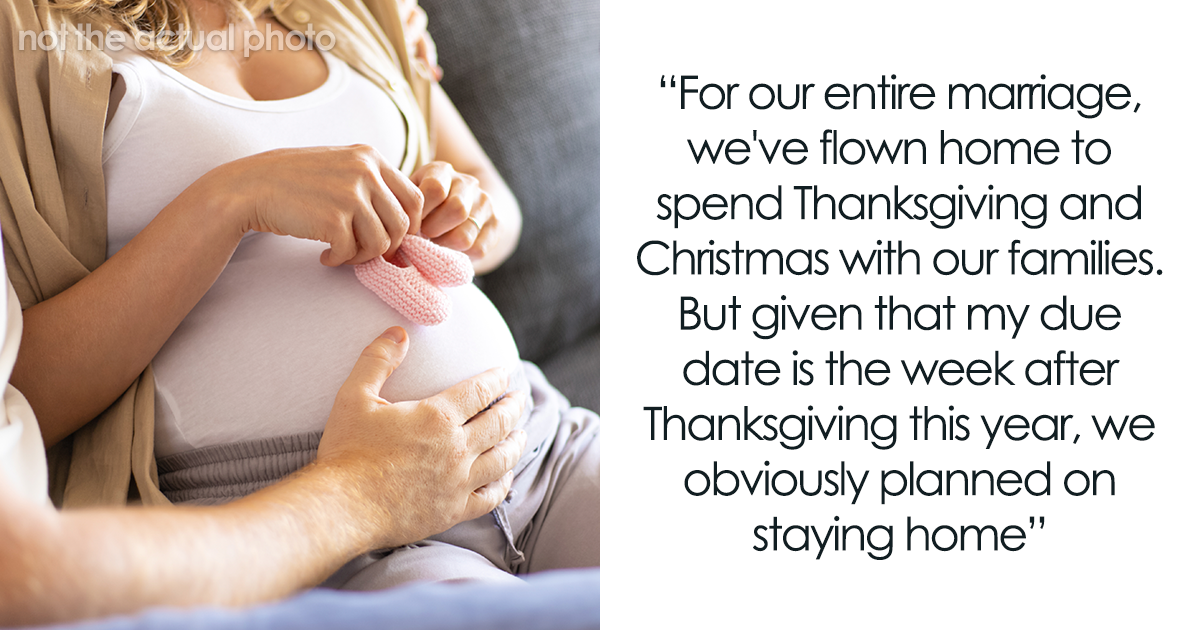
One common experience involves the “holiday ambush.” A couple decides to stay home with their newborn for Thanksgiving or Christmas because the baby is tiny, the parents are exhausted, and traveling feels miserable. A grandmother hears the plan and interprets it as a rejection of family values. Suddenly, a practical decision becomes a moral accusation. The couple is told they are selfish, keeping the baby away, ruining tradition, or choosing “her family” over “his real family.” What started as a scheduling choice becomes a referendum on loyalty. Many couples in this situation say the most painful part is not the disagreement itself. It is the refusal to understand that a new family unit needs room to form.
Another familiar experience is the “boundary stomp disguised as love.” A mother-in-law insists on dropping by whenever she wants because she is “only trying to help.” She posts photos before the parents do. She dismisses feeding, sleep, or safety rules because she raised kids “just fine.” On paper, every action sounds small. In real life, the pattern is exhausting. The parents stop feeling supported and start feeling managed. The wife, especially during pregnancy or postpartum recovery, may begin to dread every interaction. Then the husband is forced to confront a hard truth: if he does not step in, his silence becomes part of the problem.
There is also the experience of the son who was trained to manage his mother’s emotions long before he got married. He learned that saying no caused guilt, tears, or icy silence. As an adult, he may still feel responsible for keeping her calm. That old pattern makes marriage harder. He loves his wife and baby, but every limit with Mom feels like betrayal. These men are not weak by default. Many were simply raised to believe that peace means compliance. The turning point often comes when they realize protecting their household is not cruelty. It is the first genuinely adult thing they have done in the relationship.
And then there is the hopeful experience, which deserves more attention than it gets. Some grandparents are disappointed at first, but they adapt. They ask what the parents need. They wait to be invited. They bring groceries, fold laundry, respect nap schedules, and never make the mother feel like she is auditioning for approval in her own home. Those grandparents usually become the trusted ones. Their access grows because their presence lowers stress instead of raising it. In other words, the path to closeness is not force. It is respect. That lesson may not be flashy enough for the internet, but it is the one that actually saves families.
Conclusion
The phrase “selfish and possessive” lands hard because, in the wrong family dynamic, it is both an insult and a confession. A mother-in-law may call her son selfish for choosing his wife and baby, but what she is really revealing is that she expected a level of emotional priority that no longer fits reality. He is not choosing badly. He is choosing in the right order.
The healthiest version of this story is not one where the mother loses. It is one where she adjusts. She recognizes that her son’s new household is not a threat. She stops competing with his wife. She becomes supportive without becoming controlling. And everyone gets a better chance at peace, connection, and a holiday meal that does not end with someone fake-smiling over mashed potatoes.
In the end, families survive this transition when they trade entitlement for respect. The son grows up. The wife feels protected. The baby gets calm parents. And the grandmother, if she can let go of center stage, may find something better waiting for her: a real relationship built on trust instead of tug-of-war.











