
You wear the same socks before every important meeting. You avoid making plans on Friday the 13th. When someone says, “Everything is going perfectly,” you immediately knock on wood because apparently the universe has excellent hearing and a terrible sense of humor.
Most superstitions are harmless traditions. They can be entertaining, culturally meaningful, or comforting during uncertain moments. The problem begins when a belief starts controlling your decisions, increasing anxiety, wasting time, or convincing you that ordinary actions can magically prevent unrelated disasters.
Learning how to stop being superstitious does not require declaring war on every lucky charm in your home. It means understanding why the belief feels convincing, testing it fairly, reducing ritualistic behavior, and becoming more comfortable with uncertainty. The goal is not to eliminate every irrational thought. Human brains produce those in bulk. The goal is to stop treating every thought as an instruction.
What Does It Mean to Be Superstitious?
A superstition is a belief that an action, object, number, event, or ritual can influence an outcome without a reliable causal connection. Examples include believing that breaking a mirror causes seven years of bad luck, carrying a particular object guarantees success, or thinking that discussing a positive possibility will “jinx” it.
Superstition is different from a practical routine. Reviewing notes before a presentation can improve performance because preparation affects the outcome. Tapping the presentation folder exactly four times probably does not. The first behavior has a logical mechanism. The second creates an illusion of control.
Researchers describe the illusion of control as the tendency to overestimate how much personal behavior influences events that are partly or entirely determined by chance. Superstitious beliefs are associated with a greater tendency to perceive this imaginary control.
Harmless Tradition or Harmful Dependence?
A lucky bracelet is not automatically a problem. Ask what happens when you cannot use it. If you shrug and continue your day, it is probably a harmless preference. If you panic, cancel plans, repeatedly seek reassurance, or feel responsible for preventing catastrophe, the behavior deserves closer attention.
The key question is not, “Is this belief unusual?” It is, “How much power does this belief have over my life?”
Why Superstitions Feel So Convincing
Your Brain Is a Pattern-Finding Machine
The human brain constantly searches for patterns. This ability helps us predict danger, learn from experience, and understand cause and effect. Unfortunately, the brain sometimes connects events that merely happened near each other.
Suppose you wear a blue shirt to an interview and receive a job offer. The shirt becomes “lucky.” You may ignore the more realistic causes: relevant experience, preparation, a strong résumé, or the interviewer’s urgent need to fill the position. The shirt receives an impressive promotion despite contributing almost nothing.
Studies have shown that a reduced sense of control can increase illusory pattern perception, including the tendency to see meaningful connections among unrelated events. Researchers also use the term “illusion of causality” for beliefs that one event caused another when no dependable causal relationship exists.
Uncertainty Makes Rituals More Attractive
Superstitions often become stronger before exams, medical appointments, competitions, flights, financial decisions, or important conversations. These situations share two ingredients: the outcome matters, and you cannot completely control it.
A ritual offers a temporary feeling of influence. That emotional relief can make the ritual seem useful even when it has no effect on the outcome. Research involving sports, academic performance, and other high-pressure situations has repeatedly linked uncertainty and perceived difficulty with increased ritualistic or superstitious behavior.
Confirmation Bias Protects the Belief
Confirmation bias encourages you to notice evidence that supports a belief and overlook evidence that challenges it. You remember the three occasions when your “lucky” routine preceded success. You forget the twelve occasions when you performed the same routine and experienced an average or disappointing result.
Superstitions are especially difficult to disprove because believers can reinterpret almost any outcome. If the ritual works, it receives the credit. If it fails, perhaps it was performed incorrectly, the charm had “lost its energy,” or another unlucky event interfered. The belief creates its own customer-service department and rejects every refund request.
Relief Reinforces the Ritual
Imagine that you feel anxious after seeing a black cat. You perform a protective ritual, and several minutes later your anxiety decreases. Your brain may conclude that the ritual prevented danger. In reality, anxiety naturally rises and falls, but the ritual receives the credit.
This creates a repeating cycle:
- A trigger produces a frightening prediction.
- Anxiety or uncertainty increases.
- You perform a ritual or avoid something.
- Anxiety temporarily decreases.
- The brain becomes more likely to demand the ritual next time.
Breaking superstition usually requires interrupting this cycle rather than endlessly debating whether the feared event is technically possible.
How to Stop Being Superstitious Step by Step
1. Identify the Exact Rule You Are Following
Vague fears are difficult to examine. Write the superstition as a clear prediction:
- “If I do not wear this bracelet, I will perform badly.”
- “If I mention a positive outcome, I will jinx it.”
- “If I begin something on the 13th, it will fail.”
- “If I do not repeat this phrase, someone may be harmed.”
Then identify the ritual, avoidance behavior, or reassurance habit that follows. Naming the rule turns an invisible fear into a claim that can be evaluated.
2. Separate Possibility From Probability
Superstitious thinking often relies on a misleading argument: “You cannot prove that nothing bad will happen.” That statement is true but useless. You also cannot prove that a goose will not steal your wallet next Tuesday. Possibility alone is not evidence.
Ask better questions:
- What reliable evidence supports the claimed connection?
- Is there a plausible mechanism?
- How often have I ignored the rule without consequences?
- Would I accept this reasoning from another person?
- What ordinary explanation fits the facts better?
3. Keep a Prediction Log
Create four columns labeled “Trigger,” “Prediction,” “What I Did,” and “Actual Outcome.” Record both confirming and disconfirming results.
For example, you might predict that skipping a morning ritual will ruin your day. Skip it, continue with your normal activities, and record what actually happens. Perhaps you encounter traffic, spill coffee, and receive a pleasant message from a friend. That is not a cursed day. That is simply Tuesday.
A written record prevents memory from selecting only dramatic coincidences. Continue for several weeks so you can evaluate a pattern rather than a single event.
4. Delay the Ritual
If immediately stopping feels overwhelming, begin by delaying the behavior. Wait five minutes before knocking on wood, checking a lucky number, repeating a phrase, or requesting reassurance. Later, extend the delay to 15 minutes, an hour, and eventually the rest of the day.
During the delay, observe the anxiety without trying to force it away. Notice where you feel it physically. Describe it as a temporary experience: “My mind is producing a danger prediction, and my body is reacting to it.”
The purpose is to discover that anxiety can decrease without completing the ritual.
5. Conduct Small Behavioral Experiments
Behavioral experiments are more persuasive than arguments because they provide direct experience. Begin with a superstition that causes mild discomfort rather than your most frightening belief.
You could wear different socks during a routine task, leave the “lucky” pen at home, say a harmless positive statement without knocking on wood, or choose a hotel room containing a disliked number. Predict what will happen, rate your anxiety from zero to 10, and observe the outcome.
Gradually confronting feared situations while resisting protective rituals resembles principles used in exposure-based cognitive behavioral therapy. Exposure is generally most effective when it is planned, repeated, and increased in manageable steps rather than attempted as a dramatic one-time challenge.
6. Stop Using Safety Behaviors Secretly
A behavioral experiment cannot teach you much if you quietly preserve five backup rituals. Someone may leave a lucky charm at home but carry its photograph, repeat a protective sentence, and ask a friend to promise that everything will be fine.
These safety behaviors allow the superstition to claim credit when nothing bad happens. Reduce them gradually and honestly. The goal is not to feel perfectly safe before acting. It is to act without requiring an imaginary guarantee.
7. Replace Magical Control With Practical Control
Superstitions become less attractive when you focus on actions that genuinely affect outcomes.
Before an exam, study in focused sessions, sleep adequately, and prepare your materials. Before a job interview, research the company and practice answering questions. Before a trip, check the weather, confirm reservations, and arrive on time. You may still feel uncertain, but you are investing energy in variables that matter.
Ask, “What is one useful action I can take?” This shifts attention from magical control to personal responsibility without pretending that every outcome is controllable.
8. Practice Uncertainty Statements
Superstitious thinking frequently demands certainty: “Promise me this action cannot cause anything bad.” Unfortunately, absolute certainty is unavailable in ordinary life.
Practice balanced responses instead:
- “I cannot know exactly what will happen, and I can handle that uncertainty.”
- “A frightening thought is not a prediction.”
- “Coincidence does not prove causation.”
- “I am choosing evidence over ritual.”
- “I can feel uncomfortable without obeying the feeling.”
These statements should not become new magic phrases that must be repeated perfectly. Use them as reminders, then return your attention to normal life.
9. Reduce Reassurance Seeking
Repeatedly asking others whether something is safe can function like a ritual. Reassurance brings short-term relief, but doubt soon returns with a new question.
Tell trusted people what you are changing. Ask them to support your progress without participating in repeated certainty-seeking. A useful response might be, “We have already discussed this. I know you are uncomfortable, but I believe you can tolerate the uncertainty.”
10. Lower Your General Stress Level
Because superstition often intensifies when people feel stressed or powerless, basic stress management can make the beliefs easier to challenge. Maintain regular sleep, eat consistently, exercise, reduce excessive caffeine, and avoid spending hours consuming alarming content.
Relaxation should support your ability to face uncertainty, not become another required ritual. There is an important difference between taking a normal walk because it helps you decompress and believing that the walk must contain exactly 2,222 steps or disaster will strike.
A Seven-Day Superstition Reset
Day 1: Observe
List your superstitions, triggers, rituals, avoided situations, and reassurance habits. Do not change anything yet. Simply collect accurate information.
Day 2: Choose One Target
Select a mild or moderate superstition. Define the feared prediction and rate the expected anxiety from zero to 10.
Day 3: Delay
Postpone the ritual for at least 10 minutes. Observe anxiety without arguing with it or trying to cancel the thought.
Day 4: Test
Skip or modify the ritual once. Record your prediction, discomfort level, and actual outcome.
Day 5: Repeat
Perform the same experiment again. Repetition matters because one successful test can be dismissed as luck.
Day 6: Remove a Backup Behavior
Identify one hidden safety behavior, such as reassurance seeking or carrying a substitute charm, and leave it out of the experiment.
Day 7: Review the Evidence
Compare your predictions with what happened. Choose the next small experiment and continue practicing. Seven days may begin the process, but lasting change usually comes from repeated practice.
When Superstitious Thinking May Require Professional Help
Occasional superstition is common. Professional support may be appropriate when beliefs or rituals consume substantial time, create severe distress, interfere with work or relationships, restrict travel, cause financial harm, or make you feel responsible for preventing unrelated tragedies.
Some forms of obsessive-compulsive disorder involve magical thinking, intrusive fears, mental rituals, counting, repeating, checking, or the belief that thoughts can cause events. This does not mean every superstitious person has OCD. It means that intense, repetitive, unwanted rituals should not be dismissed as a quirky habit.
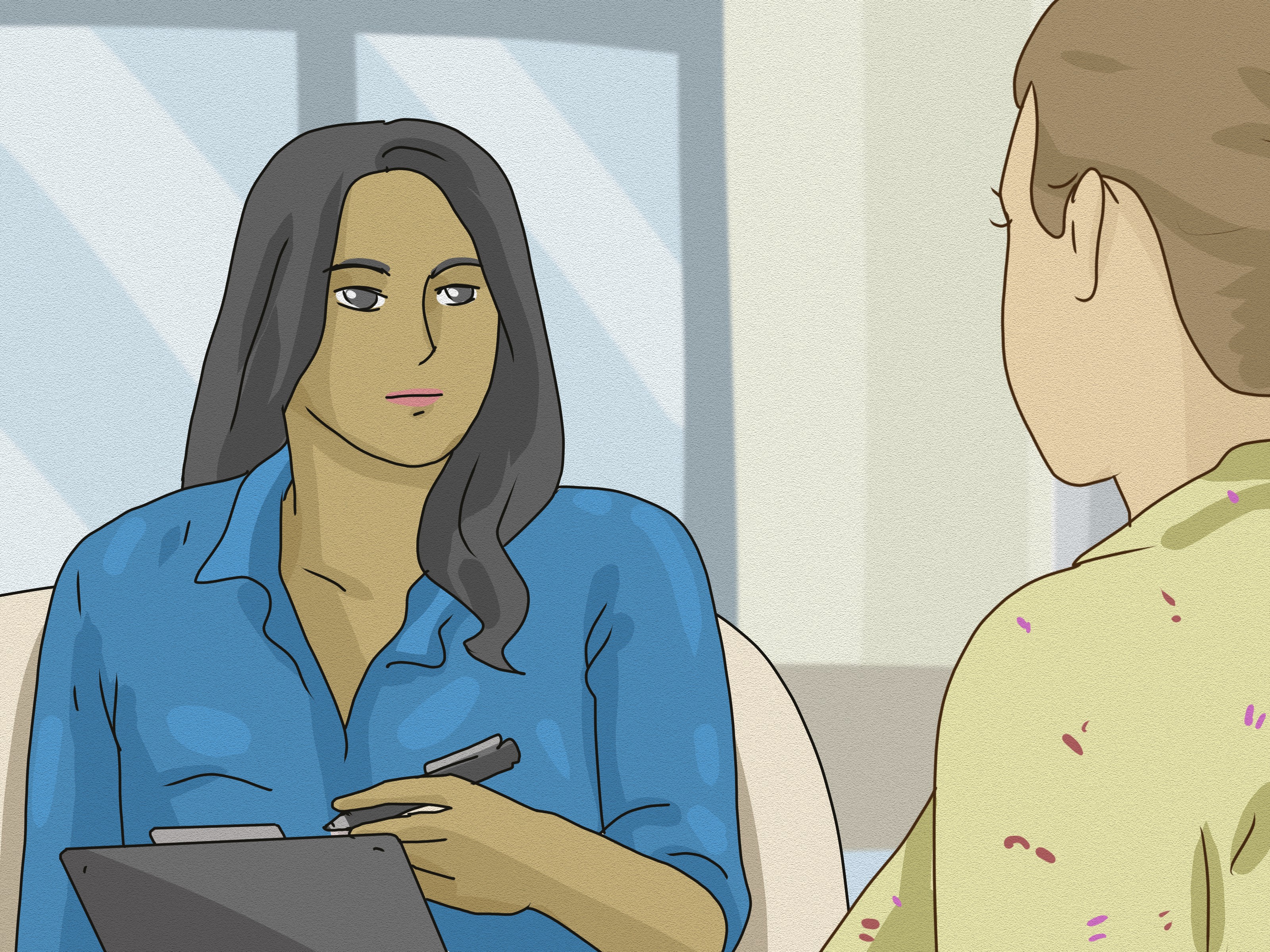
Cognitive behavioral therapy can help people examine unhelpful beliefs and change avoidance patterns. Exposure and response prevention, a specialized form of CBT, involves safely approaching triggers while resisting the usual compulsion. NIMH and the International OCD Foundation identify ERP as an evidence-based treatment for reducing compulsive behavior.
Seek a licensed mental health professional familiar with anxiety, OCD, CBT, and ERP when symptoms are severe. Do not conduct extreme exposures by yourself, especially when fears involve health, trauma, dangerous situations, or major life decisions.
Experiences That Illustrate How People Can Overcome Superstition
The following scenarios are realistic composite examples created to illustrate common experiences. They are not presented as the personal experiences of the author.
The “Lucky” Shirt That Was Doing Too Much Work
Marcus believed a particular green shirt helped him perform well in sales presentations. The belief began after he wore it during a meeting that produced a large contract. Over the next year, he reserved the shirt for important presentations. When it was unavailable, he felt distracted and less confident.
His first attempt to challenge the belief was not dramatic. He wore the green shirt to an ordinary internal meeting where nothing important happened. This weakened the idea that the shirt belonged exclusively to successful events. Next, he gave a low-stakes presentation wearing a different shirt. His anxiety reached six out of 10 before the meeting, but the presentation went well.
Marcus eventually recognized that the shirt influenced his confidence because he had assigned meaning to it. He transferred that confidence to a practical routine: rehearsing the opening, checking the technology, and arriving early. He kept the shirt because he liked it, but it returned to its proper job description: clothing.
The Number 13 Experiment
Elena avoided appointments, purchases, and important decisions involving the number 13. She knew the belief was irrational, but knowledge alone did not remove the uneasy feeling. Whenever she avoided the number, relief arrived immediately, reinforcing the habit.
She created a gradual list of experiments. First, she wrote the number 13 on a piece of paper and left it on her desk. Then she set a harmless phone reminder for 1:13 p.m. Later, she chose locker 13 at a gym and scheduled a routine haircut on the 13th day of the month.
Nothing extraordinary happened, but the most valuable lesson was not that every experiment ended pleasantly. One afternoon, she received an annoying work email after completing an exercise. Her mind immediately tried to connect the events. Instead of canceling the experiment, she asked whether irritating emails also arrived on other dates. Of course they did. She learned that overcoming superstition meant accepting normal negative events without turning them into supernatural evidence.
The Fear of Jinxing Good News
Daniel avoided discussing positive possibilities. Before job interviews, medical results, or family plans, he refused to say that things might go well. If someone else expressed optimism, he knocked on wood and mentally repeated a protective phrase.
He began by saying small, nonabsolute statements such as, “I think the meeting could go well.” He then resisted knocking on wood for five minutes. His anxiety rose, and his mind generated vivid warnings. Instead of debating them, he continued preparing dinner.
Over several weeks, Daniel progressed to discussing larger hopes without performing the ritual. Some outcomes were positive, and others were disappointing. That mixture was useful. It showed him that spoken optimism did not control reality in either direction.
The biggest change was not that he became certain nothing bad would happen. He became less interested in obtaining certainty. He could hope for a good result, prepare responsibly, and cope with whatever followed. Superstition lost influence because uncertainty no longer automatically triggered obedience.
Conclusion
Learning how to stop being superstitious is not about becoming a humorless robot who refuses to make a wish on a birthday candle. It is about recognizing when a tradition has turned into a rule and when a comforting habit has become a source of fear.
Start by naming the prediction, recording the evidence, delaying rituals, reducing reassurance, and testing beliefs through small behavioral experiments. Put your effort into practical actions while allowing uncertainty to exist. Each time you resist an unnecessary ritual and continue with your day, you teach your brain that discomfort is temporary and coincidences are not commands.
You do not need perfect certainty to live freely. You only need enough courage to let the black cat cross the sidewalk without appointing it director of your future.
Note: This article provides general educational information and is not a diagnosis or substitute for professional mental health care. Seek qualified support when superstitious thoughts or rituals cause serious distress, consume significant time, or interfere with daily life.












