
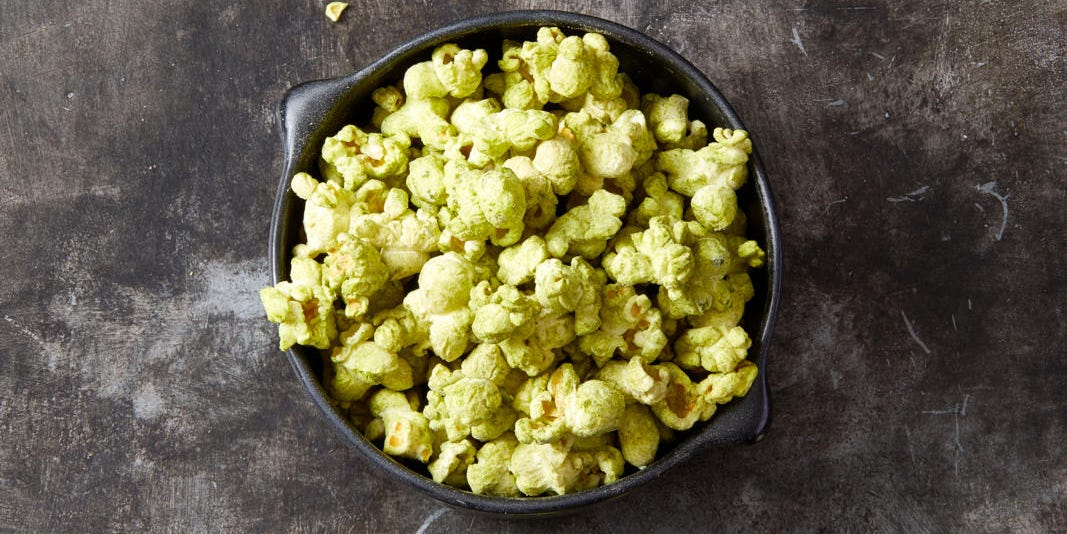
Green matcha popcorn is what happens when movie-night comfort food gets a stylish tea-shop makeover. It is crisp, lightly buttery, gently sweet, pleasantly salty, and vividly green without food coloring. The recipe takes about 15 minutes and requires no candy thermometer or specialty popper.
The secret is not simply dumping matcha over popcorn and hoping for enlightenment. Fine tea powder can clump, taste harsh when overused, and fall to the bottom of the bowl. A sifted matcha-sugar blend, a modest amount of melted butter, and two-stage tossing create an even coating with earthy tea flavor and satisfying crunch.
What Does Matcha Popcorn Taste Like?
Good matcha popcorn tastes grassy, creamy, subtly bittersweet, and pleasantly savory. Matcha has an earthy character that can resemble fresh greens, toasted nuts, or a mild sea breeze, depending on the powder. Confectioners’ sugar rounds off its natural bitterness, while fine sea salt makes the tea flavor seem fuller and less one-dimensional.
This is not supposed to taste like kettle corn wearing a green costume. The sweetness should sit in the background. Popcorn remains the star, matcha supplies the sophisticated plot twist, and salt keeps the whole production from becoming an art film nobody understands.
Green Matcha Popcorn Recipe at a Glance
- Prep time: 5 minutes
- Cook time: 8 to 10 minutes
- Total time: About 15 minutes
- Yield: Approximately 14 to 16 cups
- Servings: 6 snack portions
- Flavor: Sweet, salty, earthy, and lightly buttery
Ingredients for the Best Matcha Popcorn
- 1/2 cup popcorn kernels
- 2 tablespoons refined coconut oil, avocado oil, canola oil, or another neutral high-heat oil
- 2 tablespoons unsalted butter, melted
- 2 teaspoons culinary-grade matcha powder, sifted
- 2 tablespoons confectioners’ sugar
- 1/2 teaspoon fine sea salt, plus more to taste
- 1/4 teaspoon vanilla powder, optional
Why These Ingredients Work
Popcorn kernels: Fresh kernels pop more reliably. Store them tightly sealed in a cool, dry cabinet.
Neutral oil: Refined coconut oil adds faint theater-style richness; canola, avocado, or vegetable oil keeps the flavor neutral.
Melted butter: Added after popping, it supplies flavor and helps the powder cling without risking scorched milk solids in the pot.
Culinary-grade matcha: Ceremonial matcha is unnecessary here. Choose a fresh culinary powder with bright green color and a clean aroma.
Confectioners’ sugar and fine salt: Their small particles distribute evenly, soften bitterness, and adhere better than coarse crystals.
Equipment You Will Need
- A 5- to 6-quart heavy-bottomed pot with a lid
- A large mixing bowl with plenty of tossing room
- A small bowl and fine-mesh sieve
- A heatproof spatula or large spoon
- Oven mitts
How to Make Green Matcha Popcorn
Step 1: Prepare the Matcha Seasoning
Sift the matcha, confectioners’ sugar, fine sea salt, and optional vanilla powder into a small bowl. Whisk until the color is completely even. Do not skip the sifting step. Matcha forms tiny clumps that can deliver unpleasantly bitter bites when they land on the popcorn intact.
Step 2: Heat the Oil
Add the popping oil and three popcorn kernels to a large heavy pot. Cover and place over medium heat. When the test kernels pop, the oil is hot enough. Remove those kernels carefully with a spoon.
Step 3: Pop the Corn
Pour in the remaining kernels and shake the pot gently so they settle into an even layer. Cover the pot. As popping begins, shake it every few seconds to move unpopped kernels toward the hot surface. Keep the lid very slightly vented, while holding it securely, so excess steam can escape without launching popcorn across the kitchen.
When the popping slows to roughly one pop every two or three seconds, remove the pot from the heat. Do not wait for perfect silence; the last stubborn kernels can burn the batch while everyone waits for their big moment.
Step 4: Add Butter in Layers
Immediately transfer the hot popcorn to the large bowl. Drizzle half of the melted butter over it while tossing. Sprinkle on half of the matcha mixture and toss again. Repeat with the remaining butter and seasoning.
This layered method gives more kernels a light coating. Pouring everything onto one spot creates a soggy green neighborhood surrounded by an unseasoned suburb.
Step 5: Cool Briefly and Adjust
Spread the popcorn loosely in the bowl and let it cool for 3 to 5 minutes. Taste, then add another pinch of salt or a light dusting of sugar if needed. Serve while crisp.
Tips for Brighter Color and Better Flavor
Use Fresh Matcha
Air, heat, moisture, and light weaken matcha. Keep it tightly sealed and follow the package’s storage guidance.
Add Matcha After Popping
Direct high heat can dull the color and emphasize bitterness. Season the popcorn in the bowl while it is still warm.
Keep the Coating Light
Too much butter makes popcorn chewy, while too much matcha makes it bitter. Adjust in small increments; matcha is a seasoning, not lawn treatment.
Toss Gently
Use a lift-and-turn motion to coat the popcorn without crushing it. Two bowls also work: transfer the popcorn back and forth as you add the coating.
Easy Matcha Popcorn Variations
White Chocolate
Drizzle with 2 to 3 ounces of melted white chocolate, add a final pinch of matcha, and let the popcorn set on parchment paper.
Coconut
Replace the butter with refined coconut oil and add 1/3 cup toasted unsweetened coconut flakes.
Sesame
Add 1 tablespoon toasted sesame seeds, reduce the sugar to 1 tablespoon, and include a tiny pinch of ground ginger.
Strawberry
Add 1 to 2 tablespoons finely crushed freeze-dried strawberry powder for tart flavor and attractive pink speckles.
Spicy
Mix in a pinch of cayenne or shichimi togarashi for a gentle finish rather than a snack that files a noise complaint against your tongue.
Common Problems and How to Fix Them
The Matcha Falls to the Bottom
Add 1 teaspoon melted butter or neutral oil, toss, and return the fallen seasoning gradually.
The Popcorn Tastes Bitter
Add plain popcorn, then balance the batch with a little sugar and salt. Next time, measure rather than using a heroic spoonful.
The Popcorn Is Soggy
Use less butter, vent steam during popping, and cool the popcorn uncovered before storing it.
Too Many Kernels Stay Unpopped
Preheat with test kernels, avoid overcrowding, use fresh corn, and shake the covered pot periodically.
The Color Looks Dull
Use fresher matcha. For a cleaner green, finish with refined coconut oil and a tiny fresh dusting before serving.
Can You Make Matcha Popcorn Without a Stovetop?
Yes. Air-pop 1/2 cup of kernels according to the appliance instructions, then continue with the butter and seasoning steps. Because air-popped corn begins completely dry, you may need an extra teaspoon or two of melted butter for even coverage.
A microwave popcorn popper also works. Use plain kernels and follow the manufacturer’s directions. Heavily buttered packaged microwave popcorn is less suitable because its existing flavor can overpower the delicate matcha and make the coating greasy.
Serving and Storage
Matcha popcorn is best on the day it is made. Serve it in a wide bowl for movie night, package it in paper snack cups for a party, or use it as a crunchy element on a dessert board with berries, shortbread, and white chocolate.
Before storing, cool the popcorn completely. Transfer it to an airtight container and keep it at room temperature in a dry place for up to two days. Refrigeration is not recommended because condensation can soften the popcorn.
If it loses a little crunch, spread it on a baking sheet and warm it briefly in a low oven. Let it cool before adding a very light dusting of fresh matcha.
Is Matcha Popcorn a Healthy Snack?
Plain popcorn is a whole-grain food, and air-popped or lightly oiled popcorn can be a practical snack. However, the finished nutrition profile depends on how much butter, sugar, salt, chocolate, or other topping is added. This recipe keeps the coating moderate rather than turning every kernel into a tiny frosted cake.
Matcha also contains caffeine, and the amount can vary by product and serving size. Anyone who is sensitive to caffeine, is serving children, or has been advised to limit caffeine should use a smaller amount or choose another flavor. “Green” describes the color, not permission to eat the mixing bowl.
My Experience Making Green Matcha Popcorn: What Actually Matters
The first time I made matcha popcorn, I committed the classic enthusiastic-cook error: I assumed more matcha meant more deliciousness. I sprinkled a generous mound directly over warm popcorn, stirred twice, and admired the dramatic color. The first bite was pleasant. The second was plain. The third tasted as though a lawn mower had become emotionally involved. Most of the powder had collected in a few bitter pockets or fallen to the bottom.
That failed bowl taught me that even distribution matters more than sheer quantity. Sifting the matcha with confectioners’ sugar and fine salt changed everything. The sugar separated the fine tea particles, the salt sharpened the flavor, and the blended powder spread like a proper seasoning instead of behaving like green weather. Two teaspoons gave the batch a recognizable matcha taste without making it medicinal.
The next breakthrough was using butter in stages. When I poured all the melted butter over one side of the bowl, a handful of kernels became rich and slightly damp while the rest remained stubbornly naked. Drizzling half the butter, tossing, adding half the seasoning, and repeating produced a much more even result. It took perhaps 20 extra seconds, which is a fair price for preventing one guest from receiving the entire dairy budget.
I also compared stovetop popcorn with air-popped corn. The air-popped version was very crisp and allowed the matcha to taste clean, but it needed slightly more finishing fat to hold the powder. Stovetop popcorn had a rounder, toastier flavor and was more satisfying on its own. For everyday snacking, I preferred the stovetop batch made with neutral oil and finished with butter. For a dairy-free version, refined coconut oil worked well because it supplied richness without a strong coconut aroma.
Freshness made an obvious difference, too. A newly opened bright-green matcha produced a lively color and a clean vegetal flavor. An older package from the back of the cabinet looked more olive and tasted flatter. It was not necessarily unusable, but it needed extra sugar to seem balanced, and the finished popcorn never had the same fresh appearance. The lesson was simple: save the freshest matcha for recipes where its color and flavor remain exposed.
Cooling and storage were the final test. Packing the popcorn while it was still warm trapped enough steam to soften it by the next morning. Leaving it uncovered for several minutes before sealing preserved the crunch much better. Even then, matcha popcorn was clearly happiest within a few hours of preparation. It can survive until tomorrow, but tonight is its red-carpet appearance.
My favorite serving version ended up being the basic sweet-salty recipe with a small handful of toasted sesame seeds. White chocolate was delicious but moved the snack firmly into dessert territory. Freeze-dried strawberry powder looked beautiful and tasted bright, although it also made the bowl disappear at suspicious speed.
The plain matcha version remained the most versatile: interesting enough for guests, easy enough for a weeknight, and green enough to make ordinary popcorn feel as though it had recently returned from a wellness retreat.
Final Thoughts
The best green matcha popcorn depends on balance. Use fresh matcha, sift it with fine sugar and salt, pop the kernels until crisp, and add the coating in light layers while everything is still warm. Those small decisions prevent bitterness, clumps, sogginess, and the tragic bowl of seasoning left behind after the popcorn is gone.
Once the basic method is mastered, the recipe is easy to personalize with sesame, coconut, strawberry, spice, or white chocolate. Start with the classic version first. It is fast, memorable, naturally colorful, and just unusual enough to make regular movie-night popcorn look like it forgot to dress up.












