
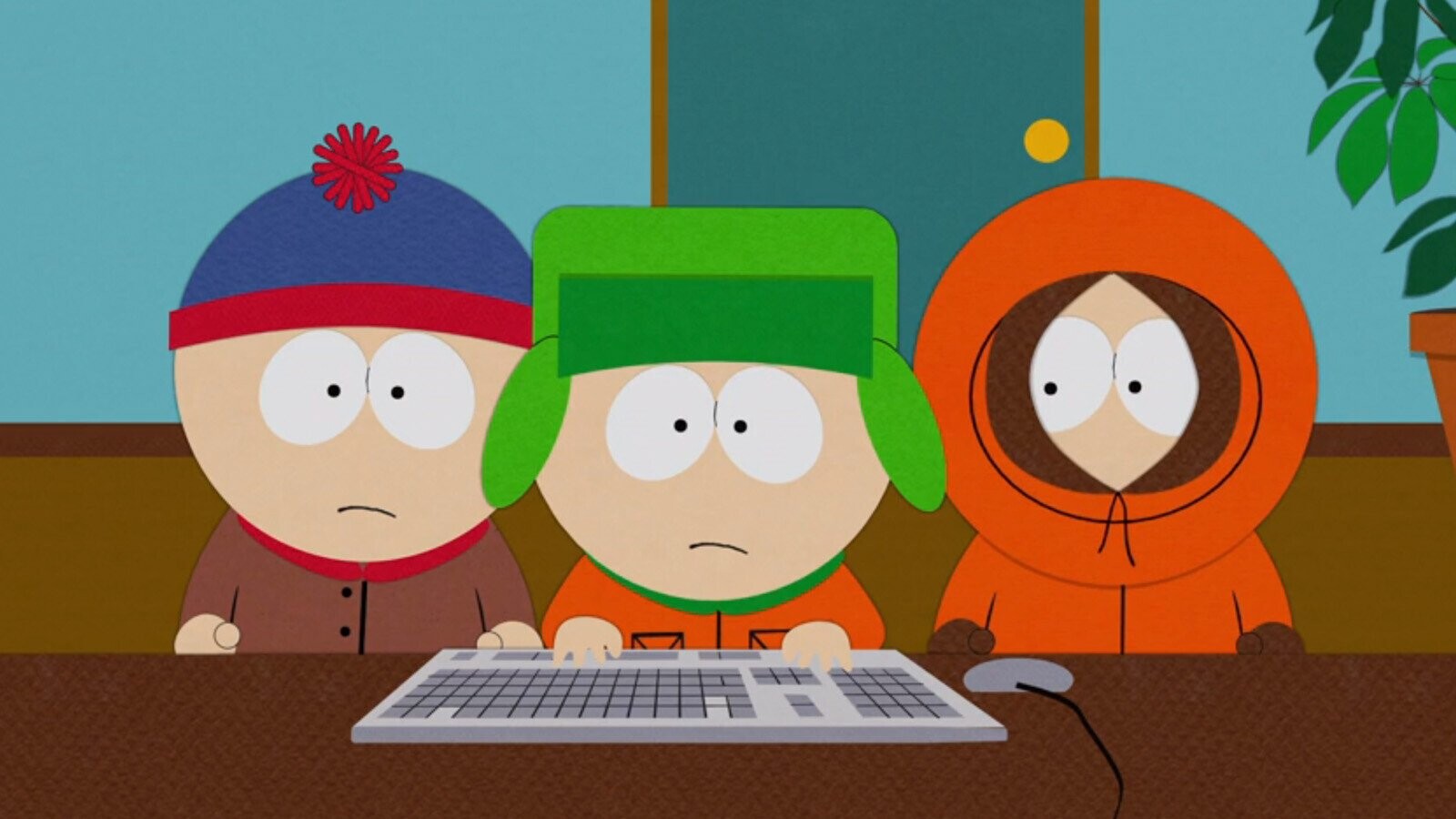
Before streaming wars, password sharing, binge drops, app fatigue, and the great modern ritual of asking, “Wait, which service has that show now?” there was a cruder, stranger, more chaotic digital frontier. In the late 1990s, television was still mostly a scheduled event. You watched what aired, when it aired, on the channel that carried it. If your dorm room, apartment, or small-town cable package did not include Comedy Central, tough luck. The remote control had spoken.
Then South Park arrived like a paper-cutout meteor full of bad words, dead Kennys, and children saying things no adult on network television was braveor foolishenough to say. Almost immediately, fans wanted access. Not later. Not when the rerun aired. Not when a VHS tape came out. They wanted it now, and the internet, still wearing digital training wheels, gave them a way.
That is why South Park online piracy became an unlikely milestone in internet history. Long before BitTorrent became a household word and years before YouTube made video sharing ordinary, fans were already digitizing episodes, uploading clips, and creating unofficial websites where the show could be downloaded or streamed. The files were rough. The process was slow. The legal status was, let’s say, Cartman-level questionable. But the cultural impact was enormous.
South Park was not merely a victim of early TV piracy. It was one of the first major shows to reveal what the internet would do to television: dissolve borders, ignore cable schedules, reward passionate fandom, and make media companies rethink whether fighting fans was smarter than serving them.
The Pre-Streaming Internet Was Weird, Slow, and Surprisingly Powerful
To understand why South Park became one of the first shows to be pirated online, you have to remember what the internet looked like in 1997 and 1998. This was the era of dial-up connections, chunky desktop monitors, “You’ve got mail,” and downloads that could take longer than a family road trip. Watching video online was not smooth, casual, or convenient. It was a commitment. You did not “stream” a show while folding laundry. You waited, clicked, prayed, and maybe made a sandwich while the file crawled toward completion.
Yet fans did it anyway. Why? Because South Park felt different. It was outrageous, quotable, rebellious, and tailor-made for internet culture before internet culture fully had a name. The animation looked simple enough to belong on a fan page. The humor was rude enough to feel like contraband. The characters were instantly recognizable. And every episode created moments people wanted to share.
The show premiered on Comedy Central in August 1997, but Comedy Central was not available in every home, dorm, or cable system. For viewers outside the channel’s reach, the internet became a back door. Fans recorded episodes, compressed them, and posted them online. Early sites such as “Mr. Hat’s Hellhole” and “YouKilledKenny.com” became part of the unofficial South Park internet history, helping spread the show beyond traditional television distribution.
From “The Spirit of Christmas” to a Viral TV Phenomenon
The online story of South Park did not begin with full episodes. It began with a short film: The Spirit of Christmas. Created by Trey Parker and Matt Stone, the short circulated in Hollywood and then across the internet in the mid-1990s. It was one of those rare pieces of media that felt like a secret everyone wanted to pass along. Before people said “viral video” every eleven seconds, The Spirit of Christmas was doing the job manually, one shared file and forwarded recommendation at a time.
That short helped build the mythology around South Park. It proved that Parker and Stone’s crude animation and sharper-than-a-rusty-sled sense of humor could travel through digital channels without a major marketing machine pushing it. By the time the series premiered, an online audience already existed. These viewers were not passive couch potatoes. They were collectors, sharers, uploaders, forum posters, and fan-site builders.
In other words, South Park did not simply become popular on television and then leak onto the web. Its DNA was already connected to internet sharing. The show’s rise showed how online fandom could act like an engine, even when that engine was built from questionable downloads, homemade pages, and enough compression artifacts to make Cartman look like he was made of mashed potatoes.
Why Fans Pirated South Park So Early
Early TV show piracy was not always about avoiding payment. In many cases, it was about access. Cable television was fragmented. International distribution was slow. Reruns were unpredictable. Physical media was delayed. If someone missed an episode, there was no official app waiting patiently with a “continue watching” button.
South Park created the perfect storm. It had young fans who were comfortable online. It aired on a cable channel not everyone received. It generated must-see controversy. And it moved quickly through pop culture. If you had not seen the latest episode, you could be left out of the joke by lunchtime the next day.
Fans also treated the show like a digital collectible. Episodes, clips, quotes, sounds, images, desktop icons, fan games, and scripts spread through unofficial sites. The early internet turned South Park into more than a television show. It became a participatory playground. Some of that participation was legal fan enthusiasm. Some of it was copyright infringement wearing a tiny orange parka.
Comedy Central’s Dilemma: Shut It Down or Ride the Wave?
For Comedy Central, early online sharing created a difficult problem. On one hand, unauthorized distribution threatened control over the show. Networks depended on ratings, advertising, syndication, home video, and licensing. Letting fans casually distribute episodes online could look like allowing the value of the show to leak away through a 56k modem.
On the other hand, the internet was clearly helping South Park grow. Viewers who could not access Comedy Central discovered the show through downloads and webcasts. Fans who loved the series promoted it for free. The online buzz made South Park feel like an underground phenomenon even as it became a mainstream hit.
This tension would define the next decade of entertainment. Media companies wanted to protect their content, but audiences wanted convenience. The old model said, “Watch when and where we tell you.” The internet replied, “Respectfully, no.” South Park became an early case study in that clash.
Why South Park Was Built for the Internet
Some shows become popular online because fans drag them there. South Park felt like it had been waiting for the web all along. Its animation was visually simple, which made it easy to recognize even in low-resolution files. Its dialogue was packed with catchphrases. Its episodes reacted to current events faster than most television comedies. Its characters were easy to turn into icons, memes, avatars, and jokes.
The show’s production style also mattered. Parker and Stone became famous for making episodes close to airdate, allowing South Park to comment on news while the news was still hot. That speed matched the rhythm of the internet. A South Park episode could feel like a comedy grenade tossed into the week’s biggest argument.
This made fans impatient. They did not want to wait months for official distribution. They wanted the episode while the conversation was still alive. In that sense, South Park digital distribution was not just a business issue. It was a cultural necessity. The show’s topical nature made delayed access feel especially outdated.
The 2008 South Park Studios Move Changed the Conversation
In 2008, Parker, Stone, Comedy Central, and Viacom made a decision that looks smarter with every passing year: they relaunched SouthParkStudios.com with free, ad-supported full episodes. At the time, this was a bold move. Many media companies were still treating online video as either a threat, a side project, or a place to dump short promotional clips. South Park went further by offering a large official library directly to viewers.
The logic was simple and surprisingly modern: if fans are already searching for episodes online, give them a legal, convenient place to watch. Instead of pushing viewers toward piracy by making access difficult, create an official alternative that keeps the audience close and creates advertising revenue.
This was not charity. It was strategy. Free streaming helped reduce friction, preserve fan goodwill, and turn unauthorized demand into a business model. The show that had been widely bootlegged in the late 1990s became one of the clearest examples of how legal streaming could compete with piracy by being easier, safer, and better.
What Other TV Shows Learned From the South Park Example
The lesson was not that piracy is good. Piracy can hurt creators, workers, distributors, and smaller productions that do not have a global fan base or powerful corporate partners. But South Park showed that piracy often reveals unmet demand. When audiences repeatedly break rules to access something, the question for media companies should not only be, “How do we punish them?” It should also be, “Why is the legal option worse?”
That lesson shaped the streaming era. Netflix, Hulu, HBO Max, Paramount+, Disney+, Peacock, and other platforms all grew from the recognition that audiences wanted on-demand access. Viewers liked control. They liked libraries. They liked watching late at night, on laptops, in dorms, on phones, and eventually on every glowing rectangle within reach.
South Park was early proof that online distribution was not a gimmick. It was the future kicking down the door, wiping its boots on the carpet, and asking where the snacks were.
The Irony: South Park Later Became Streaming Gold
The funniest part of this story is that a show once passed around through bootleg websites eventually became one of the most valuable streaming properties in television. As the streaming market matured, South Park became a prize. Its huge episode library, loyal audience, brand recognition, and continuing production made it extremely attractive to platforms fighting for subscribers.
That journeyfrom early online piracy to major streaming dealscaptures the entire evolution of digital entertainment. In the beginning, networks worried that internet distribution would drain value. Over time, they realized that digital rights could become the value. The same audience behavior that once looked like a threat became the foundation of billion-dollar negotiations.
South Park did not just survive the internet. It helped teach television how to live there.
How Online Piracy Helped Expose the Future of Fandom
The early piracy of South Park also revealed something important about fandom: people do not simply consume shows. They build communities around them. Fan sites were not only places to find episodes. They were gathering spots for jokes, arguments, artwork, games, episode guides, quotes, and rumors. They gave viewers a sense of belonging.
Modern entertainment companies now spend enormous energy trying to create that kind of engagement. They hire social teams, build official accounts, create digital extras, release clips, encourage fan art, and design campaigns around shareability. But South Park fans were doing a primitive version of that in the 1990s with homemade websites and stubborn enthusiasm.
The internet made television feel less temporary. An episode no longer vanished after broadcast. It could be archived, replayed, quoted, clipped, and debated. That changed expectations forever. Today, viewers assume media should be searchable and available. In 1998, that idea was radical enough to make network lawyers sweat through their suits.
Was Piracy Responsible for South Park Becoming a Hit?
It would be too simple to say piracy made South Park successful. The show became a hit because it was original, shocking, funny, and perfectly timed for a generation tired of polished sitcom formulas. Comedy Central’s support mattered. Parker and Stone’s voice mattered. The controversy mattered. The writing mattered. The fact that Kenny could die every week and still show up again like a tiny hooded insurance scam also mattered.
But online sharing amplified the show. It helped spread awareness beyond standard cable distribution. It gave fans a way to participate. It made South Park feel like a cultural event that belonged to the audience as much as the network.
That is the real significance. Piracy did not create South Park, but it highlighted the mismatch between audience behavior and traditional television distribution. Fans were already living in the future. The business model was still looking for the instruction manual.
The Bigger Media Lesson: Convenience Beats Control
The history of South Park streaming proves a lesson that media companies keep learning, forgetting, and learning again: convenience is powerful. When legal access is easy, affordable, and reliable, many viewers choose it. When legal access is confusing, delayed, region-locked, or scattered across too many platforms, piracy becomes more tempting.
This is why the early South Park story still matters. It is not just nostalgia for fan sites with neon fonts and questionable file names. It is a reminder that audiences usually move faster than institutions. Fans wanted online television before television was ready to be online.
The smartest companies eventually stopped asking how to force the internet back into the bottle. They started asking how to build a better bottle. Preferably one that did not buffer for forty-seven minutes.
500-Word Experience Section: Watching the Internet Grow Up With South Park
Thinking about South Park as one of the first shows to be pirated online feels like opening an old digital time capsule and getting hit in the face with dial-up noise. The whole story captures a very specific internet experience: messy, impatient, creative, slightly illegal, and weirdly communal. It was not polished. It was not user-friendly. But it felt alive.
For many early internet users, finding a South Park clip or episode online was less like opening a streaming app and more like joining a scavenger hunt. You might hear from a friend that a site had the latest episode. You might visit a fan page with a black background, red text, animated GIFs, and a download link that looked like it had been designed during a sugar crash. You clicked, waited, and hoped the file worked. Sometimes it did. Sometimes your computer responded with the digital equivalent of, “Respect my authority? Absolutely not.”
That experience created a different relationship with media. Today, abundance is normal. A viewer can complain because a show takes three seconds to load. In the late 1990s, getting a full video file at all felt like discovering buried treasure. The picture might be tiny. The sound might be crunchy. The download might fail at 91 percent, causing emotional damage still not covered by insurance. But when it worked, it felt magical.
South Park fit that world because it felt homemade even when it was professionally produced. The cutout style made fans feel like the show belonged on the internet. It was rude, fast, and anti-authority. It did not seem like a distant Hollywood product. It seemed like something a brilliant, badly behaved friend might have made in a basement after drinking too much soda.
The fan experience also showed how powerful shared jokes can be. People did not only want to watch South Park; they wanted to quote it, remix it, argue about it, and pass it along. The internet rewarded that behavior. A catchphrase could travel from a cable episode to a dorm hallway to a message board to an email chain in record time. For a show built on shock and repetition, that was rocket fuel.
Looking back, the early piracy around South Park feels like a rough draft of modern streaming culture. It showed that audiences wanted access across geography, time, and device. It showed that fans would do technical backflips to watch something they loved. It showed that distribution was no longer just a business pipeline; it was part of the audience experience.
There is also a strange charm in how imperfect it all was. Today’s platforms are sleek but fragmented. Yesterday’s fan web was clumsy but passionate. The old system was legally messy and technically painful, but it came from enthusiasm. People wanted to share a show that made them laugh so hard they had to tell someone else immediately. That impulse still drives entertainment online, whether through memes, clips, reaction videos, or group chats.
So when we say South Park was one of the first shows to be pirated online, we are not just talking about copyright infringement. We are talking about the moment television discovered that viewers had found a new remote controland it was connected to the entire world.
Conclusion
South Park holds a strange, important place in the history of online television. It was born from viral sharing, boosted by fan enthusiasm, challenged by piracy, and later transformed into a streaming powerhouse. In the late 1990s, unauthorized downloads and webcasts showed that audiences were ready for on-demand access long before the entertainment industry was ready to provide it.
The show’s journey from bootleg files to official free streaming to high-value platform deals is more than a quirky media footnote. It is a blueprint for the digital entertainment age. South Park proved that the internet could be a threat, a promotional machine, a fan community, and a distribution platform all at once. Not bad for a cartoon where a kid in an orange parka kept dying for our sinsand our punchlines.











