
Tour life is a beautiful kind of chaos: hotel keys that demagnetize at the worst possible moment, bus air that smells vaguely like coffee and guitar strings, and a daily schedule built entirely out of adrenaline. Then the tour ends. You come home. And suddenly your nervous system realizes it has been holding a very long note.
That’s where the Los Angeles bungalow shines. It’s not a mansion flex. It’s not a sterile glass box that echoes every thought you’ve ever had. It’s a scaled-down, human-sized home baseporch-first, light-friendly, and surprisingly good at absorbing the “I’ve been perceived by thousands of strangers” energy. Renovate it right, and you get something rare: a place that feels calm enough to recover, but sharp enough to still feel like you.
Why an LA bungalow makes the perfect off-tour home base
In LA, bungalows (especially Craftsman-era and midcentury versions) often sit on walkable streets with mature trees and a rhythm that feels slower than the freeway. The footprint is usually compact, which is great news for a musician who wants a home that’s easy to runless “estate management,” more “make a coffee, tune a guitar, exhale.”
What the bungalow naturally does well
- Porch culture: A covered front porch is basically a built-in decompression chambergood for morning light, late-night journaling, and talking to neighbors like a normal Earth person.
- Warm materials: Wood trim, built-ins, and honest textures feel grounding after months of stage lights and black box venues.
- Light + flow: Bungalows often have generous windows and a layout that can be opened up without losing character.
- Indoor-outdoor living: Even a small yard or patio becomes an extension of the studiowriting outside is a classic LA move for a reason.
Preserve the soul, upgrade the systems (so the house doesn’t behave like it’s still in 1937)
The best renovations don’t treat an old bungalow like a blank file. They treat it like a classic record: clean it, restore it, and upgrade the equipment so it plays beautifullywithout removing the crackle that makes it human.
Start with the “unsexy” essentials
- Seismic basics: Many older LA homes benefit from foundation bolting and bracing short “cripple walls” in crawl spaces. It’s not glamorous, but it’s the kind of upgrade you only notice when it saves you. Think of it as the drummer of renovations: not always in the spotlight, always keeping the whole thing together.
- Electrical + lighting: Musicians bring gear. Gear needs clean, safe powerdedicated circuits where appropriate, modern panels, and lighting plans that don’t make your home feel like a dentist office.
- Ventilation + indoor air quality: Tightening a house is gooduntil it traps moisture, odors, and that one takeout smell that refuses to leave. Modern ventilation and proper exhaust in kitchens and baths matter more than most people realize.
- Heating/cooling updates: LA is mild until it isn’t. Efficient HVAC (often heat pumps now) can make a small home feel consistently comfortableespecially when you’re trying to sleep after crossing time zones.
Also: codes evolve. In California, energy standards are updated regularly, and the rules tied to permits can change what’s smart to install (and how). If you’re doing a real renovation, it’s worth designing with today’s expectationscomfort, efficiency, and “future you” gratitude.
The “rockstar edge” formula: clean lines, bold contrast, and one or two perfectly unreasonable details
Rockstar edge isn’t about turning your bungalow into a backstage lounge with neon signs that say “VIBES.” It’s a balancing act: calm surfaces for recovery, plus a few choices that feel unmistakably yours.
Case study: the black-and-white reset (with a wink)
In one widely shared LA bungalow renovation for a touring musician, the design direction was “modern and clean” with a rockstar bite: a mostly black-and-white palette, bright walls and ceilings, and high-contrast hardware that reads crisp without feeling cold. The kitchen overhaul did what good tours do: removed the unnecessary drama and made everything run smoother.
- High-contrast palette: White walls/ceilings + black accents feels graphic and freshlike a new setlist with an old favorite in the encore.
- Warm counterpoints: Walnut shelving, wood backing, or vintage pieces keep the space from feeling like a glossy showroom.
- One “signature” moment: A bold tile, a record wall, a sculptural light, a bar nooksomething that quietly says, “Yes, someone interesting lives here.”
The kitchen: the real tour rider (coffee, midnight snacks, and “I wrote a chorus while the pasta boiled”)
Touring trains you to appreciate a functional kitchen like it’s a miracle. At home, the kitchen becomes the control room of daily life: fast meals between sessions, hydration that isn’t served in a plastic cup, and a place where friends can hang without hovering over your laptop.
Renovation moves that actually change the way you live
- Open the choke points: Removing or reworking a wall to connect kitchen and dining makes the home feel bigger and more socialespecially in smaller bungalows.
- Two-tone counters, smart surfaces: Durable stone where you work hard, and something lighter where you want it to feel special (like an island that doubles as a lyric-editing station).
- Lighting that layers: Bright task lighting for cooking, softer ambient lighting for winding down, and a statement fixture because you deserve nice things.
- A “listening perch”: Stools at the island aren’t just for eatingthey’re for friends who show up, hear a demo, and say “play that part again.”
Another musician’s bungalow renovation famously solved a storage problem the way musicians love to solve problems: by turning it into a feature. Built-ins created a proper vinyl libraryrecords off the floor, on the wall, and finally living their best life.
Bedrooms and baths: recovery spaces that still feel like you
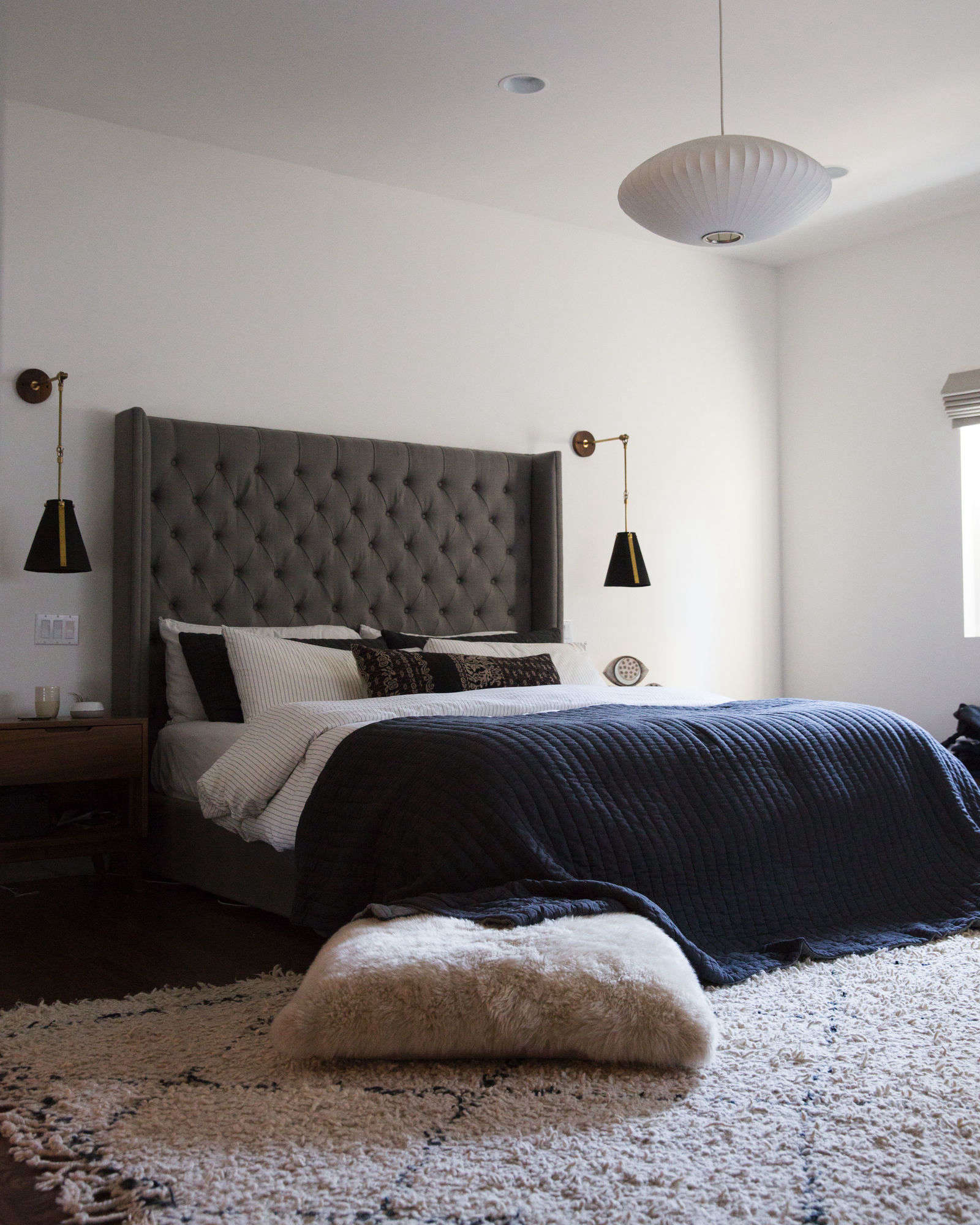
If the kitchen is the control room, the bedroom is the green roomexcept it should actually be restful. After tour, sleep is sacred. Your bedroom doesn’t need to be minimal; it needs to be quiet (visually and acoustically), easy to maintain, and genuinely comfortable.
Design details that help your brain power down
- Soft edges: Textiles, rugs, and upholstery that absorb sound and soften the space.
- Warm woods: Built-in storage, plywood cladding, or wood nightstands create a calm, grounded feeleven in modern schemes.
- Bathrooms that don’t fight you: Good ventilation, durable tile, and lighting that doesn’t make you look like you’re being interrogated.
Some standout LA bungalow makeovers lean into simple materials used boldlylike honey-toned plywood applied across walls and built-ins, creating warmth while keeping the lines clean. It’s practical, modern, and weirdly comforting (in the best way).
Create a musician-friendly zone: studio, listening nook, and “please don’t text me, I’m in flow” boundaries
A musician off-tour usually needs two things that sound contradictory: quiet and sound. The trick is designing zones that support both.
Soundproofing vs. acoustic treatment (the difference that saves friendships)
Soundproofing is about stopping sound from traveling to (or from) neighbors. Acoustic treatment is about improving how sound behaves inside your roomclarity, reflections, and mix accuracy. If you mix them up, you’ll spend money and still hear your neighbor’s blender soloing over your chorus.
Studio options that work in bungalow reality
- Bedroom-to-studio conversion: Best when you need a quiet, controlled environment for mixing and writinguse treatment at reflection points, add bass trapping, and keep symmetry in mind.
- Garage upgrade: Great for louder work, but it may require serious attention to insulation, doors, ventilation, and permits. (Garages love to be hot in summer, cold in winter, and dusty always.)
- Backyard studio shed: A popular LA move: a dedicated, separate creative zone. Some creators convert prefabricated sheds into studios with proper sound isolation and interior finishesalways check local rules before assuming what’s permit-exempt.
One LA renovation story even involved turning a backyard shed into a small recording studio. The owners described sound isolation work (including heavy sound-blocking layers) as physically brutalmuch harder than expectedyet deeply satisfying once finished. The takeaway: if you’re building isolation into a small structure, budget time, muscle, and maybe a relationship spa day afterward.
Listening nook ideas (for when you’re not “working,” you’re “researching”)
- Vinyl wall + built-in bench: Storage + seating + vibe in one move.
- Window seat with shelves: Natural light, a stack of records/books, and a place to audition new ideas without booting up the whole rig.
- Bar nook: Not for partyingmostly for the ritual of making a drink, playing a demo, and pretending you’re not emotionally attached to it.
Outdoor space: the secret third studio
LA creativity is often solar-powered. A patio or small yard can function as a writing room, a coffee room, and a “my ears need a break” room. It also helps a bungalow feel bigger without adding square footage.
Privacy + low-water landscaping (because LA is not a rainforest)
- Create enclosure: A taller fence, layered planting, or a simple privacy wall can make a small yard feel like a retreat.
- Use hardscape intentionally: Pavers or gravel paths define zonesdining, lounging, quiet readingwithout demanding constant maintenance.
- Water smarter: Drip irrigation for shrubs and trees, leak checks, and weather-based controllers reduce waste and keep plants healthier.
- Mulch like a pro: It helps hold moisture and cuts evaporationan easy upgrade with outsized impact.
In at least one notable LA bungalow renovation, the exterior got the same attention as the interiornew pavers, refreshed pool finishes, and privacy upgrades that made the yard feel like a calm, private reset button.
Budget and timeline: where to splurge, where to DIY, and where to stop being brave
Renovations are basically albums: you can record them in your bedroom, or you can book a studio, or you can do the dangerous hybrid where you think you’ll be “chill” and then you’re suddenly debating grout lines at 11:47 p.m.
Worth the splurge
- Mechanical systems: HVAC, electrical, plumbingthese are the things you feel every day.
- Windows/doors (where needed): Comfort and noise control go way up when the building envelope improves.
- Acoustic fundamentals: If you create or mix at home, proper treatment beats fancy gear more often than people want to admit.
Good DIY candidates (if you’re patient and not currently on a deadline)
- Paint: Big transformation, relatively low cost.
- Simple built-ins: A record wall, shelving, or a bench can be life-changing storage.
- Garden refresh: Clearing, mulching, drip adjustments, and planting can be staged over time.
And yes, permits matterespecially when you touch structure, plumbing, or electrical. The best “rockstar edge” is the kind that doesn’t come with a future headache when you sell, insure, or refinance.
Mistakes to avoid (so your bungalow doesn’t become a very expensive stress hobby)
- Turning everything white without adding warmth: Contrast and texture keep “clean” from becoming “clinical.”
- Ignoring acoustics: Hard surfaces can make a beautiful room sound like a bathroom. Balance with rugs, drapery, bookshelves, and panels where needed.
- Over-opening the plan: Some separation is goodespecially when you need a quiet place to write, sleep, or hide from your own notifications.
- Forgetting storage: Cables, pedals, cases, recordsdesign storage early so you’re not living in a pile of “future organization.”
- Skipping outdoor comfort: Shade, seating, and privacy are what make the yard usable, not just photographable.
Conclusion
A renovated LA bungalow with rockstar edge works because it respects both halves of the musician’s life. It’s a place that can hold quiet, ritual, and recoverywithout losing the spark. Done well, the design choices aren’t random “cool stuff.” They’re a system: upgraded bones, smarter flow, better sound, and a few personal signatures that make the home feel like your own tracknot a cover.
of Off-Tour Experience (the part no floor plan shows)
The first night back from tour is always weird. The house is too quiet, like it’s waiting for the crowd noise to fade in. You set down your bag and, for a second, you listen for the hum of a hotel HVAC unit that isn’t there. A good bungalow renovation anticipates that momentnot with gimmicks, but with softness. A rug that catches your footsteps. A porch light that doesn’t glare. A chair that looks like it has already forgiven you for being gone.
Morning arrives differently at home. In a bungalow, it often starts at the front porch: coffee in hand, shoulders dropping, the neighborhood waking up in small soundssomeone watering plants, a dog negotiating the concept of “walk,” a distant palm frond moving like it’s keeping time. If you’ve opened up the kitchen to the dining room, breakfast becomes a slow reset instead of a frantic refill. You can stand at the island, slice a lemon, and realize you’re not rushing to soundcheck. You’re just… here.
Then the creative itch returns. Not the tour kind (deadline, pressure, performance), but the home kind (curiosity, play, “what if?”). You drift toward the listening nook. Maybe it’s a record wall with built-ins, a quiet flex that also happens to solve the real problem of where your vinyl and gear actually live. You put on something familiaran album you love enough to hear all the flawsand the room doesn’t fight you. The reflections are controlled. The corners don’t boom like a bad venue. You can actually hear what you’re hearing, and your body unclenches because your ears aren’t working overtime.
If you’re lucky, the studio is separatemaybe a converted room, maybe a backyard shed. There’s a boundary to cross, which is underrated. You step outside, pass a small garden, and it feels like you’re walking into work instead of working inside your rest. You sit down, touch a keyboard, and the space offers the same thing a great collaborator does: focus without drama. You write for an hour. Maybe two. Then you stop before you’re fried, because this is the point of being off-tour: you can leave the room and still be a person.
Later, friends come by. The house holds them easily. The pass-through or open sightline lets you cook while you talk. Someone perches on a stool and asks what you’re working on. You play a demo without feeling like you’re onstage, because you aren’t. You’re in a home base that can be both private and social, both minimal and meaningful. When they leave, the quiet returnsbut now it feels earned. You close the door, take one last look at the porch light, and think: this place isn’t just where you live. It’s where you land.












