
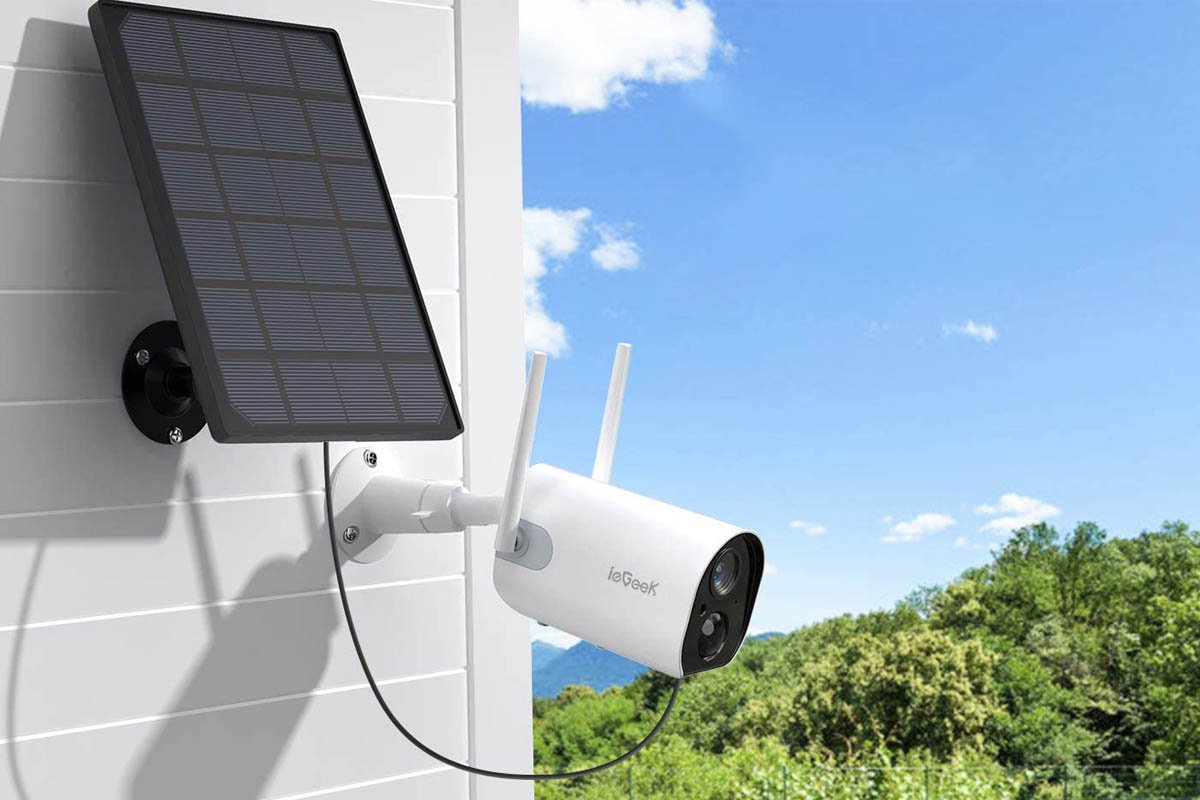
Outdoor security cameras are excellent at spotting package thieves, nighttime visitors, wandering pets, and the neighbor who still has not returned your ladder. Unfortunately, a battery-powered camera becomes much less impressive when its battery dies precisely when something interesting happens.
The best solar-powered security cameras solve that problem by pairing a rechargeable battery with a compact photovoltaic panel. With adequate sunlight, the panel replenishes the battery during the day, reducing or eliminating routine trips up a ladder with a charging cable. The result is flexible, wire-free surveillance for driveways, porches, garages, gates, sheds, barns, and other places where running electrical wiring would be inconvenient.
Solar power alone does not make a camera good, however. Video quality, motion accuracy, night vision, storage options, Wi-Fi reliability, weather resistance, and subscription costs matter just as much. After comparing current specifications, independent evaluations, manufacturer documentation, and practical installation considerations, the following models stand out for different types of homes and budgets.
The Best Solar-Powered Security Cameras at a Glance
- Best overall: EufyCam S3 Pro
- Best value: TP-Link Tapo C425 Kit
- Best with spotlights: Ring Spotlight Cam Plus Solar
- Best pan-and-tilt model: Eufy SoloCam S340
- Best 4K pan-and-tilt model: Reolink Argus PT Ultra
- Best budget option: Zumimall 2K Solar Security Camera
- Best simple setup: Blink Outdoor with a compatible solar mount
Our Top Solar Security Camera Picks
1. Best Overall: EufyCam S3 Pro
The EufyCam S3 Pro is a premium choice for homeowners who want detailed footage, dependable solar charging, and local video storage without making a monthly subscription part of the family budget. Its 4K resolution captures noticeably more detail than typical 1080p cameras, which can help when identifying faces, clothing, vehicle colors, or other useful visual information.
An integrated solar panel keeps the design tidy, while an optional external panel provides flexibility when the best camera angle is not also the sunniest location. Eufy combines passive infrared sensing with radar-assisted motion detection to reduce alerts caused by moving branches, shadows, and other outdoor nonsense. Its low-light imaging can produce color footage in conditions where many cameras switch to grainy black-and-white infrared video.
The system works with Eufy HomeBase 3, which provides local storage and centralized management. The initial cost is higher than that of a single budget camera, but the combination of 4K video, built-in solar charging, intelligent detection, and subscription-optional storage makes it a strong long-term investment.
2. Best Value: TP-Link Tapo C425 Kit
The Tapo C425 Kit delivers an appealing combination of image quality, easy installation, and affordable local storage. Its 2K QHD resolution offers a useful step up from 1080p, while a wide field of view lets one camera cover a porch, side yard, or compact driveway without staring at a beautifully detailed section of empty wall.
The camera attaches to a magnetic base, making angle adjustments unusually simple. It carries an IP66 weather-resistance rating and includes color night vision, activity zones, two-way audio, and smart detection features. A microSD card of up to 512GB can be used for local recording, while optional cloud service is available for people who prefer off-site storage.
TP-Link states that approximately 45 minutes of suitable direct sunlight can provide enough energy for a typical day of operation. That estimate depends on recording frequency, temperature, Wi-Fi strength, and motion settings, but it illustrates how efficiently the camera can operate. For most buyers seeking a capable solar outdoor security camera without premium-system pricing, the C425 Kit is difficult to overlook.
3. Best With Spotlights: Ring Spotlight Cam Plus Solar
The Ring Spotlight Cam Plus Solar combines video surveillance with two motion-activated LED lights, making it especially useful beside garages, over patios, and along dark walkways. The lights can discourage unwanted visitors while giving the camera enough illumination to record color footage after sunset.
It records in 1080p HD and includes customizable motion zones, two-way talk, a remotely activated siren, and strong integration with Amazon Alexa. The Ring app is polished and easy to navigate, particularly for households that already use a Ring video doorbell or other Ring devices.
The main compromise is storage. Ring emphasizes cloud-based recording, and many useful video-history features require a paid plan. The solar panel also needs several hours of direct sunlight for dependable charging, so placing it beneath a deeply shaded roofline is not a recipe for energy independence. Still, its bright lights, audible siren, familiar app, and mature smart-home ecosystem make it one of the most practical choices for active deterrence.
4. Best Pan-and-Tilt Camera: Eufy SoloCam S340
A fixed camera can only record what appears in front of its lens. The Eufy SoloCam S340 takes a more ambitious approach with motorized horizontal movement, vertical adjustment, automatic tracking, and a dual-camera design.
Its wide-angle lens records at up to 3K resolution, while a secondary telephoto lens provides a closer look at distant activity. The system supports hybrid zoom of up to 8X and can rotate to follow a person moving across the property. This makes it particularly effective for broad driveways, corner lots, detached garages, and backyards where a single fixed viewpoint would leave significant blind spots.
The removable solar panel can be positioned separately from the camera, which is helpful when the ideal viewing angle points north or sits beneath an overhang. Built-in local storage allows basic use without a subscription, while compatibility with HomeBase 3 supports a larger Eufy system. The camera is bulkier than a standard fixed model, but that is a reasonable trade-off for much wider coverage.
5. Best 4K Pan-and-Tilt Model: Reolink Argus PT Ultra
The Reolink Argus PT Ultra is a compelling option for buyers who want 4K video and broad motorized coverage without committing to mandatory cloud storage. It combines an 8-megapixel sensor with approximately 355 degrees of horizontal movement and 140 degrees of tilt, allowing users to inspect multiple parts of a property from the mobile app.
Automatic tracking can follow detected movement, while person, vehicle, and animal recognition helps separate meaningful events from routine outdoor activity. The camera also supports color night vision, two-way audio, customizable alerts, and dual-band Wi-Fi on current configurations.
Recordings can be stored locally on a microSD card or through a compatible Reolink hub. The solar panel is detachable, so it can face the sun even when the camera must point in another direction. This flexibility, combined with high resolution and no required monthly fee, makes the Argus PT Ultra particularly attractive for larger yards and users who prefer direct control over their footage.
6. Best Budget Option: Zumimall 2K Solar Security Camera
Zumimall’s 2K solar models offer many popular features at a lower entry price. Depending on the configuration, buyers can get motorized pan-and-tilt control, color night vision, two-way communication, a built-in siren, PIR motion detection, digital zoom, and local microSD storage.
The image quality is sufficient for general monitoring of porches, side gates, gardens, and small driveways. Some models rotate approximately 355 degrees horizontally, providing much broader coverage than similarly priced fixed cameras. The companion app is less refined than the apps from Ring, Eufy, or Tapo, and software support may not feel as polished over the long term.
Even so, Zumimall can make sense for a low-risk location or a homeowner who needs several inexpensive cameras. Carefully verify the exact model number before buying, since specifications, Wi-Fi support, storage capacity, and included solar panels can vary between products that look nearly identical.
7. Best Simple Setup: Blink Outdoor With a Compatible Solar Mount
Blink outdoor cameras are popular because they are compact, uncomplicated, and relatively easy to install. A compatible Blink solar accessory can provide external power while the camera’s batteries remain available as backup.
The major caution is compatibility. Blink has sold several outdoor-camera generations, and older solar mounts do not necessarily work with newer cameras. For example, the original Blink Solar Panel Mount was designed for the third-generation Blink Outdoor camera rather than the Outdoor 4. Newer Blink Solaris accessories support selected newer models, but buyers should match the panel and camera by exact product name before ordering.
Blink works especially well for light-duty monitoring and households already using Amazon Alexa. Video quality and advanced controls are more modest than those offered by premium 2K and 4K systems, but the straightforward app and small hardware make it a friendly option for first-time security-camera owners.
What to Consider When Choosing a Solar-Powered Security Camera
Solar Panel Placement
A solar camera does not require blazing sunshine from breakfast until dinner, but it does need meaningful exposure. South-facing placement is generally productive in the Northern Hemisphere, although an adjustable external panel can compensate when the camera must point elsewhere.
Avoid placing the panel beneath dense trees, deep eaves, or rooflines that remain shaded most of the day. Remember that a sunny location in July may be shaded in December when the sun sits lower in the sky. Dirt, leaves, pollen, and snow can also reduce charging performance, so occasional cleaning is necessary.
Video Resolution
Resolution determines how much visual detail a camera can capture, but it is not the only factor affecting image quality. A well-tuned 2K camera with good exposure and motion handling can outperform a poorly optimized 4K model.
For a small porch, 1080p may be adequate. A 2K camera provides more room for digital zoom, while 4K is valuable for long driveways, gates, and locations where subjects may be farther from the lens. Higher-resolution recordings also consume more storage and battery power.
Motion Detection and Alert Accuracy
Basic cameras react to nearly any movement. Better models classify people, pets, packages, and vehicles or combine PIR, radar, and software-based analysis. Accurate detection matters because nobody wants 37 notifications announcing that a fern has moved slightly to the left.
Look for adjustable sensitivity, activity zones, scheduling, and object-specific notifications. These controls can reduce false alarms and conserve battery power by preventing unnecessary recordings.
Local Storage Versus Cloud Storage
Local storage through a microSD card, internal memory, or a home hub avoids recurring fees and can keep recordings available during an internet outage. However, footage stored inside an easily reached camera could disappear if someone steals the device.
Cloud storage protects recordings off-site and makes them accessible from almost anywhere, but it may require a monthly subscription. Some systems reserve advanced detection, extended history, or downloadable clips for paying customers. Compare the complete ownership cost rather than judging a camera only by its purchase price.
Wi-Fi and Cellular Connectivity
Solar power eliminates the electrical cable, not the need for a reliable data connection. Before drilling holes, test Wi-Fi strength at the intended mounting point. Exterior walls, metal siding, garages, and long distances can weaken the signal.
Most battery cameras use 2.4GHz Wi-Fi because it reaches farther than 5GHz. Dual-band models provide more flexibility. For farms, cabins, construction sites, and remote gates without Wi-Fi, consider a solar cellular camera such as a compatible Reolink Go or Eufy 4G model. Cellular cameras require a data plan, so the sun may be free while the network politely sends a bill.
Privacy and Account Security
A security camera should make the home safer, not create an unsecured window into it. Use a unique password, enable multifactor authentication, install firmware updates, and review which household members can access live video. Avoid sharing permanent credentials when temporary or limited guest access is available.
Position cameras to monitor your property without unnecessarily recording neighboring windows, private yards, or areas where people reasonably expect privacy. Local laws governing audio recording and surveillance can vary, so homeowners should understand the rules in their jurisdiction.
Real-World Solar Security Camera Experience
The most common lesson from real-world solar camera installations is simple: the best camera position and the best solar-panel position are often two different places. A camera may need to face a shaded front walkway, while its panel needs to sit several feet away on a sunny wall. Models with a separate adjustable panel are much easier to optimize than all-in-one cameras when the property has large eaves or mature trees.
It is also wise to fully charge the camera indoors and complete the app setup before mounting anything. Doing so confirms that the Wi-Fi connection, firmware, notifications, storage card, and live view all work. Discovering a setup problem after climbing a ladder and tightening six screws is a fine way to add new vocabulary to an otherwise peaceful Saturday.
Motion settings usually require several days of adjustment. Maximum sensitivity sounds reassuring, but it often produces alerts for insects, headlights, rain, shadows, and branches. Start with moderate sensitivity, define a focused activity zone, and enable person or vehicle detection when available. A driveway camera may need vehicle alerts, while a backyard camera probably does not need to report every car traveling down the street.
Mounting height makes a noticeable difference. Installing a camera extremely high can protect it from tampering, but the resulting footage may show the tops of heads instead of useful facial detail. A height of roughly 8 to 10 feet often provides a practical balance for residential installations, though the ideal position depends on the camera’s field of view and the area being monitored.
Solar charging performance is rarely identical throughout the year. A battery that remains near 100 percent in summer may gradually decline during cloudy winter weeks. Cold temperatures can also reduce battery efficiency. This does not necessarily indicate a defective panel; the camera may simply be consuming more energy than the available winter sunlight can replace. Reducing recording length, lowering sensitivity, or moving the panel can restore a sustainable balance.
Night footage deserves special testing. Walk through the monitored area wearing different colors, approach from the side, and check whether a porch light or streetlight causes glare. Built-in spotlights can improve color and identification, but they may attract insects or reflect harshly from nearby walls. Infrared mode sometimes produces a cleaner result in tight spaces.
Finally, inspect saved clips instead of judging the camera only through live view. Battery cameras generally sleep between events to conserve power, and some begin recording later than expected. Test whether the camera captures a person before, during, or only after that person reaches the most important area. Repositioning the camera so subjects cross the detection zone rather than walking directly toward it can improve triggering.
A well-installed solar security camera should become pleasantly boring. It stays charged, records useful events, ignores most irrelevant motion, and asks for attention only when something genuinely deserves it. That quiet reliability is far more valuable than an impressive specification sheet attached to a camera that constantly cries wolf.
Final Verdict
The EufyCam S3 Pro is the strongest all-around choice for shoppers seeking premium 4K footage, integrated solar charging, intelligent detection, and local storage. The Tapo C425 Kit offers excellent value, while the Ring Spotlight Cam Plus Solar is better suited to buyers who want bright deterrent lighting and deep Alexa integration.
For broad coverage, the Eufy SoloCam S340 and Reolink Argus PT Ultra provide effective pan-and-tilt operation. Budget-conscious users can consider Zumimall, while Blink remains an approachable option for a simple Amazon-centered system.
Whichever model you choose, installation quality will determine much of its performance. Give the panel real sunlight, confirm strong network coverage, fine-tune motion zones, secure the account, and test both daytime and nighttime recordings. A solar camera cannot stop every problem, but it can keep watch without demanding a charging cable every few weeksand that is one less household chore worth celebrating.













