
Note: This article provides general educational information about drafting consumer product warranties in the United States. Warranty laws vary by state, product category, and sales channel. Have a qualified attorney review any warranty before publishing or using it in business.
A warranty may look like a small document tucked into a product box, but it carries a surprisingly large job. It tells customers what happens when a product fails, what the business will fix, what is excluded, and how everyone can avoid turning a cracked blender lid into a courtroom drama.
A well-drafted warranty is not about using intimidating legal language or making customers feel as though they need a law degree and a flashlight to understand it. The best warranty is clear, realistic, easy to find, and aligned with what the business can actually deliver. It protects the customer while helping the company avoid vague promises, inconsistent claims decisions, and unnecessary disputes.
For consumer products, federal warranty rules may apply under the Magnuson-Moss Warranty Act. The law does not require every business to offer a written warranty, but once a business offers one for an eligible consumer product, it must meet important disclosure and labeling requirements.
Before You Start: Know What Kind of Warranty You Are Writing
Not every promise is the same. A manufacturer’s warranty usually covers defects in materials or workmanship for a stated period. A service contract, sometimes marketed as an “extended warranty,” is generally a separate paid agreement to perform or pay for repairs or maintenance. Mixing the two up can create confusion faster than assembling furniture without reading the instructions.
This guide focuses mainly on written warranties for consumer products such as appliances, electronics, tools, furniture, home goods, and similar items sold for personal, family, or household use. Business-to-business warranties, software agreements, vehicle warranties, construction warranties, and real-estate warranties may involve additional rules that deserve separate legal review.
How to Draft a Warranty in 15 Steps
1. Identify the Product and Transaction Type
Start by defining exactly what the warranty covers. Is it for a coffee maker, a replacement battery, a custom-installed countertop, or a subscription-connected smart device? Write down the product name, model number, included components, and whether the warranty applies to consumer sales, commercial sales, or both.
This matters because a warranty for a household air purifier may be governed differently from a warranty for industrial machinery. Consumer product warranties are generally subject to different federal and state requirements than warranties for products bought only for commercial use.
2. Name the Warrantor Clearly
The customer should never have to play detective to figure out who stands behind the warranty. State the full legal name of the company responsible for honoring the warranty, along with the mailing address, customer-service contact method, and any service department details.
For example:
“This Limited Warranty is provided by BrightHome Appliances, Inc., 100 Main Street, Columbus, Ohio 43215.”
If a distributor, retailer, manufacturer, or third-party administrator handles different parts of the claim process, explain that relationship plainly. One company selling the product while another company handles repairs is fine. Making customers guess which company to call is less fine.
3. Define Who Is Covered
Specify whether the warranty applies to the original purchaser only, all subsequent owners during the warranty period, gift recipients, or registered users. Avoid vague phrases such as “valid for customers” because that does not answer the important question: which customers?
A simple example might read:
“This warranty applies only to the original consumer purchaser of the Product and is not transferable.”
For consumer warranties priced above applicable federal thresholds, the identity of the people covered must be clearly disclosed when coverage is limited to certain owners or purchasers.
4. Choose the Correct Warranty Label
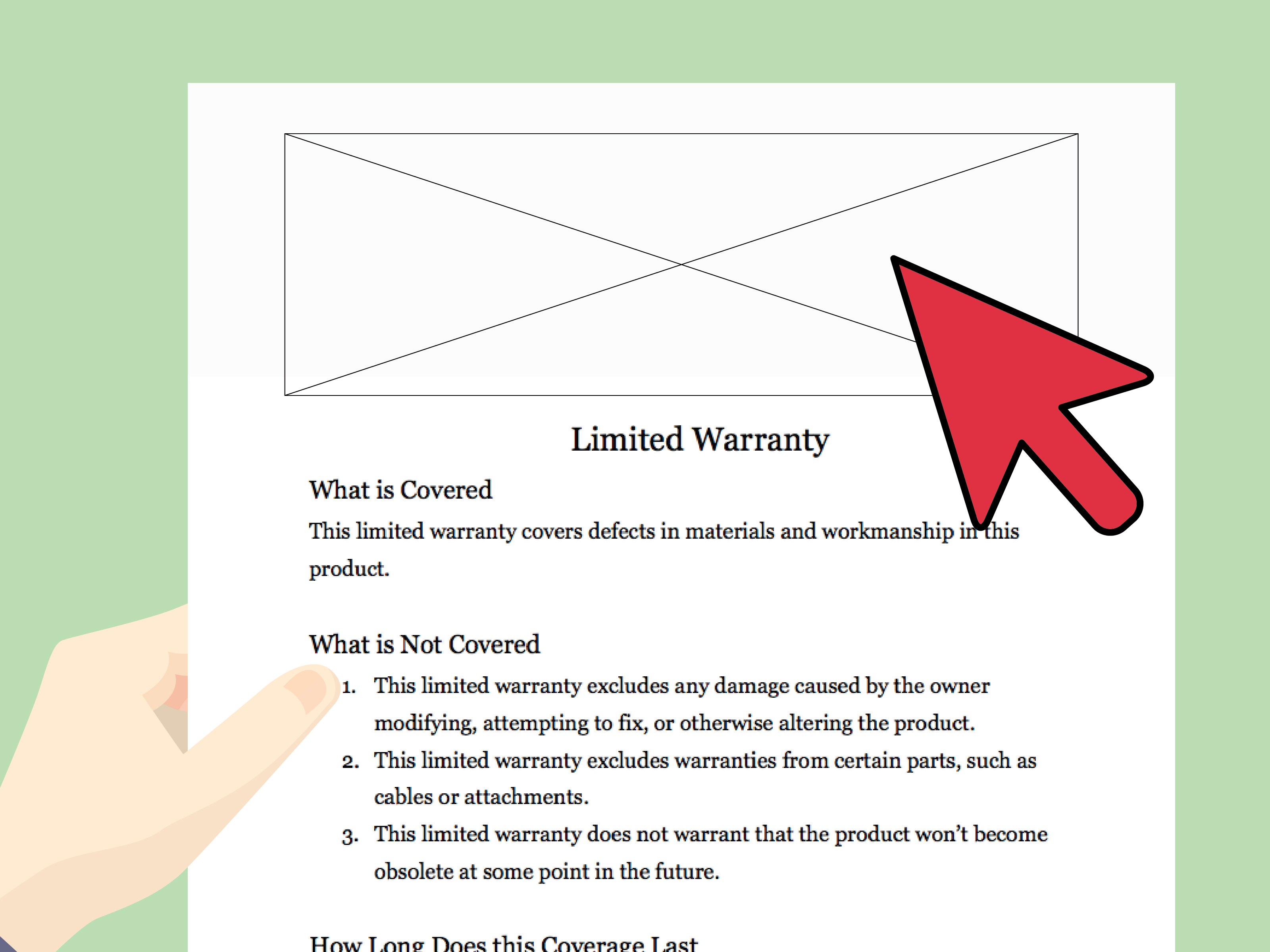
For many consumer products, written warranties must be labeled as either a “Full Warranty” or a “Limited Warranty.” Do not choose “full” merely because it sounds friendlier in a marketing meeting. A full warranty must satisfy specific federal standards.
A warranty is generally limited if, for example, it requires the customer to pay some repair costs, limits implied warranty duration, covers only the original owner, or does not provide a replacement or refund after reasonable repair attempts. When in doubt, legal review is much cheaper than explaining a mislabeled warranty later.
5. State the Warranty Period Precisely
Every warranty needs a clear start date and end point. Avoid phrases like “good for one year” without explaining one year from when. Does the clock begin on the purchase date, delivery date, installation date, product registration date, or the first time the customer turns it on?
Better language looks like this:
“This Limited Warranty begins on the date of original retail purchase and continues for twelve (12) months.”
For products with different coverage periods, separate them. For example, a vacuum may have a five-year motor warranty but a one-year warranty on the battery, hose, filters, and accessories.
6. Explain What Is Covered
This is the heart of the warranty. State whether coverage applies to defects in materials, workmanship, assembly, performance, or installation. Be specific. “We cover defects” sounds good until someone asks whether a cosmetic scratch, cracked screen, loose screw, or intermittent software issue counts as a defect.
A practical clause could say:
“This Limited Warranty covers defects in materials and workmanship under normal residential use during the Warranty Period.”
Use product-specific language whenever possible. A warranty for a garden hose should not read as though it was copied from a refrigerator warranty wearing a fake mustache.
7. List Covered Parts and Excluded Parts
Break the product into meaningful categories. Identify major components that are covered, such as motors, heating elements, structural frames, circuit boards, or internal pumps. Then identify parts that are excluded, such as filters, bulbs, batteries, cosmetic finishes, consumables, or accessories.
Federal rules require a clear identification of products, parts, components, characteristics, or properties that are covered and, when needed for clarity, excluded.
Do not bury exclusions in a wall of tiny text. A customer who discovers that the battery is excluded only after shipping a broken cordless tool across the country will not describe the experience as “delightful.”
8. Specify the Remedy You Will Provide
Tell customers what the company will do if a covered defect occurs. Common remedies include repair, replacement, refund, store credit, reimbursement for authorized repairs, or replacement parts.
Be direct about who chooses the remedy. For example:
“At our option, we will repair the Product, replace the Product or defective part with a new or refurbished equivalent, or refund the original purchase price.”
If refurbished parts may be used, say so. If a replacement may be a comparable model rather than the exact original model, say that too. Honest details beat surprise upgrades or surprise downgrades.
9. Allocate Repair, Shipping, Labor, and Removal Costs
A warranty can become frustrating when it promises “repair” but says nothing about labor, shipping, installation, removal, diagnostic fees, or return transportation. Spell out which costs the company pays and which costs the customer may pay.
For example:
“We will pay for covered replacement parts and standard ground return shipping. The customer is responsible for packaging the Product securely and for any expedited shipping requested by the customer.”
If the product is large, installed, or difficult to ship, explain whether in-home service, depot service, onsite repair, or authorized local repair is available. A dishwasher cannot simply be dropped into a mailbox with a cheerful note.
10. Draft Reasonable Exclusions and Conditions
Exclusions help prevent the warranty from becoming an unlimited insurance policy. Common exclusions include normal wear and tear, misuse, accidents, unauthorized modifications, improper installation, commercial use, neglect, cosmetic damage that does not affect function, and damage caused by natural disasters.
Keep exclusions tied to the product and the problem. Avoid broad language that appears designed to deny every claim. For example, saying “all damage caused by third-party repairs is excluded” may be too broad if the third-party repair had nothing to do with the defect.
Be especially careful with clauses requiring consumers to use a specific brand of part, accessory, or repair provider. Federal law generally prohibits warranty terms that condition coverage on using a particular branded product or service unless an exception applies.
11. Create a Simple Claim Procedure
A warranty is only useful if customers can actually use it. Explain the claim process step by step. Include the contact method, proof-of-purchase requirements, photos or videos needed, return instructions, inspection procedures, and expected response timeline.
A customer-friendly process might include:
- Contact customer support by phone, email, or online form.
- Provide the order number, model number, and description of the problem.
- Submit photos or videos when requested.
- Receive repair, return, replacement, or service instructions.
- Follow the approved service process before paying for third-party repairs.
Federal disclosure rules require a step-by-step explanation of how consumers obtain warranty performance, including relevant contact information and authorized service providers.
12. Address Implied Warranties Carefully
Implied warranties are legal protections that may arise automatically under state law. They can include the implied warranty of merchantability, meaning goods should generally do what ordinary goods of that type are supposed to do, and the implied warranty of fitness for a particular purpose in certain situations.
Under the Uniform Commercial Code, attempts to disclaim or modify implied warranties often require specific wording and conspicuous presentation. However, consumer-product warranties that include a written warranty may face additional federal restrictions on disclaiming implied warranties. This is a section where legal review is essential, not optional.
If a limited warranty lawfully limits the duration of implied warranties, it should include the required state-law qualification language, such as a notice that some states do not allow limitations on how long implied warranties last.
13. Add Limitations of Liability With Care
Businesses often want to limit responsibility for indirect, incidental, or consequential damages, such as lost profits, lost data, lost business opportunities, or damage to other property. Such limitations may be enforceable in some situations, but state law and consumer protection rules can restrict them.
Use a balanced clause and avoid pretending it applies everywhere. A typical structure might say:
“To the extent permitted by applicable law, we are not responsible for incidental, indirect, special, or consequential damages arising from the use or inability to use the Product.”
Then add a state-law notice explaining that some states may not allow certain exclusions or limitations. Do not copy a limitation clause from a random internet template and assume it is magic armor. Legal documents are not enchanted scrolls.
14. Include Dispute Resolution and State-Law Language
Explain how complaints and disputes should be handled. You may provide a customer-service escalation process, an informal dispute program, mediation, arbitration, or court procedures, depending on the business model and applicable law.
If the company uses an informal dispute settlement mechanism for consumer warranty claims, it must be accurately described. Consumers should also be told that they may have rights that vary from state to state. State laws can create additional protections, including implied warranties, lemon-law remedies, or mandatory warranty obligations for specific products.
Do not use a dispute clause to hide the ball. Customers should be able to understand where to submit a complaint, what happens next, and whether they must complete a process before seeking another remedy.
15. Test, Review, Publish, and Maintain the Warranty
Before publishing, conduct a plain-language review. Ask someone who did not write the warranty to answer basic questions: What is covered? How long does coverage last? Who pays shipping? What must the customer do? What happens if repair fails?
For eligible consumer products, warranty terms may need to be available to consumers before purchase. For online warranties, federal rules allow digital availability when consumers are clearly told where to find the terms and how to request a non-internet copy.
Finally, use version control. Add an effective date, document version number, and archive copies of past warranty versions. Products change, suppliers change, repair networks change, and occasionally someone decides to rename a product line after a meeting involving too much coffee. Your warranty should keep up.
A Practical Warranty Drafting Checklist
Before approving your final warranty, confirm that it includes the following:
- A clear title identifying it as a Full Warranty or Limited Warranty when required.
- The legal name and contact details of the warrantor.
- A precise description of the covered product and components.
- A clear statement of who is covered.
- The coverage start date and duration.
- A complete explanation of covered defects and excluded conditions.
- The repair, replacement, refund, or reimbursement remedy.
- Clear information about labor, shipping, removal, inspection, and service costs.
- A simple claim procedure with contact details.
- Appropriate implied-warranty and state-law language.
- Reasonable limitations and exclusions reviewed for enforceability.
- Pre-sale availability and digital access procedures where applicable.
- An effective date and internal version number.
Common Warranty Drafting Mistakes to Avoid
Using vague coverage language: “We guarantee quality” sounds friendly but may create unclear obligations. Define what quality means in the context of the product.
Overpromising in marketing: Product pages, sales emails, packaging, and social media can create expectations that conflict with the written warranty. Keep marketing claims aligned with warranty language.
Hiding exclusions: Important limits should be visible and understandable, not buried in paragraph twenty-seven beneath a mountain of uppercase text.
Forgetting about customer costs: If customers must pay shipping, labor, diagnosis fees, or removal costs, state that clearly.
Copying another company’s warranty: Their product, supply chain, repair network, state exposure, and appetite for angry emails may be completely different from yours.
Skipping legal review: A warranty is a legal commitment. A one-hour legal review can prevent years of recurring disputes, chargebacks, customer-service confusion, and “but your website said…” conversations.
Experience-Based Lessons From Drafting Warranties
One of the biggest lessons in warranty drafting is that the document should match the real-world customer journey. A warranty can look elegant on a screen and still fail spectacularly when a customer tries to use it. The gap usually appears in the practical details: the phone number does not work, the repair center is no longer authorized, the product cannot reasonably be shipped, or the customer discovers that nobody knows who approves a replacement.
Businesses often begin with a broad promise because they want to inspire confidence. That instinct is understandable. “We stand behind everything we sell” sounds warm, reassuring, and excellent on a banner. But a warranty needs more than warmth. It needs operating instructions. What happens when the product fails after ten months? Who reviews the claim? Does the customer send photos? Is the replacement new, refurbished, or equivalent? Does the company pay return shipping? Every unanswered question becomes a customer-service decision, and inconsistent decisions can become a legal and reputational headache.
Another useful lesson is that shorter is not always clearer. A two-page warranty packed with undefined terms can be harder to use than a four-page warranty organized with headings, examples, and plain-language steps. Customers do not mind reading when the document helps them solve a problem. They mind reading when the document behaves like a maze designed by a committee of squirrels.
Good warranty drafting also requires cooperation across departments. Legal teams understand risk. Product teams understand what can fail. Customer-service teams know which complaints appear every week. Finance teams understand the cost of replacements. Operations teams know whether repairs can actually be completed within a promised timeframe. The strongest warranty is usually written after these groups compare notes rather than after one person copies an old document from a shared drive named “FINAL_final_revised_USE_THIS_ONE.docx.”
Product data can improve warranty language dramatically. If a company sees repeated claims involving broken charging cables, weak hinges, leaking seals, or installation errors, the warranty should address those issues directly. Perhaps the cable should be treated as a consumable item. Perhaps the installation instructions need improvement. Perhaps the product needs a better component. A warranty is not merely a legal shield; it is also a source of feedback about product quality.
Transparency usually pays off. Customers may not love an exclusion, but they are more likely to accept it when it is specific and easy to understand. “Damage caused by improper installation” is more useful when the warranty also explains what proper installation requires. “Normal wear and tear” is more useful when the document gives examples, such as faded fabric, worn tires, depleted batteries, or replaceable filters.
Finally, a warranty should be reviewed whenever the business changes something important. A new supplier may alter component quality. A new online sales channel may change the pre-sale disclosure process. A new repair vendor may change turnaround times. A new product feature may introduce software, data, or connectivity issues that were not contemplated in the original language. Warranty documents should evolve with the product instead of sitting untouched for five years like an office plant everyone assumes someone else is watering.
Conclusion
Drafting a warranty is ultimately an exercise in keeping promises clear. Define the product, identify who is covered, explain the duration, describe the remedy, list realistic exclusions, create a simple claims process, and make sure the document follows applicable federal and state law.
The goal is not to write the longest warranty possible. The goal is to write one that a customer can understand, a service team can administer, and a business can confidently honor. When those three things line up, the warranty becomes more than legal fine print. It becomes proof that the company is prepared to stand behind its product when it matters most.












