
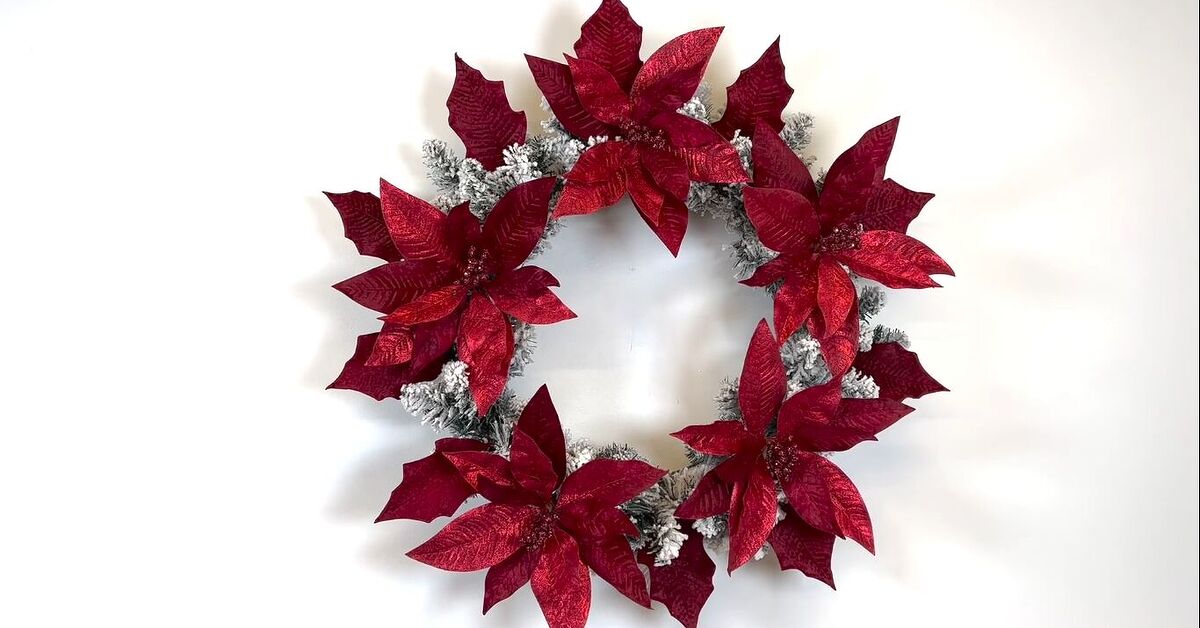
A poinsettia wreath delivers nearly everything people want from holiday decor: bold color, recognizable seasonal style, and enough visual drama to make an ordinary front door look ready for its own Christmas movie. Better still, you can create one without professional floral training, a workshop full of equipment, or an unexplained talent for tying perfect bows.
This project uses a greenery wreath as the foundation and layers poinsettia blooms, leaves, berries, pinecones, ribbon, and optional ornaments into a balanced arrangement. Faux poinsettias are the easiest and most durable choice, especially for an exterior door. Fresh poinsettia stems can also be used for an indoor wreath when they are prepared carefully and placed in water-filled floral picks.
The following guide explains how to make a poinsettia wreath step by step, choose the right materials, avoid common decorating mistakes, and adapt the design to traditional, farmhouse, elegant, or modern holiday decor.
Why Poinsettias Work So Well in a Christmas Wreath
The colorful parts of a poinsettia that most people call flowers are actually modified leaves known as bracts. Their broad, pointed shape naturally creates a starburst effect, making each bloom look substantial even from across a room or from the sidewalk.
That scale is useful in wreath design. A few large poinsettias can establish a strong focal point without requiring dozens of tiny decorations. Red poinsettias create a classic Christmas look, white blooms feel snowy and sophisticated, and pink, burgundy, or champagne varieties offer a more contemporary palette.
Poinsettias also pair naturally with evergreen branches, cedar, eucalyptus, holly, berries, bells, pinecones, and metallic ornaments. In other words, they get along with almost every holiday decoration already hiding in your storage bins.
Choose Between Faux and Fresh Poinsettias
Faux Poinsettias
Artificial poinsettia stems are the most practical option for a reusable DIY Christmas wreath. They do not wilt, require no water, and can tolerate normal indoor conditions throughout the season. Weather-resistant faux flowers are also better suited to a covered porch or exterior door.
Look for stems with layered fabric bracts, realistic veining, wired leaves, and flexible branches. Avoid flowers that are crushed, excessively glittery, or visibly attached to thick plastic stems. A little sparkle is festive; enough glitter to identify your route through the house is a maintenance problem.
Fresh Poinsettias
Fresh poinsettias can produce a beautiful indoor wreath, but the stems must receive water. After cutting a stem, allow the milky sap to slow by placing the cut end in cool water. Some floral professionals briefly seal only the cut end in very hot water before transferring it to fresh water. Insert each prepared stem into a water-filled floral pick and keep the wreath away from fireplaces, heating vents, direct sunlight, and cold drafts.
Wear gloves while handling fresh stems because the sap may irritate sensitive skin. Keep plant material away from curious children and pets, particularly animals that enjoy sampling seasonal decorations as though the living room were a salad bar.
Materials and Tools You Will Need
- One 18- to 24-inch evergreen, grapevine, or wire wreath base
- Five to nine faux poinsettia blooms or prepared fresh stems
- Assorted faux or fresh greenery, such as pine, cedar, eucalyptus, or magnolia leaves
- Green floral wire or paddle wire
- Wire cutters
- Floral shears or sturdy scissors
- Hot glue gun and glue sticks for a faux wreath
- Decorative ribbon, preferably wired ribbon
- Optional berries, pinecones, bells, ornaments, or battery-operated lights
- Water-filled floral picks if using fresh poinsettias
- Wreath hanger, ribbon loop, or removable door hook
An 18-inch base works well for an apartment door, kitchen, or window. A 22- to 24-inch wreath generally has better presence on a standard exterior door. Remember that greenery and ribbon can increase the finished diameter by several inches.
How to Make a Poinsettia Wreath Step by Step
1. Select and Inspect the Wreath Base
Place the wreath on a large table and examine its shape. If you are using an artificial evergreen wreath, spread the branches outward so it looks full rather than recently rescued from a shipping box. Bend some tips toward the front and others toward the outer edge to create depth.
For a grapevine wreath, decide whether you want to leave some vines exposed. An asymmetrical design covering roughly two-thirds of the base can look especially elegant. A wire form should first be covered with overlapping bundles of greenery secured with paddle wire.
2. Create a Hanging Loop Before Decorating
Attach a sturdy loop of floral wire or ribbon to the back of the frame. Doing this now is easier than trying to locate the frame after it has disappeared beneath flowers, pine branches, bells, and several ambitious yards of ribbon.
Hold the wreath by the loop to confirm that the base hangs straight. Mark the top mentally or with a small temporary piece of ribbon.
3. Decide Where the Main Poinsettias Will Go
Before securing anything, lay the poinsettias on top of the wreath. A cluster of three blooms near the lower left or lower right creates a polished asymmetrical arrangement. For a fuller traditional wreath, distribute five to nine flowers around the circle.
Use odd numbers when possible. Groups of three, five, or seven tend to look natural because the eye moves through them instead of dividing the arrangement into obvious pairs.
Rotate the flowers so they do not all face directly forward. One can face outward, another slightly upward, and a third toward the center. This small adjustment prevents the wreath from looking flat.
4. Trim the Poinsettia Stems
For faux stems, leave approximately four to six inches below each bloom. That length is usually enough to anchor the flower securely without forcing a long plastic stem through the entire wreath.
If a faux bloom has no usable stem, thread floral wire through its plastic base and twist the ends together to create a wire pick. Fresh poinsettias should remain long enough to reach their water picks without crushing or folding the bracts.
5. Anchor the Largest Flowers First
Push each stem into the greenery or between the grapevines until the flower sits close to the surface. The bloom should appear nestled into the wreath rather than balanced on top of it.
Wrap floral wire around the stem and wreath frame, then twist it securely on the back. For a permanent faux arrangement, place a small amount of hot glue near the insertion point. Use glue as reinforcement rather than the only attachment method, especially on a front-door wreath exposed to temperature changes.
6. Add Secondary Poinsettias
Place smaller blooms around the focal flowers, varying their height and angle. Let a few green leaves remain visible between the red or white bracts. That separation helps each flower keep its shape and prevents the arrangement from becoming one giant holiday-colored blob.
Pause after every two or three additions. Stand several feet away and evaluate the wreath instead of judging it only from twelve inches above the table.
7. Layer in Greenery and Filler
Add cedar, pine, eucalyptus, magnolia leaves, or another complementary foliage. Arrange the stems so they follow the circular direction of the wreath. Overlap each new piece over the cut end of the previous piece to conceal wires and create continuous movement.
Use lighter or differently shaped foliage behind the poinsettias to define their silhouettes. Frosted eucalyptus can brighten a red-and-green wreath, while glossy magnolia leaves introduce a richer Southern holiday style.
8. Add Berries, Pinecones, or Ornaments
Fill noticeable gaps with small accents. Red berries reinforce a traditional palette, white berries provide contrast, and pinecones add woodland texture. Metallic ornaments make the wreath feel dressier and help reflect nearby holiday lights.
Distribute accents in small clusters rather than placing one identical object at perfectly measured intervals. Excessive symmetry can make a handmade wreath look manufactured. Aim for balance, not military formation.
Wire heavier objects directly to the frame. Lightweight faux berries may be secured with floral wire or hot glue.
9. Make and Attach the Bow
Wired ribbon is easiest to shape because the edges hold their curves. Create several loops, pinch them together at the center, and secure the bundle with floral wire. Add two or more tails, cutting the ends into a V shape for a finished look.
Attach the bow near the poinsettia cluster, opposite it for visual balance, or at the bottom center for a classic design. Avoid covering your best flowers with an oversized bow. The ribbon is a supporting actor, not the relative who takes over every family photograph.
10. Perform the Hang Test
Lift the wreath and hang it temporarily. Gravity may shift loose greenery, tilt ornaments, or reveal gaps that were invisible while the project was flat.
Shake the wreath gently. Secure anything that moves more than intended. Trim visible wire ends and bend sharp points toward the frame so they cannot scratch the door.
11. Make Final Adjustments
Fluff the poinsettia bracts, reshape the ribbon loops, and separate compressed greenery. Check the wreath from the front, both sides, and slightly below, which is the angle many visitors will see when approaching a door.
If one side looks heavier, do not automatically add another large flower. A small pinecone cluster, ribbon tail, or outward-reaching greenery stem may provide enough visual weight to restore balance.
Poinsettia Wreath Design Ideas
Classic Red and Green
Use red poinsettias, pine greenery, holly berries, gold bells, and a red velvet bow. This combination works with traditional Christmas trees, plaid textiles, and warm white lights.
White Christmas Wreath
Combine ivory poinsettias with frosted greenery, pearl ornaments, white berries, and champagne ribbon. A few silver accents keep the wreath bright without making it look cold.
Rustic Farmhouse Style
Start with a grapevine base and cover only the lower half or one side. Add burgundy poinsettias, cedar, pinecones, cotton stems, and a black-and-white plaid bow. Allowing part of the grapevine to show makes the arrangement feel relaxed and handcrafted.
Modern Minimalist Wreath
Attach three white or deep-red poinsettias to a simple metal hoop. Add one narrow spray of eucalyptus and finish with a long velvet ribbon. The open space becomes part of the design, so resist the urge to fill every inch.
Colorful Contemporary Wreath
Try pink poinsettias with burgundy leaves, navy ribbon, copper ornaments, or dried orange slices. Poinsettia wreath ideas do not have to remain trapped in a red-and-green time capsule.
How to Display the Finished Holiday Wreath
Hang the wreath with an over-the-door hanger, removable exterior hook, or wide ribbon secured over the top of the door. Make sure the hardware is rated for the finished weight.
On an exterior door, place the wreath beneath a porch roof when possible. Direct rain, strong sun, snow, and heavy wind can damage ribbon, fade faux flowers, and loosen glued decorations. An indoor wreath can hang above a mantel, over a console table, on a pantry door, in a window, or over a large mirror.
If you add battery-operated lights, choose a strand intended for the display environment. Conceal the battery pack behind the greenery while keeping its switch accessible. Use only flameless lighting near dry natural materials.
Common Poinsettia Wreath Problems and Easy Fixes
The Wreath Looks Flat
Bend greenery and flowers toward different angles. Add a few longer stems around the outer edge and position some poinsettias slightly above the base instead of pressing every bloom to the same depth.
The Flowers Keep Falling Out
Do not rely on hot glue alone. Wrap the stems or flower bases with floral wire and attach that wire to the actual wreath frame rather than to loose greenery.
The Design Looks Too Busy
Remove several small decorations and repeat fewer materials. Three coordinated elements usually create a stronger design than ten unrelated ornaments competing for attention.
The Wreath Looks Lopsided
Hang it and identify where the visual weight is concentrated. Add a ribbon tail, greenery spray, or small accent cluster to the lighter area. Also confirm that the hanging loop is centered on the frame.
The Bow Will Not Hold Its Shape
Replace soft ribbon with wired ribbon or insert thin floral wire along the back of existing loops. Store ribbon tails loosely so they do not develop stubborn creases.
How to Store a Faux Poinsettia Wreath
At the end of the season, remove the wreath from direct light and brush away dust with a soft, dry cloth. Make sure outdoor moisture has evaporated completely before storage.
Place the wreath in a rigid wreath box or a large plastic container that will not crush the flowers. Secure it to the inside of the container with twist ties if it might slide. Stuff crumpled tissue paper lightly around delicate poinsettia bracts and ribbon loops.
Store the container in a cool, dry closet rather than an attic or garage with severe temperature changes. Proper storage allows a well-made poinsettia Christmas wreath to return for several holiday seasons with only minor fluffing and perhaps one ceremonial battle against tangled ribbon.
Lessons Learned From Making Poinsettia Wreaths
The first useful lesson from making a poinsettia wreath is that the project usually needs fewer flowers than expected. Large poinsettias occupy a surprising amount of visual space. Buying an enormous pile of blooms may feel reassuring in the craft store, but using every one can bury the greenery and turn the wreath into a red circular cushion.
Starting with five or seven flowers provides more control. Place the three strongest blooms in the focal area, then use the remaining flowers only where the design genuinely needs additional color. Unused stems can decorate a garland, wrapped gift, centerpiece, or tree, so restraint does not mean waste.
Another lesson is to design the wreath in its future orientation. Working entirely on a flat table can produce an arrangement that looks excellent horizontally but shifts strangely when hung. After attaching the main flowers, place the wreath on a door or wall hook. This immediately reveals whether a heavy ornament is pulling downward, a ribbon tail is covering a bloom, or the top of the wreath feels empty.
It also helps to rotate the wreath while working. Looking at one section for too long makes tiny gaps seem important and major balance problems almost invisible. A few minutes away from the table can be surprisingly valuable. Returning with fresh eyes often shows that the project does not need another flower; it simply needs one branch bent outward.
Securing decorations mechanically before gluing them is another habit worth developing. Floral wire may take longer than a generous blob of hot glue, but wire survives movement, storage, and fluctuating temperatures more reliably. Glue is excellent for stopping small pieces from rotating. It is less impressive when asked to support a heavy pinecone on a cold exterior door for six weeks.
Ribbon choice can change the entire project. A narrow satin ribbon creates a delicate finish, while wide velvet or plaid ribbon makes the wreath feel fuller and more traditional. Wired ribbon is especially forgiving because loops can be reshaped after the wreath has been stored. When a bow looks awkward, the problem is often its placement rather than the bow itself. Moving it a few inches closer to the poinsettia cluster can make the arrangement feel intentional.
Fresh poinsettias bring wonderful texture indoors, but they require more planning than faux flowers. Their water picks must remain upright and accessible for refilling. The wreath also needs protection from heat and drafts. For a party, dinner, or short holiday display, the fresh version can be spectacular. For a front door expected to survive weather, package deliveries, and enthusiastic door slamming, faux poinsettias are considerably less dramatic in the maintenance department.
Finally, handmade wreaths improve when they reflect the room or entrance around them. Repeating a ribbon from the Christmas tree, an ornament finish from the mantel, or a berry color from a nearby garland helps the wreath feel connected to the rest of the holiday decor. The goal is not flawless symmetry. The goal is a welcoming decoration with enough personality to look handmade and enough structure to look deliberate.
Conclusion
Learning how to make a poinsettia wreath is largely a matter of layering materials in the right order. Begin with a sturdy base, establish the focal flowers, add greenery for movement, fill selective gaps with accents, and finish with ribbon. Secure heavier materials with floral wire, test the wreath vertically, and stop adding decorations once the composition feels balanced.
Whether you choose classic red blooms, snowy white poinsettias, or an unexpected pink-and-burgundy palette, the finished wreath can become a memorable part of your holiday decor. It may also inspire the highest form of seasonal crafting confidence: looking at an expensive store-bought wreath and quietly thinking, “Mine has a better bow.”
Note: Faux poinsettias are recommended for long-term exterior displays. Fresh poinsettia stems are best used indoors with water-filled floral picks, gloves, and protection from direct heat, cold drafts, children, and pets.












