
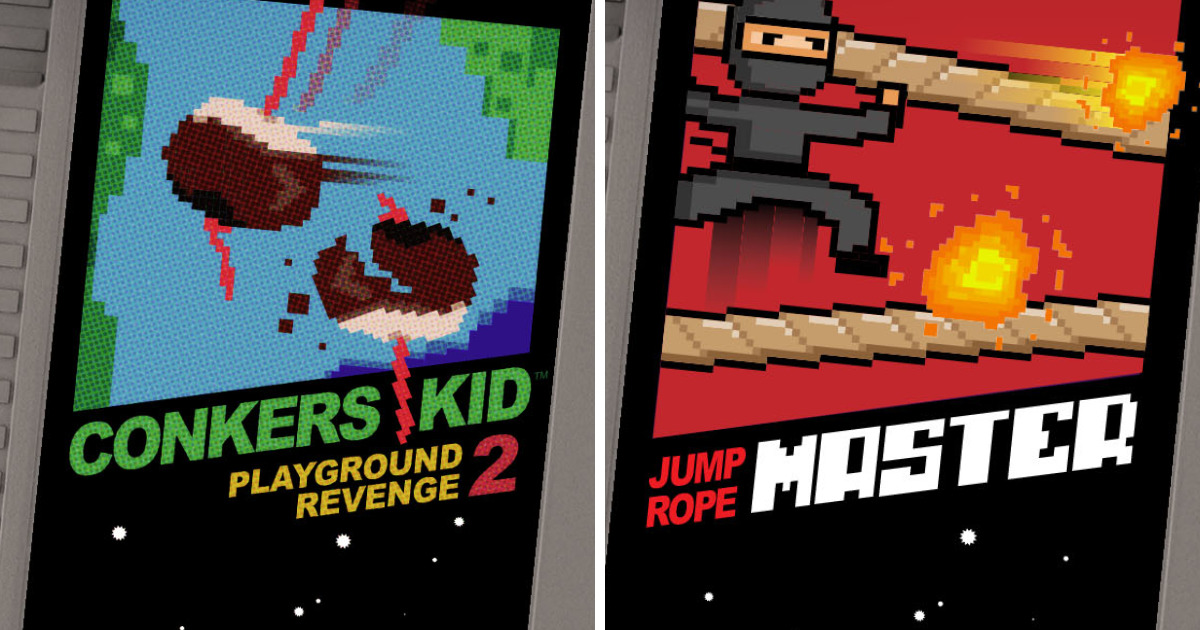
Before every kid had a tablet, a smartwatch, and the ability to ask a speaker for dinosaur facts at breakfast, childhood gaming was wonderfully low-tech. A cracked driveway became a hopscotch arena. A blanket over two chairs became a fortress. A backyard became a kingdom, a jungle, a race track, and occasionally a legal battleground over whether “base” counted if you touched it with only one finger.
Now imagine those same classic childhood pastimes rebuilt as retro 8-bit video games: blocky sprites, catchy chiptune music, blinking power-ups, limited lives, and bosses that look suspiciously like older siblings. That is the playful idea behind this re-imagining: taking the games many of us played with chalk, sneakers, sticks, balls, imagination, and questionable rule enforcement, then translating them into the language of old-school arcade cabinets and home consoles.
The result is not just nostalgia with pixels sprinkled on top. It is a surprisingly smart design exercise. Classic childhood games already have what great retro video games need: simple rules, instant feedback, repeatable challenges, risk, reward, social energy, and just enough chaos to keep everyone yelling. In other words, hide-and-seek was basically stealth gameplay before stealth gameplay had a menu screen.
Why Classic Childhood Pastimes Fit the 8-Bit World So Well
The 8-bit era of gaming was built on limitation. Hardware could not render cinematic landscapes or hundreds of animation frames, so designers leaned into clarity. A character had to be recognizable in a handful of pixels. A goal had to be understood in seconds. A game loop had to feel fun even when the screen was simple.
That is exactly how childhood pastimes work. Tag does not require a manual. Jump rope does not need a tutorial level. Hopscotch has a grid, a marker, and a mission. Hide-and-seek has suspense, timing, and dramatic reveals. These games succeed because they are easy to start and endlessly adjustable. Add a new rule, move the boundary, change teams, introduce “safe zones,” and suddenly the whole playground has a new patch update.
Retro 8-bit video games also thrive on repetition. You play, fail, learn the pattern, and try again. Childhood games follow the same rhythm. You miss the square in hopscotch, step on the line, lose your balance, groan dramatically, and wait for another turn. You get tagged three seconds into a round and immediately demand a rematch. Failure is not the end. It is the loading screen for another attempt.
The Design Rules for Turning Playground Games Into 8-Bit Adventures
To re-imagine classic childhood pastimes as retro 8-bit video games, each game needs more than a pixel-art makeover. It needs a proper arcade-style identity. That means a clear objective, a satisfying control scheme, visible obstacles, escalating difficulty, and a reward system that makes players say, “One more round,” which is gamer language for “I will be here for 47 more minutes.”
1. Keep the Rules Simple
The best 8-bit games can be explained quickly: jump over barrels, eat dots, dodge enemies, rescue someone, clear the screen. Childhood pastimes are naturally built this way. “Don’t get caught,” “don’t touch the line,” “jump at the right time,” and “capture the flag” are already perfect arcade objectives.
2. Turn Everyday Objects Into Power-Ups
A lunchbox becomes a shield. A juice box becomes an energy refill. A pair of light-up sneakers becomes a speed boost. A cardboard box becomes stealth armor, because every kid knows a cardboard box is not trash; it is a vehicle, castle, spaceship, and emergency turtle shell.
3. Make the Playground the Game Map
In an 8-bit childhood universe, the front yard is Level 1, the school playground is Level 2, the neighborhood block is Level 3, and Grandma’s house is the bonus stage where snacks appear with suspiciously perfect timing.
Game Concept #1: Hide-and-Seek: Pixel Shadow Mission
Genre: Stealth adventure
Objective: Hide before the countdown ends, avoid the seeker’s flashlight cone, and reach base without being spotted.
Hide-and-seek becomes a top-down stealth game where players sneak behind couches, trees, laundry baskets, and suspiciously oversized houseplants. The screen darkens as the seeker gets close. A tiny 8-bit heartbeat sound speeds up when danger approaches. The player can collect “Quiet Steps” power-ups to reduce noise or “Blanket Cloak” items to blend into the background.
The boss level is “Older Cousin Mode,” where the seeker checks all the obvious hiding spots first and then starts using advanced strategies like listening for giggles. Brutal. Fair? Not entirely. Memorable? Absolutely.
The genius of this concept is that hide-and-seek already has suspense. The countdown creates pressure. The hiding creates strategy. The searching creates tension. Retro graphics would only make it funnier, especially if every hiding place were labeled with dramatic names like “The Forbidden Laundry Pile” or “Behind the Door, Again.”
Game Concept #2: Tag: Turbo Playground Chase
Genre: Arcade runner
Objective: Avoid being tagged while collecting stamina stars and reaching safe zones.
Tag is the original multiplayer panic simulator. In its 8-bit form, it becomes a fast side-scrolling chase game with dodge rolls, fence hops, puddle jumps, and dramatic “almost got me” animations. The player starts with three hearts and one questionable shoelace. If the shoelace comes untied, movement speed drops until the player finds a “Double Knot” upgrade.
Different versions of tag could become different modes. Freeze Tag turns tagged players into ice-block sprites waiting to be rescued. Shadow Tag requires avoiding the enemy’s shadow instead of their hands. TV Tag lets players escape by naming a show, although in the 8-bit edition, repeating a title triggers a buzzer and public shame.
The final stage could take place during recess, where the bell rings and all players must sprint to the classroom before the timer hits zero. Bonus points if you arrive sweaty, out of breath, and pretending nothing happened.
Game Concept #3: Hopscotch: Chalk Grid Quest
Genre: Puzzle platformer
Objective: Toss the marker, hop through numbered tiles, avoid cracks, and complete the grid.
Hopscotch may look simple, but it is basically a balance, timing, and pattern-recognition challenge disguised as sidewalk art. As an 8-bit video game, it becomes a puzzle platformer where each chalk square has a different effect. Blue squares bounce. Red squares crumble. Star squares give bonus points. The dreaded “line touch” instantly resets the round with a tragic little sound effect.
The player controls a tiny hopping character who must land on one foot or two depending on the tile layout. Later levels introduce wind, moving chalk lines, rolling marbles, and the neighborhood dog wandering through the grid like an unscheduled mini-boss.
Hopscotch works beautifully as a retro game because its visual structure is already grid-based. The numbered boxes, the start-to-finish path, and the increasing difficulty feel like they were waiting for a pixel artist to show up with a tiny digital chalk stick.
Game Concept #4: Jump Rope: Rhythm Rope Rumble
Genre: Rhythm action
Objective: Jump in time with the rope, hit combo streaks, and survive faster patterns.
Jump rope is rhythm gaming before rhythm gaming. The rope is the beat. The jumper is the controller. The song is the level design. In an 8-bit version, the player taps at exactly the right moment to clear each swing. Miss the rhythm, and the sprite trips with a tiny puff of pixel dust.
Early levels use slow, friendly patterns. Later stages introduce double Dutch, reverse swings, surprise speed-ups, and chant-based boss battles. The soundtrack would be pure chiptune playground magic: beeps, claps, digital jump sounds, and a melody that lodges itself in your brain for the rest of the afternoon.
The scoring system rewards timing, endurance, and flair. A perfect streak unlocks “Super Sneakers.” A long combo activates “Recess Fever,” turning the screen into a flashing celebration of tiny stars, bouncing ropes, and one pixelated teacher trying to maintain order.
Game Concept #5: The Floor Is Lava: Living Room Escape
Genre: Survival platformer
Objective: Cross the room without touching the lava floor.
The floor is lava might be the most naturally video-game-like childhood pastime ever invented. It has platforms, danger zones, movement puzzles, and the kind of high-stakes drama only a sofa cushion can provide. In 8-bit form, it becomes a living-room platformer where players leap from couch to chair to coffee table while the lava level rises.
Each room has a different layout. The basement level includes laundry baskets and toy boxes. The bedroom level features rolling desk chairs. The kitchen level is nearly impossible because adults keep saying, “Do not jump on that.” The final level is the “Whole House Run,” where the player must reach the front door before the imaginary volcano erupts.
Power-ups include “Sock Slide,” “Pillow Bridge,” and “Parent Not Looking,” which grants five seconds of invincibility. Naturally, touching the floor triggers a dramatic game-over screen that says, “You Became Toast.”
Game Concept #6: Capture the Flag: Backyard Battle 8
Genre: Team strategy action
Objective: Sneak into enemy territory, grab the flag, and return safely.
Capture the flag is practically a multiplayer game design lesson. It has teams, territory, offense, defense, stealth, speed, rescue mechanics, and emotional debates about boundaries. As an 8-bit game, it could be a split-screen strategy adventure where players choose roles: Runner, Guard, Decoy, Scout, or The Kid Who Takes It Too Seriously.
The game map includes bushes, fences, tree bases, and chalk borders. Getting caught sends the player to “jail,” where teammates must tag them free. Weather changes create new challenges. Rain makes the grass slippery. Night mode reduces visibility. Summer mode adds mosquitoes, the most annoying enemy type in all of backyard history.
A great 8-bit version would balance strategy and chaos. The best players would not just run fast; they would plan routes, fake out guards, and communicate with teammates. Or they would scream “Go! Go! Go!” and sprint directly into danger, which is also a valid childhood strategy.
Game Concept #7: Kickball: Recess League All-Stars
Genre: Arcade sports
Objective: Kick, run bases, dodge throws, and win the playground championship.
Kickball has all the ingredients of a retro sports game: big movements, simple controls, quick scoring, and a rubber ball that behaves like it has its own weather system. In an 8-bit version, players time their kick with a power meter. Too early, and the ball dribbles sadly toward first base. Perfect timing sends it flying over the pixelated blacktop while the crowd goes wild.
Teams could be built from classic playground character types: The Speedster, The Power Kicker, The Wild Thrower, The Rule Lawyer, and The Surprisingly Good Kindergartener. Each has different stats and special moves. The Rule Lawyer can pause the game once per inning to argue about whether the ball hit the fence before or after bouncing.
The championship match takes place against the Faculty Team, whose pitcher has impossible accuracy and whose gym teacher boss sprite wears sunglasses for no clear reason.
Game Concept #8: Sidewalk Chalk Studio: Pixel Pavement Creator
Genre: Creative sandbox
Objective: Draw levels, solve chalk puzzles, and build playable worlds.
Sidewalk chalk is not just a toy. It is an open-world design tool with dust on your fingers. In an 8-bit re-imagining, it becomes a creative sandbox where players draw platforms, ladders, portals, mazes, monsters, treasure paths, and secret doors directly onto the pavement.
The game could include a “Level Builder” mode where kids create playable chalk worlds and challenge friends to clear them. A dragon drawn in purple chalk becomes a boss. A blue chalk river becomes a hazard. A yellow sun becomes a healing station. The only limit is imagination and, realistically, how much sidewalk space remains before someone draws a giant smiley face.
This concept captures one of the best things about childhood play: the power to transform ordinary spaces. A driveway is not just a driveway. It is a canvas, a map, a scoreboard, and occasionally a restaurant menu for invisible customers.
Game Concept #9: Paper Airplane Rally: Desk Launch Derby
Genre: Flight challenge
Objective: Fold, launch, steer, and land the perfect paper airplane.
Paper airplanes turn small design choices into dramatic flight results. Fold too loosely, and your aircraft becomes a sad napkin with ambition. Fold well, and suddenly you are an aerospace engineer in a T-shirt.
In an 8-bit version, the player selects paper type, wing shape, and launch angle. Each level adds obstacles: ceiling fans, open windows, backpacks, desks, and one classmate who absolutely will not move. Wind arrows show air currents. Bonus rings reward clean flight paths. A perfect landing on the teacher’s desk unlocks “Legend Mode,” though probably not extra credit.
This game would be part physics puzzler, part arcade flyer, and part tribute to every kid who believed one perfect throw could cross the entire room.
Game Concept #10: Blanket Fort Defense: Couch Kingdom
Genre: Tower defense
Objective: Build and defend a blanket fort from invading chores, pets, and collapsing pillows.
Blanket forts deserve their own fantasy franchise. In 8-bit form, the player gathers pillows, sheets, books, clips, chairs, and couch cushions to build defensive walls. Enemies include Laundry Monsters, Vacuum Beasts, Snack Crumb Ants, and the terrifying final boss: “Time for Bed.”
Each building material has stats. Pillows absorb damage. Books create strong walls but reduce comfort. Blankets expand territory. Flashlights reveal hidden enemies. A stuffed animal army provides morale bonuses, because every good fortress needs loyal knights with button eyes.
The magic of this concept is that a blanket fort already feels like a game world. It has architecture, rules, mood lighting, and a sense of ownership. Add pixel art, and the whole thing becomes a cozy dungeon crawler with juice boxes.
What These 8-Bit Re-Imaginings Say About Nostalgia
Nostalgia works because it does not simply replay the past; it remixes it. A retro 8-bit version of a childhood pastime is powerful because it combines two familiar emotional languages: playground memory and classic video game design. One reminds us of movement, friends, summer air, and homemade rules. The other reminds us of glowing screens, tight controls, simple goals, and music that sounds like a robot learning joy.
That blend makes the idea feel instantly accessible. Even readers who never owned an old console understand the look: square characters, limited colors, tiny animations, and a world built from visible blocks. Even readers who did not play every childhood game recognize the emotions: hiding, chasing, jumping, building, pretending, competing, laughing, and loudly insisting that someone cheated.
Retro design also adds charm because it leaves room for imagination. Modern graphics can show everything. Pixel art suggests just enough. A three-square sprite can be a kid, a hero, a menace, or your little brother after drinking too much fruit punch. The player fills in the gaps, and that participation makes the world feel personal.
Why This Concept Works for Modern Audiences
Re-imagining classic childhood pastimes as retro 8-bit video games hits several sweet spots at once. It appeals to adults who grew up with neighborhood games, arcade sounds, and early consoles. It also appeals to younger audiences who love pixel art through indie games, mobile games, and retro-inspired design. The style feels vintage without being dusty, simple without being boring, and funny without needing to explain the joke for three paragraphs.
It also celebrates the value of play. Childhood pastimes are not just ways to pass time. They help develop coordination, problem-solving, cooperation, communication, creativity, and resilience. When a child makes up rules for a backyard game, negotiates teams, adapts to a new space, or tries again after losing, that child is doing much more than “just playing.” They are learning how systems work, how people work, and how to keep going when the first plan falls apart.
That is what makes the 8-bit treatment so fitting. Early video games had to teach players through action. So do playground games. The first round is the tutorial. The second round is experimentation. The third round is rivalry. By the fourth round, someone has invented a new rule and everyone is arguing like tiny attorneys.
Experience Section: Playing Childhood Again Through Pixels
Imagine starting up a game called Recess Quest 1987. The screen flickers. A cheerful chiptune melody begins. The menu offers three options: “Start Game,” “Choose Pastime,” and “Argue Rules.” Naturally, you select “Argue Rules” first, because authenticity matters.
The first level loads: a sunny blocky neighborhood with square trees, a sidewalk grid, and a sky made of two shades of blue. Your character is a tiny kid sprite with oversized sneakers and limitless confidence. The mission reads: “Survive Until Dinner.” It is funny because that was basically the mission of childhood.
Playing these re-imagined pastimes would feel different from modern games. There would be no giant map packed with icons, no 40-minute cinematic intro, no complicated crafting menu requiring six kinds of digital bark. Instead, the fun would come from immediate action. Hop. Run. Hide. Jump. Build. Throw. Try again. It would capture the directness of both retro gaming and outdoor play.
There is also something emotionally satisfying about seeing ordinary childhood objects treated like legendary items. A jump rope becomes a rhythm weapon. A piece of chalk becomes a world-building tool. A blanket becomes castle infrastructure. A paper airplane becomes a precision aircraft. A rubber ball becomes the centerpiece of a championship. These objects were never expensive, but they were powerful because imagination upgraded them for free.
The experience would also be social, even in single-player mode. Childhood pastimes are full of voices: someone counting too fast during hide-and-seek, someone yelling “No tag-backs,” someone asking for a do-over, someone declaring that the driveway crack is lava, a sibling claiming victory under extremely suspicious circumstances. A good 8-bit version would preserve those voices through funny dialogue boxes and quick character reactions.
For example, in Tag: Turbo Playground Chase, when you get caught, a text box might appear: “You were tagged! You deny everything.” In Blanket Fort Defense, when a wall collapses, the game could announce, “Structural integrity compromised by snack crumbs.” In Paper Airplane Rally, a failed launch might earn the message, “Flight time: 0.8 seconds. Confidence: still heroic.”
That humor matters because childhood play was rarely polished. It was messy, improvised, and full of ridiculous confidence. Nobody had perfect equipment. The bases were jackets. The goals were two rocks. The rules changed depending on who was winning. A retro 8-bit style celebrates that imperfection. It turns limitation into personality.
The best part of playing these games would be the way they make memory interactive. Instead of simply remembering hopscotch, you guide a pixel kid through chalk squares. Instead of remembering a blanket fort, you build one against waves of chores. Instead of remembering the thrill of being chased in tag, you feel the timer, the speed boost, and the panic of a seeker closing in.
In that sense, these imagined games are not only about the past. They are about how play keeps changing form. A game that once lived on a sidewalk can become a digital platformer. A backyard chase can become an arcade runner. A hand-drawn chalk dragon can become a boss fight. The spirit stays the same: simple rules, big imagination, and the deep human need to turn ordinary places into adventures.
If these retro 8-bit childhood games existed, they would probably be easy to learn, hard to master, and full of tiny emotional surprises. They would remind players that fun does not always need realism, complexity, or a massive budget. Sometimes all it needs is a square of chalk, a few friends, a made-up rule, and maybe a pixelated soundtrack that makes every jump feel heroic.
Conclusion: Press Start on the Playground
Re-imagining classic childhood pastimes as retro 8-bit video games proves how timeless good play design really is. Hide-and-seek, tag, hopscotch, jump rope, kickball, sidewalk chalk, blanket forts, paper airplanes, and the floor is lava all contain the same ingredients that made early video games unforgettable: clear goals, quick feedback, rising challenge, memorable spaces, and the thrill of trying again.
These imagined games are charming because they do not treat childhood as something small. They treat it as epic. The driveway becomes a dungeon. The couch becomes a castle. The playground becomes an arena. The kid with chalk becomes a level designer. And every ordinary afternoon becomes an adventure waiting for someone to press start.
Note: This article is written for web publication as original, SEO-friendly editorial content inspired by real information about retro gaming, childhood play, pixel art, and nostalgia.











