
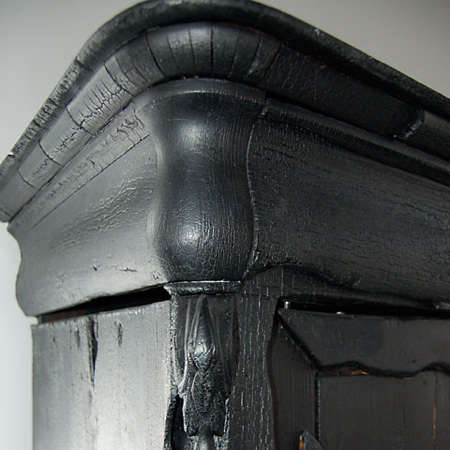
Some furniture enters a room politely. Maarten Baas’ "Where There’s Smoke" walks in smelling faintly of rebellion, art school, and a very expensive bonfire. It looks like the aftermath of a design-world disaster, yet it is anything but accidental. A chair is burned, blackened, preserved, and returned to function. The result is not junk. It is not a prank. It is one of the most provocative furniture ideas of the early twenty-first century.
At first glance, the work seems to ask a simple question: what happens when beautiful furniture is destroyed? But the better question is sneakier: what if destruction can become a form of preservation? With his Smoke furniture and the later "Where There’s Smoke" series, Dutch designer Maarten Baas turned the clean, glossy expectations of modern design upside down. He did not merely make chairs; he made arguments you can sit on.
Who Is Maarten Baas?
Maarten Baas is a Dutch artist and designer born in 1978. He studied at the Design Academy Eindhoven, a school famous for producing designers who do not treat furniture as obedient household equipment. Baas graduated in 2002 with the Smoke collection, a project that immediately gave him a reputation as a designer willing to poke tradition with a flaming stick.
His work often sits between art, design, theater, and humor. That in-between quality matters. Baas does not simply design objects that look nice next to a sofa. He creates pieces that ask what design is supposed to do in the first place. Should furniture be perfect? Should it last forever? Should it hide the marks of time, damage, and change? Or should it admit, with a slightly charred grin, that nothing stays pristine for long?
What Is "Where There’s Smoke"?
"Where There’s Smoke" is an extension of Baas’ original Smoke concept. In the Smoke collection, Baas burned furniture and then preserved the charred pieces with a transparent epoxy resin, making them strong and usable again. In 2004, the New York design gallery Moss collaborated with Baas on "Where There’s Smoke", a series in which he applied this fiery treatment to design classics by figures such as Gerrit Rietveld, Antoni Gaudí, Charles and Ray Eames, Ettore Sottsass, and others.
That detail is important because Baas was not burning anonymous thrift-store chairs and calling it philosophy. He was charring icons. He took pieces already loaded with design history and gave them a new surface, a new mood, and a new biography. The famous object survived, but it no longer looked like a museum label’s obedient little darling. It looked wounded, dramatic, alive, and oddly glamorous.
The Process: Burn, Preserve, Reuse
The production process sounds almost absurdly simple: take furniture, burn it, stabilize it, and use it again. In practice, it is far more controlled than a backyard barbecue with better PR. The wooden structure is set on fire until it chars. The burned texture is kept rather than sanded away. Damaged areas may be repaired so the object can function again. Once the piece has cooled, it is coated in epoxy resin, locking the blackened surface in place.
The epoxy does two jobs at once. First, it protects the fragile carbonized surface. Second, it creates a strange visual tension: the furniture looks ruined, yet it is durable enough to live another life. Some Smoke pieces, especially those produced by Moooi, combine burnt wood with fire-retardant foam and black leather upholstery. The finished object feels theatrical, but it is still furniture. You can sit in it, although you may feel as if you should apologize to a curator first.
Why Burning Furniture Became a Big Design Statement
Modern furniture history is full of ideal forms: the perfect line, the perfect curve, the perfect chair, the perfect ratio between comfort and elegance. Baas’ Smoke furniture introduces imperfection as the headline act. It rejects the idea that beauty must be smooth, polished, and untouched. Instead, it says beauty can be scarred, irregular, and transformed.
This is why Maarten Baas Smoke furniture remains so compelling. The pieces are not merely black chairs. They are conversations about time. Fire makes the past visible. It marks the object. It changes the form without completely erasing it. A burned Rietveld Zig Zag chair is still recognizably related to Rietveld’s radical modernist idea, but Baas adds a new chapter: design history is not frozen; it can be challenged, damaged, reborn, and still function.
Design Classics Under Fire
The most memorable part of "Where There’s Smoke" is its use of famous furniture designs. Baas transformed recognizable works including Rietveld’s Zig Zag chair, Mackintosh-inspired chairs, Sottsass pieces, and the Campana brothers’ Favela chair. Each piece became a one-of-a-kind object or part of a very limited edition.
The Rietveld Zig Zag chair is a particularly sharp example. The original design is a masterpiece of geometric clarity: a chair reduced to a few planes, almost like a lightning bolt you can sit on. When Baas burns it, the chair’s strict architectural confidence becomes unstable and ghostly. The clean modernist shape remains, but the surface now looks ancient, charred, and almost archaeological. It is as if modernism spent the night in a volcano and came back with better stories.
The Role of Moss Gallery in New York
Moss, the influential New York design gallery founded by Murray Moss, helped bring "Where There’s Smoke" into the American design conversation. The 2004 exhibition presented approximately fifty new pieces and positioned Baas not just as a young designer with a clever technique, but as someone actively wrestling with the canon of design itself.
That American context matters for SEO readers searching for Maarten Baas furniture, collectible design, or burnt wood chair. The project was not a quiet European experiment that stayed in a studio. It traveled into the high-stakes world of galleries, collectors, museums, and design criticism. It became part of the broader rise of collectible design, where furniture could function as usable object, sculpture, and market asset all at once.
Smoke by Moooi: From Experiment to Production
After Baas’ graduation project drew attention, Moooi brought key Smoke pieces into production, including the Smoke armchair, Smoke dining chair, and Smoke chandelier. This is where the idea became more widely accessible, at least to people whose furniture budgets do not faint easily.
The Moooi versions keep the essential drama of the original process: burnt wood, epoxy finish, dark upholstery, and an unmistakably charred texture. Each piece varies because fire refuses to behave like a factory robot. That variation is part of the attraction. In a world of identical flat-packed furniture, the Smoke chair says, “I have been through something.” Your average dining chair says, “Allen key included.” Different energy entirely.
Materials and Texture: Why Burnt Wood Feels So Magnetic
Burnt wood has a deep visual richness. It absorbs light. It creates cracks, ridges, shadows, and irregular patterns. In Baas’ hands, the surface is not a flaw to be repaired but the main event. The texture makes the chair feel primitive and futuristic at the same time. It can sit in a sleek white room and immediately become the object everyone circles around.
The appeal also comes from contradiction. Wood usually represents warmth, nature, craft, and domestic comfort. Fire represents danger, loss, and transformation. Epoxy represents technology and preservation. Baas fuses all three into one design language. The chair looks fragile but is reinforced. It looks ruined but is functional. It looks old but belongs unmistakably to contemporary design.
Is It Comfortable?
That is the practical question hiding behind all the poetry. The answer depends on the piece. Moooi’s Smoke dining chair and armchair are designed for use, with upholstery and structural restoration supporting the original function. One-off pieces from "Where There’s Smoke" may vary more because they are closer to art objects than standard products.
Still, comfort is not the only point. Nobody buys or studies Maarten Baas’ Smoke chair because they are looking for a shy chair to disappear under a breakfast table. The value is in the experience: the shock, the story, the handmade irregularity, and the way it shifts an interior from “tasteful” to “wait, is that chair burned?”
How to Style Maarten Baas Smoke Furniture
Smoke furniture works best when given room to breathe. A charred chair next to too many dramatic objects can make a room feel like a design argument with no moderator. Place it against clean walls, natural stone, concrete, pale wood, or minimal architecture, and the blackened surface becomes sculptural.
For residential interiors, one Smoke piece can act as a focal point. A Smoke armchair in a reading corner creates instant mood. A Smoke dining chair placed at the head of a table turns seating into a visual hierarchy. A Smoke chandelier gives a room a gothic edge without needing actual cobwebs, which is always nice for guests and fire inspectors.
In galleries, hotels, and concept stores, the pieces can be more theatrical. They suit interiors that want to communicate risk, taste, intelligence, and a little controlled chaos. The key is contrast. Let the burnt surface stand against smoother materials, and the furniture will do what Baas intended: make people rethink beauty.
Collecting and Market Value
Maarten Baas’ Smoke works occupy a strong position in the collectible design market. Production pieces by Moooi are different from unique gallery works, and limited or one-off pieces from "Where There’s Smoke" can command much higher attention from collectors. Auction records show continuing interest in Smoke tables, chairs, cabinets, and unique examples from the series.
Collectors care about several details: provenance, edition, condition, whether the piece was made by Moooi or as a unique Baas studio work, and whether it relates to an iconic historical design. A charred version of a famous chair carries more conceptual weight than a standard production object. Documentation matters, too. Because the surface is intentionally damaged, buyers need to understand what is original char, what is repair, and what might be later wear.
Why "Where There’s Smoke" Still Feels Fresh
More than two decades after the first Smoke pieces, the project still feels current because it speaks to questions that have only become louder. We live in a culture obsessed with newness, resale value, restoration, authenticity, sustainability, and image. Baas complicates all of that. He takes an object and damages it on purpose, yet the result becomes more valuable. He makes destruction look like care. He turns the fear of imperfection into a design strategy.
The work also resonates with contemporary conversations about reuse and transformation. Smoke is not straightforward sustainable design in the usual “made from recycled plastic bottles” sense. Its power is more philosophical. It asks whether an object has to remain unchanged to remain valuable. It suggests that beauty can come from adaptation, scars, and second lives.
Experience Notes: Living With the Idea of Smoke Furniture
Experiencing Maarten Baas "Where There’s Smoke" is different from simply looking at a furniture catalog. A normal product photo tells you shape, color, and maybe dimensions. Smoke furniture makes you imagine sound, heat, smell, and risk. Even when the chair is perfectly safe, the mind supplies the crackle of burning wood. That sensory memory gives the object unusual emotional force.
In a home setting, the first experience is usually surprise. Visitors notice the piece quickly because it breaks the rules of what “finished” furniture is supposed to look like. Most furniture tries to hide its trauma. Smoke furniture displays it like a medal. The blackened frame can make people hesitate before touching it, which is part of the fun. They expect ash on their fingers, but the epoxy-sealed surface tells a different story. The piece is both dangerous-looking and domesticated.
The second experience is conversation. A Smoke chair is not background furniture. It invites questions: Was it really burned? Can you sit on it? Why would someone do that? Is it art or design? Those questions are precisely why the work has endured. A good chair supports the body. A great design object supports a debate.
The third experience is contrast over time. At first, the charred surface dominates. Later, you begin noticing the familiar shape underneath. If the piece is based on a design classic, the original silhouette slowly reappears through the drama. That delayed recognition is satisfying. It feels like solving a visual riddle: the object is not destroyed beyond recognition; it is transformed just enough to make recognition meaningful again.
There is also a practical lesson for interior design. A room does not need many radical objects. One is usually enough. Smoke furniture works because it concentrates intensity. Place a Smoke chair beside calm materials such as linen, white plaster, oak flooring, or matte stone, and it becomes a controlled thunderstorm. Put it among too many loud pieces, and the effect can become visual shouting. The best interiors give it silence, space, and lighting that catches the texture without flattening it.
For design students, the experience is especially useful. Baas’ work proves that a strong concept can be simple without being shallow. “Burn the chair” sounds like a stunt until you understand the questions behind it: perfection, history, damage, function, and rebirth. The lesson is not that every designer should run toward the nearest chair with a lighter. Please do not. The lesson is that materials can carry meaning, and process can become narrative.
For collectors, living with Smoke furniture can feel like owning a moment when design stopped behaving. It is elegant, but not polite. It is collectible, but not precious in the traditional glossy sense. It gives a room character because it already has character built into its surface. Every crack and blackened edge reminds you that furniture does not have to be bland to be useful, and usefulness does not have to kill mystery.
Conclusion
Furniture: Maarten Baas "Where There’s Smoke" is more than a story about burnt chairs. It is a story about how design history can be questioned without being discarded. Baas took furniture icons, exposed them to fire, preserved their altered bodies, and returned them to the world as functional, poetic, unsettling objects.
The genius of the series is its balance. Too much destruction, and the furniture would be rubble. Too much preservation, and the idea would lose its bite. Baas finds the strange middle ground where damage becomes beauty and function survives transformation. That is why Smoke furniture remains memorable, collectible, and endlessly discussable. It looks like the end of an object, but it is actually a new beginning.











