
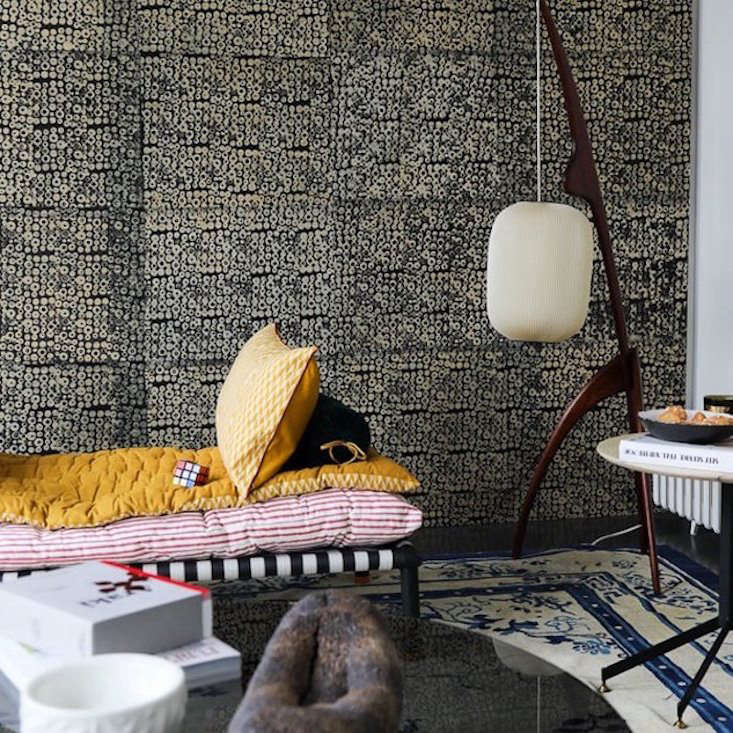
The Little Charpoi Mattress is the sort of design object that makes guests pause, lean closer, and ask, “Is that a bench, a bed, or an extremely stylish invitation to cancel my afternoon plans?” The answer is mostly a bench cushionbut its appeal comes from being much more than padding placed on a frame.
Created as the companion to the Little Charpoi bench, this petite mattress emerged from a collaboration between The Socialite Family and Parisian furnishings company Le Monde Sauvage. The design combined a traditional South Asian furniture form with graphic textiles, contemporary proportions, and the relaxed elegance associated with modern Parisian interiors.
Archival coverage from 2017 described the Little Charpoi as a black metal bench woven with black-and-white elastic, made in India, and paired with a coordinating mattress. At that time, the bench was listed at €220 and the mattress at €195. Those figures should be treated as historical references rather than current retail prices or proof of availability.
What Is the Little Charpoi Mattress?
Despite its name, the Little Charpoi Mattress was not promoted as a standard mattress for a twin bed, guest room, or nightly sleep. It functioned more like a fitted cushion or padded topper designed to sit on the Little Charpoi frame.
This distinction matters. A traditional sleeping mattress is engineered around sustained body support, pressure distribution, temperature regulation, and spinal alignment. A decorative charpoy mattress is usually intended for sitting, lounging, reading, taking a short nap, or dramatically declaring that you are unavailable until further notice.
The mattress softened the bench’s woven elastic surface while adding color, pattern, and textile richness. Without it, the frame had a sharper, more architectural appearance. With it, the Little Charpoi became a compact daybed-like furnishing that could visually bridge the gap between a bench, an ottoman, and a casual chaise.
Because surviving online product records are archival and sometimes contain mismatched descriptions, buyers considering a secondhand example should request exact dimensions, filling materials, fabric composition, weight limits, and care instructions from the seller. The historic product name alone is not enough to confirm construction details.
The Collaboration Behind the Design
The Socialite Family
The Socialite Family began in 2013 as an editorial platform documenting how contemporary families actually lived. Instead of presenting museum-like rooms where nobody had ever dropped a cracker, founder Constance Gennari focused on expressive homes filled with art, books, inherited objects, children’s belongings, and furniture that participated in daily life.
In 2017, the platform developed into an interiors brand. Its furniture collections have emphasized strong lines, premium materials, saturated color, European craftsmanship, and the cultural conversation between French and Italian design. The brand continues to describe its pieces as objects made for homes that are lived in, moved around, lounged upon, and occasionally spilled on.
The Little Charpoi fit naturally into this philosophy. It was visually distinctive without becoming stiff or ceremonial. It looked curated, but it also looked ready to hold a stack of magazines, two children, one sleepy adult, or a cat who had contributed absolutely nothing toward the purchase.
Le Monde Sauvage
Le Monde Sauvage brought a complementary sensibility rooted in textiles, travel, craft, color, and intentional imperfection. Established in 1970, the Parisian company has built an identity around interiors that feel collected rather than coordinated by an algorithm.
The brand describes travel and encounters with unfamiliar materials as central to its creative process. Its collections frequently combine layered fabrics, hand-finished surfaces, expressive colors, and details that reveal the work of artisans. This approach helps explain why the charpoya simple form shaped by regional craft traditionswas a logical foundation for the collaboration.
Together, the two companies created something that did not resemble standard mass-market seating. The Socialite Family contributed its understanding of real, personality-filled homes, while Le Monde Sauvage supplied a textile-rich, globally influenced vocabulary. The result felt French, Indian, vintage, modern, and pleasantly difficult to categorize.
The Traditional Charpoy Behind the Modern Piece
The Little Charpoi did not invent its basic form. Its inspiration came from the charpai, also spelled charpoy, charpaya, khat, manji, or manjaa traditional woven bed used across South Asia.
The name is commonly associated with words meaning “four” and “feet,” an admirably direct description. No branding workshop was required. A charpoy traditionally consists of four legs connected by a rectangular frame, with rope, cotton tape, natural fiber, or another flexible material woven across the opening.
This construction creates a surface that is lightweight, portable, naturally ventilated, and capable of functioning as a bed, daybed, bench, or communal seat. Traditional versions can be moved into courtyards, shaded areas, sleeping spaces, or social gathering places. The woven surface may also be tightened as it relaxes with use.
The form has a long and complex history. Museum collections show how Indian furniture techniques influenced objects made for Western markets during the nineteenth century. A stool in the Metropolitan Museum of Art, designed by American designer Lockwood de Forest and made in India in 1881, incorporates legs inspired by Indian charpoys. The object illustrates how craftsmen, travelers, designers, and commercial workshops have exchanged furniture ideas across cultures for generations.
The Little Charpoi therefore belongs to a broader history of reinterpretation. Its black metal frame and elastic weaving replaced the heavier wooden structure and natural rope associated with many traditional examples. The coordinating mattress added the plushness expected in a contemporary European interior while preserving the low, relaxed profile of the original furniture type.
Why the Little Charpoi Mattress Still Looks Relevant
A Low Profile Makes a Room Feel Open
Low furniture leaves more visible wall space and can make a room feel less crowded. The Little Charpoi’s compact silhouette would work especially well beneath a window, at the foot of a bed, along a hallway wall, or opposite a larger sofa.
Small-space designers often recommend multifunctional pieces that can handle more than one job. A daybed can serve as seating during the day and occasional sleeping space at night, while a bench can act as a perch, coffee-table substitute, luggage stand, or decorative anchor.
The Little Charpoi follows the same logic on a smaller scale. It does not dominate a room, yet it provides a useful horizontal surface. That makes it appealing for apartments where every piece of furniture must earn its square footage.
Graphic Weaving Creates Visual Energy
The black-and-white elastic webbing documented in archival coverage gave the frame a strong geometric character. Depending on the viewing angle, the woven pattern could resemble a check, grid, stripe, or handmade textile.
That graphic structure prevents the piece from disappearing into neutral surroundings. In a pale room, it creates contrast. In a colorful room, it acts as a visual outline that keeps patterns from turning into decorative soup.
The Mattress Adds Warmth and Softness
A metal frame and taut woven base can appear visually cool. A padded mattress introduces softness, making the piece feel more inviting and less like an attractive object that might ask visitors to remain standing.
Textiles also help connect the bench to the rest of a room. A patterned mattress can repeat the colors of artwork, curtains, pillows, rugs, or wallpaper. A solid mattress can calm a busy interior while allowing the woven frame to remain the main feature.
How to Style a Little Charpoi Mattress
Use It as a Living Room Daybed
Place the charpoy against a wall and add two or three pillows rather than constructing a pillow mountain visible from space. A cylindrical bolster at each end creates a more formal daybed appearance, while mismatched cushions make the arrangement feel casual and collected.
Pair it with a low side table and a swing-arm wall light to create a reading corner. Mounted lighting is particularly useful in compact rooms because it preserves floor space.
Position It at the Foot of a Bed
At the end of a bed, the Little Charpoi can hold folded blankets, tomorrow’s clothes, decorative pillows, or the mysterious pile of garments that is neither clean nor officially dirty.
For a cohesive bedroom, repeat one color from the mattress in the bed linens. Avoid matching every textile exactly. The charm of this design lies in layering rather than creating a showroom set where the curtains appear to have married the comforter.
Create an Entryway Landing Spot
In a wide entryway, the bench can provide a place to remove shoes, set down a bag, or wait for the one family member who announced “I’m ready” while still searching for a jacket.
Add a large mirror above it and place a basket nearby for shoes or scarves. Keep the accessories relatively simple so the charpoy’s woven structure remains visible.
Try It as Flexible Dining Seating
A small charpoy can function as bench seating on one side of a casual dining table, provided its height and stability are appropriate. Low-profile chairs on the opposite side maintain an open sightline, while the mattress makes longer meals more comfortable.
Bench seating can also be positioned behind a sofa with a compact table to create a secondary dining or work zone in a combined living space.
Comfort and Practical Use
The Little Charpoi Mattress should be judged according to its intended role. For sitting, reading, or occasional lounging, a relatively thin cushion may provide sufficient softness because the woven base already flexes under weight.
For nightly sleeping, however, shoppers should not assume that a decorative mattress offers the same support as a conventional bed. Mattress comfort depends on the interaction between the cushion and its foundation. Firmer, closely spaced support structures generally reduce sagging, while open foundations improve airflow.
A vintage or secondhand Little Charpoi should be checked for stretched elastic, loose frame connections, bent metal, uneven support, odors, stains, and compressed filling. Sit on several areas rather than testing only the center. If the base dips dramatically or produces noises resembling an experimental percussion concert, restoration may be necessary.
Cleaning and Caring for the Mattress
Begin by identifying the cover fabric and locating any surviving care label. Textile labels can provide fiber content, country of origin, manufacturer information, or cleaning instructions, although requirements differ depending on the product category and market.
For routine maintenance, use a vacuum with a clean upholstery attachment. Work gently along seams and edges, where crumbs and dust tend to establish permanent residency.
Blot spills immediately with a clean, light-colored cloth. Do not scrub, because scrubbing can spread a stain and damage the surface fibers. Before applying water, detergent, solvent, or steam, test the method on an inconspicuous area and follow the manufacturer’s cleaning code whenever one is available.
If the cover is velvet or another fabric with a visible nap, vacuum lightly and use a soft upholstery brush to restore the surface. Some velvets can tolerate low steam, while others require professional cleaning. Natural and synthetic velvets may react differently, so guessing based on appearance is risky.
Rotate a removable mattress periodically to distribute wear. Air it in a dry, shaded location and avoid prolonged exposure to strong sunlight, which can fade textiles. If the cushion becomes damp, allow it to dry completely before returning it to the frame.
Who Would Appreciate This Design?
The Little Charpoi Mattress is best suited to someone who values furniture with a story. It appeals to collectors of modern European design, admirers of handcrafted textiles, and homeowners who prefer one memorable piece over several anonymous ones.
It is also a smart concept for small apartments, creative studios, reading rooms, children’s spaces, guest rooms, and relaxed living areas. Its low height makes it visually unobtrusive, while its unusual form gives the room character.
It may be less suitable for buyers seeking a conventional guest bed, highly structured back support, built-in storage, or a replacement cushion that can be purchased easily from a standard mattress store. Because the original item appears to be an archived design, secondhand buyers should verify every measurement before committing.
Real-World Experience: Living With a Little Charpoi-Style Mattress
Imagine introducing a Little Charpoi-style bench into a modest living room that already contains a sofa, a bookcase, an area rug, and one accent chair nobody enjoys sitting in. The charpoy arrives looking almost too decorative to be practical. Its low frame seems small beside the sofa, while the patterned mattress immediately becomes the most confident textile in the room.
The first improvement comes from removing the unpopular accent chair. The charpoy takes its place beneath a window, opening the center of the room and improving the walking path. Unlike the chair, it can seat two people during a casual gathering. It also gives one person enough room to sit cross-legged with a laptop, although a tray is advisable unless balancing coffee above upholstery sounds like an exciting financial decision.
During the first week, the mattress mostly serves as a visual feature. A folded throw sits at one end, and two cushions rest against the wall. The arrangement looks photogenic, but the real test comes on the weekend. Someone uses it for reading, another person sits there while talking on the phone, and a guest chooses it instead of the sofa because the woven base has a gentle springiness.
The low height creates a relaxed posture rather than the upright position of a dining chair. That makes the piece comfortable for informal conversation, but older visitors or people with limited mobility may find it harder to stand up. This is an important practical consideration that beautiful product photographs rarely discuss.
After several weeks, the best styling approach becomes obvious: less is better. Four decorative pillows turn the charpoy into a textile storage system. Two pillows and one lightweight throw are enough. Leaving part of the mattress visible allows its pattern and shape to contribute to the room.
The bench also proves useful when entertaining. It can be moved closer to the coffee table for extra seating, positioned beside the sofa as a large ottoman, or cleared completely to hold books and serving trays. Its narrow profile makes these changes easier than moving a full-size daybed.
Maintenance becomes part of the experience. Dust and lint are more visible on bold fabrics, so a weekly pass with an upholstery attachment keeps the mattress fresh. The woven base should also be vacuumed because debris can collect between the elastic bands. A removable mattress is helpful here: lifting it exposes the structure and makes inspection easier.
Seasonal styling changes the personality of the piece without altering the furniture. In summer, linen pillows and a lightweight cotton throw emphasize its airy, globally inspired character. In winter, a wool blanket and deeper colors make it feel warmer. The mattress becomes a flexible layer rather than a fixed decorating decision.
The most satisfying part of living with a Little Charpoi-style piece is that it does not demand a perfectly coordinated room. It works with vintage furniture, contemporary lighting, modern art, handwoven rugs, and family objects. In fact, it looks more convincing when the surroundings have developed over time.
The main lesson is that this furniture succeeds when treated as usable design rather than a protected collectible. Sit on it, read on it, place it where people naturally gather, and care for the textile according to its actual material. A charpoy that nobody is allowed to touch has missed the point rather spectacularly.
Conclusion
The Little Charpoi Mattress by The Socialite Family and Le Monde Sauvage represents a thoughtful meeting of traditional form and contemporary interior design. Its appeal comes from contrast: woven structure and soft padding, black geometry and expressive textiles, cultural history and modern apartment living.
Although the original product is primarily documented through archival coverage, its design remains relevant. Today’s interiors still benefit from low-profile furniture, multifunctional seating, tactile materials, and objects that carry a stronger identity than the average beige bench.
Whether encountered as a collectible original, a secondhand discovery, or inspiration for styling another charpoy, the mattress reminds us that furniture does not need to fit neatly into one category. Sometimes the most useful piece in a room is part bench, part daybed, part conversation starterand entirely prepared for an afternoon nap.
Note: The Little Charpoi and its coordinating mattress are archival designs. Historical prices, materials, and availability may no longer apply. Verify dimensions, construction, condition, cleaning requirements, and intended use directly with the current seller before purchasing.












