
Editorial note: This article examines a viral online comparison and the public evidence surrounding an ongoing criminal case. Luigi Mangione has pleaded not guilty and is presumed innocent unless proven guilty in court. The word “assassin” appears here as part of the viral headline, not as a legal description of Mangione.
The internet loves a mystery, especially when the available evidence consists of grainy surveillance images, partial faces, changing clothes, dramatic captions, and enough loose pixels to keep thousands of amateur detectives awake past midnight.
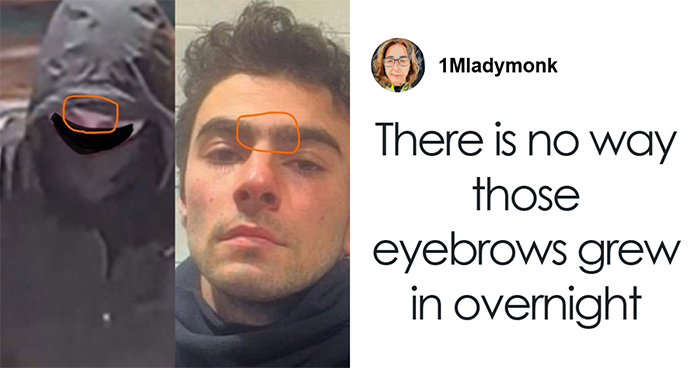
That combination powered the viral claim behind “The Plot Thickens” posts comparing Luigi Mangione with images of the masked gunman who killed UnitedHealthcare CEO Brian Thompson in Manhattan. Social media users circled eyebrows, drew lines beside noses, compared backpacks, adjusted brightness, and announced that the pictures supposedly showed two different people.
The comparisons were visually persuasive to many viewers. They were not, however, the same thing as a verified forensic analysis. Some posts also blended surveillance images taken at different locations and times, occasionally pairing them with altered, mislabeled, or artificial-intelligence-generated pictures.
So, what differences did people notice? Why did the theory spread so rapidly? And do mismatched eyebrows or jackets prove that authorities arrested the wrong person? The honest answer is less thrilling than a conspiracy thread but far more useful: individual screenshots can raise reasonable questions, yet they cannot settle identity or guilt without the complete evidentiary record.
What Happened in the UnitedHealthcare CEO Shooting?
Brian Thompson, 50, was fatally shot on December 4, 2024, while walking toward a Midtown Manhattan hotel where UnitedHealth Group was holding an investor conference. Surveillance footage showed a masked gunman approaching from behind, firing, and fleeing the area.
During the ensuing manhunt, investigators released several surveillance images. Some showed a heavily covered figure near the crime scene. Others reportedly showed a person authorities believed to be the same suspect at a Starbucks, inside a taxi, and at an Upper West Side hostel. The clearest early image came from the hostel, where the man briefly lowered his mask while speaking with an employee.
Luigi Mangione was arrested five days later at a McDonald’s in Altoona, Pennsylvania. Authorities alleged that he possessed fraudulent identification, a face mask, handwritten materials, and a 3D-printed firearm. Federal prosecutors subsequently accused him of traveling across state lines and using interstate facilities while stalking Thompson. Those remain prosecution allegations rather than established trial findings.
The Viral Luigi Mangione Photo Comparison
The phrase “the plot thickens” accompanied collages comparing Mangione’s booking photographs with selected surveillance stills. The posts generally focused on four supposed inconsistencies: eyebrows, eyes and nose, clothing, and backpack design.
On a smartphone screen, these differences could look dramatic. Place two compressed images side by side, add arrows, zoom until every eyebrow hair resembles a tree branch, and suddenly the viewer feels one detective badge away from solving the case.
That feeling is powerful. It is also unreliable.
1. The Eyebrows Looked Different
The most repeated claim concerned Mangione’s thick, prominent eyebrows. In some surveillance stills, the visible eyebrows appeared thinner, shorter, or more widely separated. Viral commenters argued that eyebrow density could not change enough within a few days to explain the difference.
The problem is that the comparison often treated a low-resolution, shadowed image as though it were a studio portrait. A hood can cover the upper brow. A mask can pull attention toward the eyes. Video compression can erase fine hairs, while sharpening software can exaggerate darker ones. Camera angle also changes the apparent distance between the brows.
The eyebrow debate became even more complicated during a December 2025 pretrial hearing. Prosecutors displayed notes found during Mangione’s arrest that they said included the instruction, “Change hat, shoes, pluck eyebrows.” The defense challenged the legality of the search that produced evidence from his backpack, and the significance of any individual note remains a matter for the courts. Still, the reported wording demonstrates why an eyebrow-only theory is not as straightforward as viral posts suggested.
2. The Eyes and Nose Seemed Wrong
Other users claimed the suspect’s eyes were a different shape or that the bridge of his nose appeared narrower. Again, those observations are understandable. They simply are not conclusive.
A person looking down into a surveillance camera will not resemble the same person facing a booking camera directly. Lens distortion can widen or narrow central facial features. Shadows created by a hood may alter the perceived eye sockets, while a tight mask can change the visible contours around the nose and cheeks.
The National Institute of Standards and Technology identifies illumination, focus, head position, facial expression, resolution, noise, and occlusion as factors that can affect face-image quality and recognition performance. In ordinary language: a security camera mounted near a ceiling is not a magical truth machine.
3. The Jackets Did Not Match
Some collages showed a dark jacket in one frame and a lighter brown or greenish jacket in another. Posters treated the clothing change as proof that the photographed individuals could not be the same person.
There are several problems with that conclusion. First, the publicly released images were not all captured at the same moment. They came from different cameras and locations during a wider timeline. Second, lighting and color processing can make dark green, gray, brown, and black fabric appear surprisingly different. Anyone who has ordered clothing online knows that “charcoal” can arrive looking like black, blue, or the emotional color of disappointment.
Third, changing outerwear is physically possible. Investigators also reported recovering clothing from a backpack found during the manhunt, although whether every publicly discussed item can be connected to the shooter is an evidentiary questionnot something a collage can decide. The existence of different jackets may deserve scrutiny, but it does not independently establish two identities.
4. The Backpacks Appeared Different
The shooting footage showed the gunman with a distinctive light-colored backpack. Later images appeared to feature bags with different colors, straps, or dimensions. This became another central pillar of the “wrong man” theory.
Yet a backpack can be discarded, replaced, packed inside another bag, or distorted by camera perspective. Authorities said a backpack believed to be associated with the suspect was recovered in Central Park and reportedly contained a jacket and Monopoly money. Whether that bag, the crime-scene bag, and other bags shown in public images are conclusively connected must be evaluated through authenticated evidence, witness testimony, surveillance continuity, and forensic examinationnot strap-color analysis performed through a reposted JPEG.
Why the Photo Differences Went Viral
The theory spread because it offered a simple, visual story: the authorities said they had their suspect, but the internet believed it had spotted an obvious mistake. That narrative is emotionally satisfying because it allows viewers to feel smarter than institutions with nothing more than two screenshots and a red circle.
It also appeared during a period of intense anger about medical bills, denied insurance claims, prior authorization, and the power of large healthcare corporations. Some online communities transformed Mangione into a symbol before the evidence had been tested. Once people became emotionally invested in his innocence, guilt, attractiveness, politics, or symbolic meaning, every pixel started behaving like supporting evidence.
TIME documented how fabricated alibis and manipulated images rapidly circulated after Mangione’s arrest. WIRED reported that online communities scrutinized everything from eyebrow hairs to numbers and Monopoly references, producing an expanding universe of theories. The case was no longer merely a criminal prosecution; it had become participatory internet mythology.
The Danger of Comparing Unverified Images
One of the biggest weaknesses in viral photo analysis is source confusion. A collage may include an official surveillance still, a cropped news image, an enhanced screenshot, a mirror-flipped version, and a photograph downloaded from an anonymous account. After several rounds of reposting, viewers may have no idea which image came from law enforcement and which one was created in somebody’s bedroom at 2:14 a.m.
That risk was not hypothetical. Reuters verified that one widely shared image presented as a Mangione mug shot was generated using artificial-intelligence tools. Snopes separately examined authentic and questionable images circulating around the case, while PolitiFact investigated unsupported claims about writings falsely attributed to Mangione.
Once a synthetic or edited image enters a comparison, every conclusion drawn from it becomes contaminated. The eyebrows may look different because one set of eyebrows never existed. That is a fairly important footnote.
A Criminal Case Is More Than a Facial Resemblance Test
Identity evidence in a serious prosecution can include video sequences, timestamps, travel records, witness accounts, fingerprints, DNA, electronic records, recovered objects, purchase histories, identification documents, ballistics, and statements. Each item must be authenticated and may be contested by the defense.
Prosecutors have described a broader collection of evidence they say connects Mangione to the killing, including extensive video footage, forensic material, a fraudulent identification card resembling one used at the hostel, a firearm, and writings. His lawyers have challenged searches, statements, legal theories, and the admissibility of evidence. A New York judge ruled in May 2026 that prosecutors could introduce a gun and notebook recovered during a later search, while suppressing certain other backpack contents because of problems with an earlier search.
This does not mean the prosecution is automatically correct. Nor does it mean internet users must ignore visible inconsistencies. It means those inconsistencies belong inside a complete legal and forensic analysis, where evidence can be examined in its original form and challenged through adversarial proceedings.
Where the Luigi Mangione Case Stands
As of July 31, 2026, Mangione has pleaded not guilty in the state and federal cases. His New York state trial on murder, weapons, and forgery charges is scheduled to begin September 8, 2026.
In the federal case, a judge dismissed the murder-through-a-firearm and related weapons counts, eliminating the death penalty as a possible federal punishment. Mangione still faces two federal stalking counts carrying a potential life sentence. Jury selection is scheduled for January 5, 2027, with opening statements expected January 25, 2027.
Those dates matter because social media often speaks as though a final verdict has already been delivered. It has not. The prosecution will have to prove its allegations, the defense will be able to challenge the evidence, and jurorsnot viral commenterswill ultimately evaluate the cases presented to them.
A Practical Reader Experience: Evaluating the Viral Comparison Yourself
Imagine encountering the collage for the first time. The headline says, “The plot thickens.” One image shows a masked figure with a narrow strip of face visible. Another shows Mangione looking directly toward a camera. Arrows point toward the eyebrows. Captions announce that the nose, jacket, and backpack are different.
Your first reaction may be, “They really do look different.” That reaction is not foolish. Human beings are designed to notice patterns and facial distinctions. The responsible next step, however, is to slow down before converting an impression into a conclusion.
Check Where Every Image Originated
Start by identifying the original source of each photograph. Was it released by the NYPD, Pennsylvania authorities, a courtroom, or a news organization? Is it a genuine booking photo? Has it been mirrored, sharpened, colorized, or enlarged?
A reverse-image search may reveal that the version in the collage was cropped from a larger frame. It may also show that an alleged mug shot appeared first on an account describing it as digital art. That discovery immediately changes the value of the comparison.
Compare Like With Like
Next, look for images captured under similar conditions. Compare frontal views with frontal views, not a ceiling-mounted camera with a straight-on portrait. Look for matching head position, facial expression, lighting, and resolution.
If one image contains 40 useful pixels across the face and the other contains several hundred, tiny differences may reflect missing information rather than different anatomy. Enlarging a blurry face does not create new detail. It creates larger blur, which is the digital equivalent of shouting the same uncertain answer.
Separate Observations From Conclusions
“The eyebrow appears thinner” is an observation. “Therefore, it is definitely another person” is a conclusion. Several additional explanations must be eliminated before the conclusion becomes reliable: shadow, compression, grooming, pose, obstruction, editing, and image authenticity.
Use cautious language such as “may,” “appears,” and “cannot be determined from this image.” Those phrases are not signs of weakness. They are signs that the speaker understands the limits of the evidence.
Look Beyond the Most Shareable Detail
Eyebrows are easy to circle. Surveillance timelines are not. A proper assessment asks whether investigators followed a continuous route across cameras, whether timestamps align, whether the same identification was used, whether travel records correspond, and whether physical evidence is independently connected.
A viral post naturally highlights the easiest clue to understand. Courts must examine the less glamorous material toothe records, authentication testimony, laboratory procedures, search warrants, chain of custody, and competing expert opinions. No one has ever made chain-of-custody paperwork go viral, but it matters considerably more than a dramatic arrow.
Keep Moral Anger Separate From Factual Judgment
Many Americans have painful experiences with the healthcare system. People may have faced rejected claims, unaffordable medication, confusing bills, or delayed treatment. Those experiences deserve serious public debate and policy attention.
They do not determine whether a particular defendant committed a particular crime. Supporting healthcare reform is not evidence of Mangione’s innocence. Criticizing violence is not evidence of his guilt. A fair evaluation requires keeping social grievances, emotional reactions, and factual findings in separate mental folders.
Be Comfortable With an Unfinished Answer
After checking the images, you may still believe some differences deserve explanation. That is a reasonable position. You may also conclude that the public screenshots are too poor to support a confident identification. That is reasonable too.
The mistake is jumping from uncertainty to certainty because certainty earns more likes. “I do not know from these photographs” is often the most accurate answer available. It may not thicken the plot, but it prevents the plot from being manufactured out of compression artifacts.
Conclusion
The viral comparison between the masked gunman and Luigi Mangione succeeded because it transformed a complex criminal investigation into an instantly understandable visual puzzle. The eyebrows looked different. The jackets changed. The backpacks did not seem to match. To millions of viewers, the conclusion appeared obvious.
But visual discrepancies in isolated surveillance stills are not proof of mistaken identity. Different cameras, lighting, angles, masks, compression, clothing changes, image manipulation, and even synthetic media can create major apparent inconsistencies. At the same time, questions about identification and evidence should not be mocked or dismissed; they should be examined using original files, qualified experts, authenticated records, and the full judicial process.
The plot may indeed be thick. The internet, however, has a habit of adding its own cornstarch.
Publication note: Because this case remains active, editors should review the legal status and scheduled trial dates again immediately before publication.












