
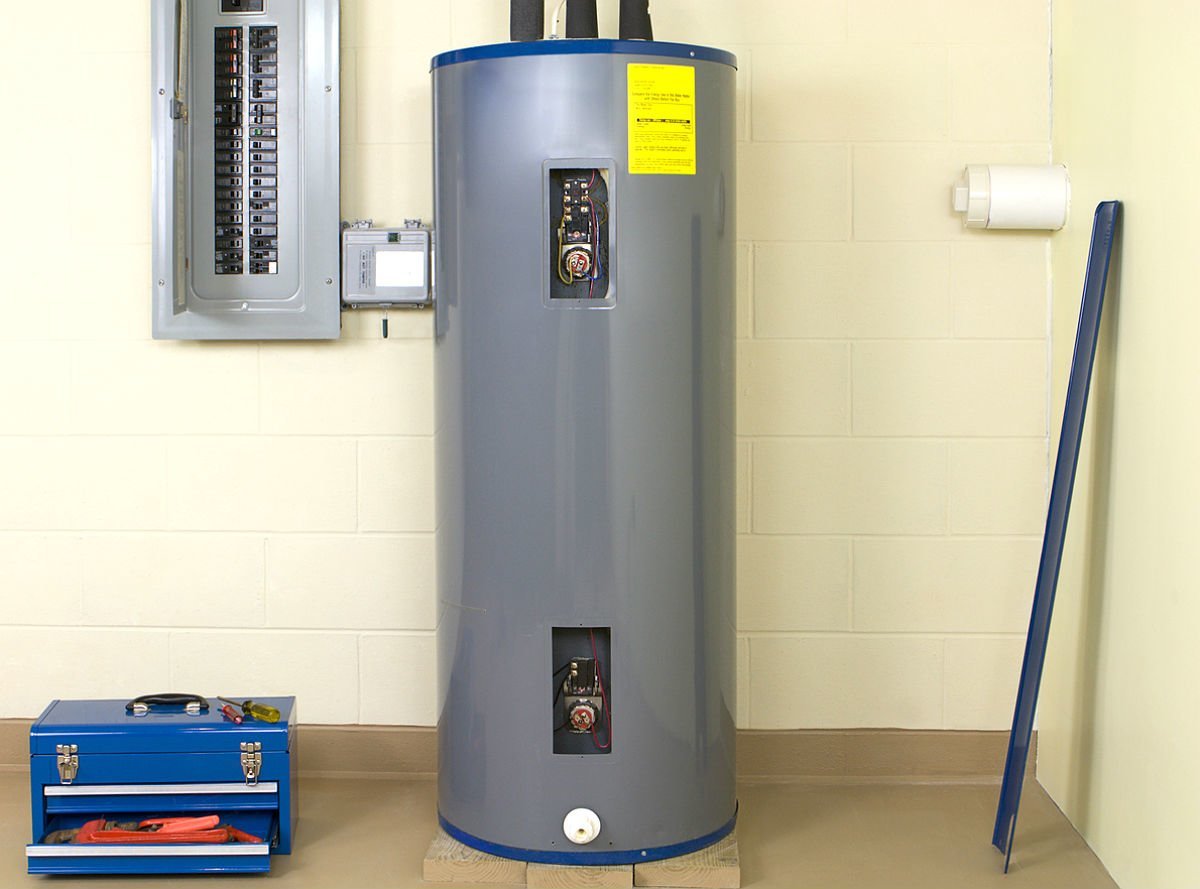
Choosing a water heater by tank capacity alone is a little like buying shoes based only on their color. The number matters, but it does not tell the whole story. A 50-gallon heater with a fast recovery rate may outperform a larger unit that reheats water at the speed of a sleepy tortoise.
The right water heater size depends on household size, peak-hour hot water demand, fuel type, recovery rate, fixture flow rates, and local incoming-water temperature. For a storage model, focus on the first-hour rating. For a tankless water heater, calculate the required gallons per minute and temperature rise.
Quick Answer: What Size Water Heater Do I Need?
For a conventional tank water heater, these ranges provide a useful starting point:
| Household Size | Suggested Tank Capacity | Typical Target FHR |
|---|---|---|
| 1 to 2 people | 30 to 40 gallons | About 40 to 55 gallons |
| 3 people | 40 to 50 gallons | About 55 to 65 gallons |
| 4 people | 50 to 60 gallons | About 65 to 75 gallons |
| 5 or more people | 60 to 80 gallons | 75 gallons or more |
These figures are estimates, not plumbing commandments carved into a copper pipe. Two adults who take short showers may use less hot water than one bath-loving teenager. Always compare the heater’s performance with what the household actually does during its busiest hour.
Why Tank Capacity Is Only the Beginning
A storage water heater combines already-heated water in its tank with water it heats while the household is using it. Consequently, two units with identical tank capacities can deliver very different amounts of usable hot water.
First-Hour Rating
The first-hour rating, or FHR, estimates how many gallons of hot water a storage heater can supply in one hour when it begins with a fully heated tank. It accounts for both stored water and the unit’s recovery performance.
FHR appears on the yellow EnergyGuide label and in the product specifications. Choose a model with a first-hour rating close to, or slightly above, the household’s peak-hour demand. An enormous surplus generally means paying for capacity that may rarely be useful.
Recovery Rate
Recovery rate describes how quickly a heater can reheat incoming cold water. Gas-fired tanks frequently have stronger recovery than standard electric resistance models, although performance varies significantly by product. Burner input, heating-element wattage, efficiency, and incoming-water temperature all affect recovery.
This explains why a 50-gallon gas unit can sometimes keep up with a household better than a 50-gallon electric model. The tanks look equally impressive in a product listing, but one may recover much faster after consecutive showers.
How to Calculate Peak-Hour Hot Water Demand
Identify the busiest continuous 60-minute period in a typical day. For many homes, it is the morning rush. Count only activities likely to overlap during that hournot every gallon used from sunrise to bedtime.
- List the showers, baths, faucets, and hot-water appliances used during the busiest hour.
- Estimate the hot water consumed by each activity.
- Add the amounts together.
- Choose a storage heater whose FHR meets or modestly exceeds the total.
A modern showerhead may flow at 2.0 gallons per minute, while a standard model may use up to 2.5 gallons per minute. However, shower water is a mixture of hot and cold water. A 10-minute shower does not necessarily draw 20 to 25 gallons directly from the heater.
A Specific Four-Person Example
Suppose a family takes three 10-minute showers during the morning peak. Each shower uses approximately 16 gallons of water from the heater after accounting for cold-water mixing. Someone also uses 3 gallons of hot water at a sink.
The estimated peak demand is 16 + 16 + 16 + 3 = 51 gallons. A tank water heater with an FHR in the mid-50s or higher should cover that routine. If the fourth person regularly joins the shower relay, the family should look for a higher FHR rather than hoping the laws of thermodynamics take the morning off.
What Size Tankless Water Heater Do I Need?
Tankless water heaters are not sized by storage capacity. They are rated by the flow they can heat continuously, expressed in gallons per minute. Correct sizing requires two numbers: simultaneous flow rate and temperature rise.
Step 1: Add Simultaneous Flow Rates
List the fixtures that may operate at the same time and add their flow rates. Use the actual ratings printed on fixtures and appliances whenever possible.
| Possible Combination | Example Flow Requirement |
|---|---|
| One efficient shower and a faucet | Approximately 3.0 GPM |
| Two efficient showers | Approximately 4.0 GPM |
| Two showers and a dishwasher | Approximately 5.5 to 6.0 GPM |
| Three showers and another fixture | Approximately 7.0 GPM or more |
Step 2: Calculate Temperature Rise
Temperature rise is the difference between incoming groundwater temperature and the desired output temperature:
Desired output temperature − incoming water temperature = required temperature rise
If incoming water is 50°F and the desired output is 120°F, the heater must produce a 70°F rise. The same unit can deliver more GPM in a warm climate with 70°F inlet water than in a northern winter where inlet water approaches 40°F.
Check a manufacturer’s performance table at the required rise. The maximum GPM printed in large type may reflect favorable test conditions and may not represent winter performance at a specific home.
How Water Heater Type Changes the Answer
Gas Storage Water Heaters
Gas tanks often recover quickly and can provide a strong FHR without an unusually large tank. Installation must accommodate the correct fuel supply, combustion air, venting system, clearances, and local code requirements. A larger burner may also require changes to the gas line or vent.
Electric Resistance Water Heaters
Standard electric tanks are widely available and usually simpler to place because they do not need combustion venting. Their recovery can be slower than that of comparable gas models, so FHR deserves special attention in homes with clustered shower schedules.
Heat-Pump Water Heaters
A heat-pump water heater moves heat from the surrounding air into the tank. It can use substantially less electricity than a conventional resistance unit, but sizing and location matter. These heaters commonly come in 50-, 65-, and 80-gallon capacities.
Upsizing can be beneficial for a household with heavy peak demand. A larger tank stores more heat and may reduce reliance on less-efficient backup resistance elements. The installation area must also satisfy the manufacturer’s requirements for temperature, air volume, condensate drainage, noise, and ducting.
Tankless Water Heaters
A properly sized tankless unit can supply hot water continuously, but “endless” does not mean “unlimited.” If demand exceeds its capacity, water may arrive cooler or the flow may be restricted. Whole-house electric tankless models can also require substantial electrical capacity, while high-output gas units may need upgraded fuel lines and specialized venting.
Other Factors That Affect Water Heater Size
- Number of bathrooms: Simultaneous showers can matter more than the number of occupants.
- Bathtubs: Large soaking tubs can create a major single draw that a small tank cannot comfortably cover.
- Guest patterns: Frequent overnight visitors justify more reserve than a once-a-year holiday invasion.
- Appliances: Confirm whether the dishwasher and clothes washer use household hot water or heat water internally.
- Fixture efficiency: Low-flow showerheads can reduce both water use and required heating capacity.
- Incoming-water temperature: Colder water increases the heater’s workload and reduces tankless output.
- Available space: A larger tank may not fit through the doorway or beneath existing pipes.
- Future needs: Consider a growing family, planned bathroom addition, or new soaking tub.
Should You Oversize a Water Heater?
A small performance cushion is sensible. Buying dramatically more capacity than necessary is not automatically better. An oversized storage heater usually costs more, occupies more space, and may increase standby heat loss. An oversized tankless model may require costly utility upgrades without improving comfort during normal use.
Heat-pump models are a partial exception because additional storage can help the system remain in efficient heat-pump mode. Even then, the choice should reflect peak demand, installation conditions, utility rates, and manufacturer guidance rather than a simple “bigger wins” rule.
Common Sizing Mistakes
- Replacing an old heater with the same gallon capacity without checking whether household habits have changed.
- Comparing tank volume while ignoring first-hour rating and recovery.
- Sizing tankless equipment by average daily consumption instead of simultaneous flow.
- Ignoring winter groundwater temperature when calculating tankless performance.
- Assuming every showerhead uses the same GPM.
- Turning the thermostat dangerously high to compensate for inadequate capacity.
- Buying a unit before measuring the installation area, doorways, connections, and service clearances.
For many households, approximately 120°F is a practical water-heater setting that balances comfort, energy use, and scald protection. Homes with special health or sanitation considerations should seek professional guidance. Raising storage temperature requires careful evaluation and may call for a thermostatic mixing valve.
Final Verdict
A 30- to 40-gallon storage heater often works for one or two people, 40 to 50 gallons may serve three people, and many four-person households start around 50 gallons. Larger families commonly need 60 to 80 gallons or a high-recovery system. These are only screening ranges.
The reliable answer comes from matching peak-hour demand to a tank model’s FHR. For tankless equipment, add simultaneous fixture flow and verify the model’s GPM at the home’s required temperature rise. That small amount of homework is considerably more pleasant than discovering the sizing mistake while covered in shampoo.
Real-World Experiences: What Homeowners Often Learn
The following experience-based scenarios reflect common household outcomes rather than guarantees for every home.
The Same-Size Replacement That Felt Smaller
A family replaces an aging 50-gallon gas heater with a basic 50-gallon electric model. Because the label still says “50 gallons,” everyone expects identical performance. The first morning produces a surprise: the third shower turns lukewarm.
The issue is not necessarily a defective heater. The new model may have a lower recovery rate and FHR than the old gas unit. The lesson is simple but expensive: tank capacity is not a complete performance specification. Comparing FHR before purchasing could have revealed the difference.
The Tankless Unit That Worked Until January
Another household installs a tankless heater after checking its advertised maximum flow. Summer performance is excellent. In winter, two simultaneous showers become less impressive because incoming water is much colder.
The heater must now produce a larger temperature rise, reducing the flow it can heat to the desired temperature. The unit did not mysteriously become lazy; it reached its operating limit. Checking the cold-climate performance chartor choosing a higher-output modelwould have produced a more realistic expectation.
The Family That Solved the Problem With a Showerhead
A household assumes it needs an expensive larger heater because hot water runs out during the morning rush. Before replacing anything, the homeowners measure their two showerheads and discover that both use considerably more water than efficient alternatives.
After installing 2.0-GPM WaterSense-labeled showerheads, peak demand falls enough for the existing heater to keep pace. Water and energy consumption decline at the same time. It is not the most dramatic remodeling story, but neither is writing a large check for capacity the household did not need.
The Heat-Pump Heater That Needed More Breathing Room
A homeowner chooses a heat-pump water heater based solely on efficiency and tank size, then places it in a cramped closet. Performance disappoints, noise is more noticeable, and the surrounding space becomes cool.
Heat-pump units draw energy from ambient air and must be installed according to product requirements. In some homes, a louvered door, appropriate ducting, or a different location solves the problem. The experience demonstrates that physical environment is part of sizing: a technically adequate tank can still perform poorly in an unsuitable space.
The Four-Person Household With a 40-Gallon Success Story
Not every family needs a huge tank. One four-person household uses efficient showerheads, staggers showers, runs appliances later, and rarely fills a bathtub. A high-performing 40-gallon gas heater with a strong FHR may meet that routine comfortably.
Meanwhile, another four-person family takes simultaneous showers and regularly fills a large soaking tub. It may need a 60-gallon tank, a high-recovery model, or a carefully sized tankless system. Head count helps narrow the choices, but habits make the final decision.
Note: Water-heater selection and installation can involve gas, electricity, combustion venting, pressure relief, structural support, drainage, permits, and local codes. Have a qualified, licensed professional verify the final size and installation requirements before purchasing equipment.












