
Note: This ranking is editorial and subjective. Trailer details were verified using official publisher materials and reputable gaming publications.
Some video game trailers explain the gameplay loop. Others list features, flashuses that require a flowchart to understand. Then there are the rare trailers that forget they are advertisements and casually become short films.
The best cinematic game trailers establish characters, create conflict, build atmosphere, and deliver an emotional payoff within minutes. You do not need to understand the franchise, memorize its lore, or know which button makes the hero dodge. The images, music, editing, and performances do the storytelling for you.
For this ranking, visual quality alone is not enough. Each selection must feel like a scene from a larger movie, not simply a collection of attractive explosions. Narrative structure, cinematography, sound design, emotional impact, and the dangerous ability to make viewers demand a feature-length adaptation all count.
Dim the lights, silence your phone, and prepare to ask the same question ten times: Why is this not already a movie?
10. The Last of Us Part II Reveal Trailer
The 2016 reveal trailer for The Last of Us Part II does not begin with gunfire or a monster attack. It begins in silence, moving slowly through a forest before entering a house stained by violence.
Inside, an older Ellie sits with a guitar. Her hands shake, blood marks her face, and bodies lie nearby. She performs a bleak version of “Through the Valley” while Joel quietly enters the room. Their brief conversation ends with Ellie promising revenge against an unnamed group.
Why It Feels Like a Movie
The trailer trusts the audience to read the environment. It never stops to explain the bodies, Ellie’s injuries, or the tension between the two characters. Instead, it uses framing, music, and restrained dialogue to suggest an entire emotional history.
It plays like the final scene of a prestige revenge dramaor possibly the opening scene of one. Either way, it leaves viewers with questions rather than a product checklist, which is exactly why it works.
9. Assassin’s Creed Revelations E3 2011 Trailer
Ezio Auditore had already survived conspiracies, rooftop chases, and enough guards to destroy the helmet industry. The E3 trailer for Assassin’s Creed Revelations finally presents him as an aging warrior approaching the end of his journey.
Captured near Masyaf, Ezio faces execution while visions of Altaïr appear around him. The action is beautifully choreographed, but the trailer’s real strength is its sense of exhaustion. Ezio is still dangerous, yet every movement suggests a man carrying decades of loss.
Why It Feels Like a Movie
The trailer combines historical epic, character drama, and stylish action without turning into an incoherent montage. Its use of Woodkid’s “Iron” gives the sequence a solemn rhythm, making every blow feel connected to Ezio’s past.
This is not merely an assassin escaping a rope. It is a hero confronting his legacy while the ghost of another legend watches. Hollywood has built entire trilogies from less.
8. Cyberpunk 2077 2013 Teaser Trailer
Years before players could explore Night City, the first major Cyberpunk 2077 teaser introduced the world through one frozen moment of futuristic violence.
A cybernetically modified woman stands in the middle of a massacre while bullets shatter against her body. The camera moves through the chaos in extreme slow motion as the song “Bullets” by Archive adds a strange, mournful calm. A specialized police unit arrives, but the ending complicates the situation by suggesting that the woman may eventually join them.
Why It Feels Like a Movie
The sequence resembles the opening of a stylish science-fiction noir. It provides almost no traditional exposition, yet it communicates the basic tensions of the setting: advanced technology, psychological collapse, corporate power, and the uncertain boundary between criminal and enforcer.
Its imagery is sleek without feeling clean. Every frame suggests a city where beauty and brutality share the same apartmentand neither pays rent on time.
7. Halo 3 “Believe”
The Halo 3 “Believe” campaign made an unusual choice: instead of showing Master Chief winning a battle, it treated him as a historical figure whose actions were being remembered years later.
Its centerpiece moves through an enormous handcrafted battlefield diorama. Human soldiers and Covenant forces are frozen in moments of terror, courage, and defeat. The camera eventually reaches Master Chief, apparently captured by the enemy, before revealing one tiny sign that the fight may not be over.
Why It Feels Like a Movie
The trailer borrows the visual language of war museums and historical documentaries. Master Chief is not presented merely as a powerful armored character. He becomes a legend reconstructed through artifacts, veterans’ memories, and carefully preserved images.
The absence of conventional gameplay makes the campaign feel even larger. It asks viewers to think about sacrifice and memory instead of ammunition capacity. For a commercial designed to sell a shooter, that is a remarkably ambitious move.
6. World of Warcraft: Wrath of the Lich King Cinematic Trailer
Arthas Menethil walks through a frozen wilderness while the voice of his father recalls the hopes once placed upon him. The words describe a noble king who would rule with wisdom and inspire his people. The images reveal the horrifying opposite.
Arthas raises the dragon Sindragosa from the ice and stands before an undead army, transforming a father’s loving speech into a tragic commentary on everything his son has become.
Why It Feels Like a Movie
The trailer is built around dramatic irony. The narration celebrates Arthas as a future protector while the visuals expose him as the ruler of the Scourge. That contrast gives the cinematic emotional weight even for viewers who know nothing about Warcraft lore.
Its pacing is patient, its landscapes are enormous, and its final image could close the first act of an expensive dark-fantasy film. It also proves that quietly raising one skeletal dragon can be more intimidating than detonating fifteen cities.
5. Diablo IV “By Three They Come”
The announcement cinematic for Diablo IV begins like a grim archaeological adventure. A group of treasure hunters enters an ancient ruin, solves a ritual puzzle, and discovers that the cost of opening the final door is much higher than anyone mentioned in the expedition brochure.
Paranoia spreads through the group as blood becomes the key to an elaborate summoning. The survivors are gradually reduced to ingredients, allowing Lilith to enter the world through a grotesque curtain of flesh and crimson fabric.
Why It Feels Like a Movie
At nearly nine minutes, “By Three They Come” has enough time to establish personalities, create distrust, and escalate from treasure hunt to supernatural nightmare. The characters are not anonymous warriors posing for screenshots. They behave like desperate people trapped in a horror film.
The cinematography favors shadows, confined spaces, and uncomfortable close-ups. By the time Lilith appears, the trailer has moved from fantasy adventure to occult horror without losing control of its tone. It is essentially a complete short moviejust one with an unusually disturbing birth scene.
4. Star Wars: The Old Republic “Deceived”
“Deceived” depicts the Sith Empire’s assault on the Jedi Temple during the Sacking of Coruscant. Darth Malgus enters the temple with a small strike team before an army crashes through the building behind him.
What follows is a spectacular battle involving Jedi, Sith, troopers, lightsabers, explosions, and enough property damage to keep the Coruscant insurance industry busy for several centuries.
Why It Feels Like a Movie
The trailer understands visual geography. Despite the scale of the fight, viewers can follow where the characters are, what they are trying to accomplish, and how the balance of power changes. Each major fighter receives a distinct entrance and memorable moment.
More importantly, “Deceived” tells a complete historical event rather than teasing random scenes. It has an objective, a central villain, rising action, and a devastating conclusion. Remove the game logo, add opening credits, and it could easily pass as the prologue to a lost Star Wars feature film.
3. Gears of War “Mad World”
The original Gears of War trailer could have emphasized muscular soldiers, large weapons, and creatures with serious dental problems. Instead, it sends Marcus Fenix through a ruined city while Gary Jules’ cover of “Mad World” plays softly in the background.
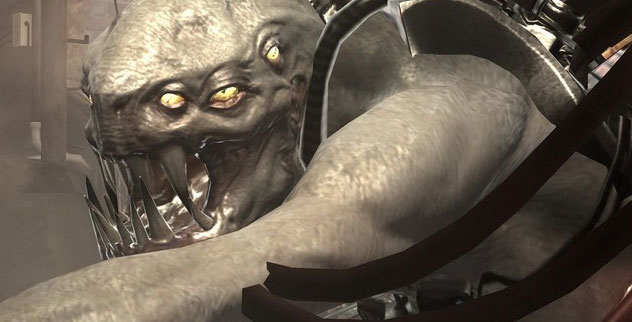
Marcus appears isolated and vulnerable. He runs through abandoned streets, pauses near a statue, and eventually encounters a massive Corpser in the darkness. The trailer ends before the confrontation can become a typical action sequence.
Why It Feels Like a Movie
The contrast between violent imagery and fragile music creates immediate emotional depth. The ruined city is not merely a battlefield; it feels like a place where ordinary life once existed. Marcus is not shown celebrating combat. He looks like someone trying to survive the end of everything.
The trailer’s influence remains visible in game marketing today, especially whenever a publisher places a slow song over terrible events and hopes everyone feels complicated emotions. Many have copied the formula. Few have matched the original.
2. The Witcher 3: Wild Hunt “A Night to Remember”
Geralt of Rivia enters a barn to confront a beautiful woman who is soon revealed to be a bruxa, a powerful vampire. Their conversation becomes a vicious fight involving claws, silver, magical signs, collapsing wood, and tactical use of moonlight.
The trailer captures what makes Geralt interesting: he is skilled but not invincible, calm but not emotionless, and always one unpleasant surprise away from becoming monster food.
Why It Feels Like a Movie
“A Night to Remember” functions as a self-contained supernatural thriller. It establishes the hunter, introduces the monster, stages a clever confrontation, and ends with a final exchange that adds personality to both characters.
The choreography is physical and readable. Geralt’s victory depends on knowledge and preparation rather than heroic shouting. Meanwhile, the bruxa is frightening without becoming a generic creature. She is intelligent, expressive, and clearly disappointed that dinner brought specialized equipment.
The result feels like a polished sequence from a mature fantasy filmone that understands monsters can be seductive, terrifying, and surprisingly good conversationalists.
1. Dead Island Reveal Trailer
The reveal trailer for Dead Island tells the story of a family attacked by zombies during a tropical vacation. That description sounds straightforward. The presentation is anything but.
The tragedy unfolds through two timelines. One moves backward from the image of a young girl falling from a hotel window. The other moves forward through the family’s desperate attempt to survive. The two strands eventually meet, revealing the full sequence of events.
Why It Feels Like a Movie
The reverse chronology is not an empty trick. It changes how viewers process the violence. We see consequences before causes, gradually understanding how a joyful family vacation became a nightmare. Small details gain meaning as the timeline progresses, rewarding close attention and repeat viewing.
The piano-driven score, controlled editing, and focus on one family make the horror painfully personal. The trailer does not ask viewers to admire weapons or count zombies. It asks them to mourn people they met less than three minutes earlier.
That emotional precision is why the trailer remains one of gaming’s most famous promotional films. It may not perfectly represent the tone of the finished game, but as a standalone piece of storytelling, it is difficult to beat. It is tragic, inventive, beautifully constructed, and devastatingly efficient.
The Experience of Watching Game Trailers Like a Movie Marathon
Watching these ten trailers consecutively creates a strange miniature film festival. There are no tickets, no overpriced popcorn, and no person in the front row checking messages at maximum brightness. Yet the emotional experience can be surprisingly similar to watching a collection of short movies.
The Opening Seconds Matter More Than Spectacle
The strongest trailers seize attention before revealing their biggest visual effects. Dead Island opens with an impossible, disturbing image. Gears of War creates loneliness before introducing danger. The Last of Us Part II lets the sound of a guitar carry the scene.
These openings generate curiosity rather than immediately demanding excitement. Viewers lean forward because something feels wrong, incomplete, or emotionally charged. By comparison, a trailer that begins with ten explosions has very little room to grow. Once everything is already exploding, the only available escalation is a larger explosion wearing a hat.
Music Changes the Meaning of Every Image
Music is often the invisible lead actor in a cinematic game trailer. “Mad World” transforms Marcus Fenix from an action hero into a lonely survivor. “Iron” gives Ezio’s battle a sense of fate and finality. The restrained score in Dead Island turns zombie violence into family tragedy.
Try imagining those trailers with generic action music. The images would remain technically impressive, but much of their identity would disappear. An effective soundtrack does not simply make a scene louder. It tells the audience how to interpret what cannot be explained through dialogue.
The Best Trailers Leave Space for the Audience
Movie-like trailers resist the temptation to explain every detail. The Cyberpunk 2077 teaser does not deliver a lecture about cyberpsychosis. The Halo 3 campaign does not summarize the Human-Covenant War. “By Three They Come” allows viewers to learn the ritual’s rules while watching the characters discover them.
This creates participation. The viewer becomes an investigator, interpreting expressions, environments, and visual clues. A good trailer provides enough information to create meaning but leaves enough unanswered to inspire discussion.
Great Marketing Can Create Dangerous Expectations
There is also a complicated side to the experience. A cinematic trailer can communicate tone without representing gameplay. Viewers may fall in love with a story, character, or emotional promise that the finished game approaches differently.
Dead Island is the most famous example of this tension. Its trailer emphasized intimate tragedy, while the released game delivered a broader mixture of action, exploration, weapon crafting, and dark humor. Both could be entertaining, but they were not identical experiences.
That difference does not make cinematic trailers dishonest by default. Movie trailers also shape expectations through selective editing. The important question is whether the promotional film captures the spirit of the product or invents an entirely different one.
Why We Keep Rewatching Them
The most memorable game trailers survive long after release dates, launch events, and preorder campaigns have passed. People return to them because the trailers have their own rhythm and emotional payoff. They are no longer useful merely as advertisements; they become part of gaming history.
Rewatching one can also restore the feeling of anticipation that existed before a game arrived, when every image inspired theories and every line seemed important. For a few minutes, the future of that fictional world is unknown again.
That may be the greatest achievement of a movie-quality game trailer. It does not simply convince people to purchase something. It makes them imagine an entire story beyond the edges of the screen.
Conclusion
The finest cinematic game trailers understand that spectacle works best when it serves a story. Advanced animation may attract attention, but characters, atmosphere, music, and emotional structure make a trailer unforgettable.
From the heartbreaking reverse chronology of Dead Island to the supernatural duel in “A Night to Remember,” these trailers demonstrate how closely game marketing can approach filmmaking. Some create complete narratives. Others offer a single scene from an imaginary blockbuster. All ten prove that the distance between a game trailer and a movie can sometimes be measured in little more than a title card.
Now somebody please give “By Three They Come” a two-hour horror adaptation. Preferably with the lights on.












