
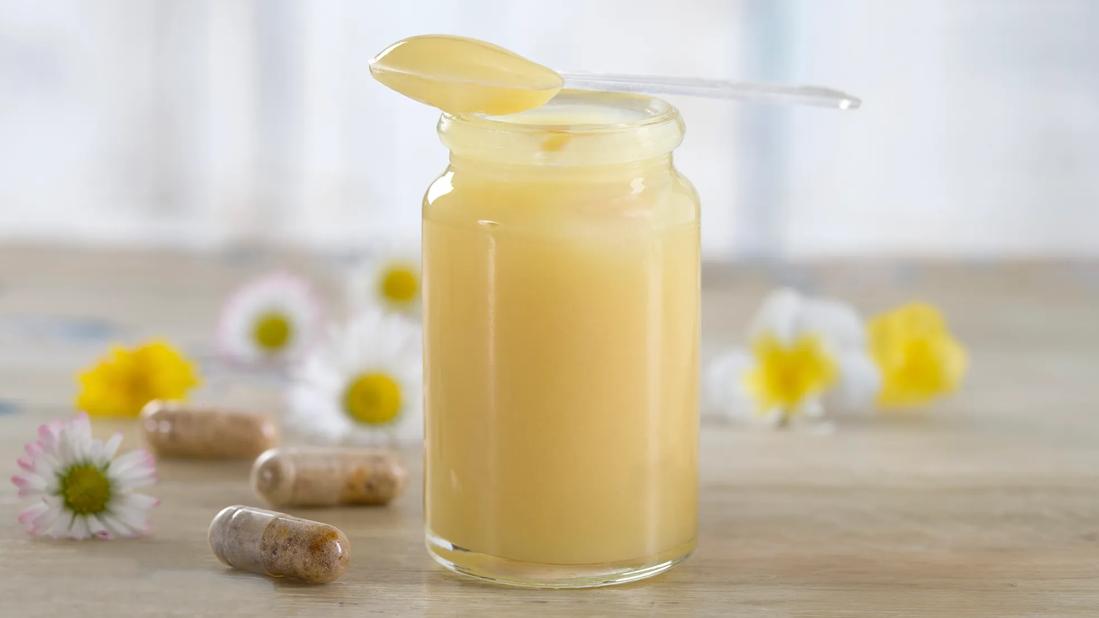
Royal jelly sounds like breakfast for a monarch. In reality, it is a creamy secretion made by young worker bees and used to feed developing larvae, especially a future queen. Humans now sell it as a dietary supplement, food ingredient, and skin-care additive.
Royal jelly contains proteins, sugars, fats, minerals, and unusual bioactive compounds. Early studies have explored possible effects on cholesterol, blood sugar, menopause symptoms, skin health, and inflammation. However, most human trials are small, products vary considerably, and the evidence does not support treating royal jelly as a cure-all.
This guide explains what royal jelly is, how it differs from honey and other bee products, what science actually shows, and why allergy warnings deserve more attention than the “superfood” sparkle.
What Is Royal Jelly, Exactly?
Royal jelly is a thick, milky substance secreted mainly from glands in the heads of nurse bees. Worker bees feed it to all very young larvae during their first days. A larva chosen to become a queen continues receiving abundant royal jelly inside a special queen cell.
This feeding pattern is central to queen development. A queen becomes larger, fertile, and longer-lived than a typical worker. That remarkable biology helped give royal jelly its legendary reputation, but bee biology does not transfer neatly to humans. We are not giant bees with gym memberships.
Bee-development facts verified with Penn State Extension.
What Does Royal Jelly Look and Taste Like?
Fresh royal jelly is usually creamy white or pale yellow, with a smooth, slightly gelatinous texture. Unlike honey, it tastes tangy, acidic, bitter, and only mildly sweet. Imagine yogurt meeting a flower garden and leaving the conversation confused.
Because it contains a great deal of water, fresh royal jelly is perishable and is commonly refrigerated or frozen. It is also sold freeze-dried in capsules, tablets, powders, drink mixes, honey blends, and cosmetics. Storage requirements depend on the product, so follow the label.
What Is in Royal Jelly?
Royal jelly is a complex mixture rather than a single chemical. Its composition can vary with geography, season, bee diet, harvest timing, processing, and storage.
Proteins, Carbohydrates, and Fats
Fresh royal jelly is commonly reported as approximately 60% to 70% water, 10% to 18% protein, 11% to 23% carbohydrates, and 3% to 8% fat. It also contains small amounts of minerals, vitamins, amino acids, enzymes, and other compounds.
Major Royal Jelly Proteins
Major royal jelly proteins account for much of its protein content and are studied for possible biological activity. They can also act as allergens, which matters far more to a sensitive consumer than any glamorous “queen bee” marketing.
10-HDA
Royal jelly contains a distinctive fatty acid called 10-hydroxy-2-decenoic acid, or 10-HDA. Laboratory research has examined its antimicrobial, anti-inflammatory, and metabolic activity. Some manufacturers list 10-HDA as a quality marker, but a higher percentage does not prove a stronger health benefit.
Composition and research limitations synthesized from NIH-indexed reviews.
Royal Jelly vs. Honey, Bee Pollen, and Propolis
Royal Jelly vs. Honey
Honey is made from nectar or honeydew and stored as an energy-rich food. It is mostly sugar and tastes sweet. Royal jelly is a glandular secretion used to nourish larvae and the queen. It contains more protein and has a sharper flavor.
Royal Jelly vs. Bee Pollen
Bee pollen consists mainly of flower pollen collected and packed by bees, often with nectar and salivary substances. Royal jelly is produced by the bees themselves.
Royal Jelly vs. Propolis
Propolis is a sticky resinous material bees use to seal and protect the hive. These products are chemically different, and tolerating honey does not guarantee that royal jelly, pollen, or propolis will be safe.
Potential Royal Jelly Benefits: What Does the Research Say?
The fairest summary is “interesting, but unproven.” Laboratory and animal studies suggest antioxidant, anti-inflammatory, antimicrobial, and hormone-like activity. Human research is limited, and small trials are better viewed as invitations for larger studies than as final verdicts.
Cholesterol and Metabolic Health
Several small studies have reported changes in cholesterol or inflammatory markers. In one randomized, placebo-controlled trial of overweight adults, royal jelly was associated with reductions in total cholesterol and C-reactive protein over eight weeks.
That does not make royal jelly a cholesterol treatment. Studies have used different doses and preparations, involved modest numbers of participants, and generally measured short-term laboratory markers rather than heart attacks or strokes. Do not replace prescribed cardiovascular medicine with a bee product that has excellent publicity but limited clinical evidence.
Cardiometabolic evidence.
Blood Sugar and Type 2 Diabetes
Some trials in people with type 2 diabetes have reported changes in fasting glucose, insulin, hemoglobin A1C, or oxidative-stress markers. Systematic reviews, however, describe inconsistent results and generally low-quality evidence. Royal jelly is not a substitute for diabetes medication, nutrition planning, activity, or glucose monitoring.
Diabetes findings.
Menopause Symptoms
A few randomized trials suggest oral royal jelly may modestly improve certain menopausal symptoms, including anxiety, back discomfort, or overall symptom scores. Other studies have examined bone and lipid markers in postmenopausal women. The findings remain preliminary.
Royal jelly has shown weak estrogen-like activity in laboratory research. People with estrogen-sensitive conditions, especially estrogen receptor-positive breast cancer, should avoid it unless their oncology team specifically approves its use.
Menopause and hormone-related evidence.
Skin, Wound, and Mouth Care
Small studies have explored royal jelly for skin-barrier function, wounds, and mouth sores caused by cancer treatment. Some results are positive, but they are not strong enough to establish routine treatment. Applying royal jelly to a diabetic foot ulcer, surgical wound, or therapy-related mouth injury without medical guidance could delay proper care or introduce contamination.
Skin, wound, and mucositis research.
Royal Jelly Side Effects and Safety Risks
Royal jelly is often marketed as gentle because it is natural. Bees also make venom, so the hive may not be the best place to borrow a safety slogan.
Allergic Reactions
The most serious risk is allergy. Reported reactions include itching, hives, swelling, wheezing, asthma attacks, digestive symptoms, and anaphylaxis. People with asthma, pollen allergies, eczema, or known reactions to bee products may face greater risk. Eating honey safely does not rule out a royal jelly allergy.
Seek emergency help for breathing trouble, throat tightness, faintness, rapidly spreading hives, or swelling of the lips, tongue, or face.
Allergy and anaphylaxis warnings.
Medication Interactions
A case report linked royal jelly with an enhanced effect of warfarin and bleeding. Although one report cannot define the exact risk, people taking warfarin or other blood thinners should consult a clinician or pharmacist before using it.
Pregnancy, Breastfeeding, and Children
Reliable safety data are limited for pregnancy, breastfeeding, infants, and children. Pediatric use deserves particular caution when a child has asthma, eczema, pollen sensitivity, or food allergies.
Hormone-Sensitive Conditions
Because laboratory studies have found weak estrogenic activity, Memorial Sloan Kettering advises people with estrogen receptor-positive breast cancer to avoid royal jelly. Anyone with a hormone-sensitive cancer should consult the treating specialist.
How to Choose and Use Royal Jelly
In the United States, dietary supplements are not FDA-approved for safety and effectiveness before sale. Manufacturers are responsible for safety, quality, and truthful labeling, while the FDA mainly provides oversight and postmarket enforcement.
- Choose a product that states the amount per serving and identifies fresh or freeze-dried royal jelly.
- Read the complete ingredient list for honey, pollen, herbs, sweeteners, preservatives, and other allergens.
- Look for testing by a recognized independent organization. A quality seal does not prove effectiveness, but it can offer added assurance about identity and contamination checks.
- Avoid products claiming to cure diabetes, reverse aging, prevent cancer, or replace prescription care. Those are red flags wearing tiny bee costumes.
- Check expiration dates, storage directions, company contact information, and batch details.
U.S. supplement regulation and quality guidance.
How Much Should You Take?
There is no universally established, evidence-based dose. Studies use different preparations and amounts, and fresh royal jelly cannot always be compared gram-for-gram with concentrated powder. Following a label does not guarantee that a product is effective or appropriate.
Ask a clinician or pharmacist about royal jelly before use if you have allergies, asthma, diabetes, a hormone-sensitive condition, planned surgery, pregnancy, or blood-thinner treatment. Bring the label or a clear photo; “the yellow bottle with the queen” is not a reliable medication history.
What Is Royal Jelly Really Good For?
Royal jelly is biologically fascinating and worthy of further study. It contains unusual compounds and may influence selected symptoms or laboratory markers. Current evidence does not establish dependable benefits, standardized dosing, or long-term safety for most uses. Curiosity is reasonable; replacing medical care is not.
Experiences With Royal Jelly: What Trying It Is Often Like
Personal experiences vary partly because the products vary. Fresh royal jelly, freeze-dried capsules, honey blends, and energy shots are not equivalent. One person may taste a refrigerated spoonful from a beekeeper; another may swallow a capsule containing ginseng and bee pollen. Comparing them is like comparing black coffee with a caramel blended drink because both once met a coffee bean.
The First-Taste Surprise
Fresh royal jelly rarely tastes like honey. Its tart, bitter flavor surprises many first-time users. Some mix a small amount into yogurt, oatmeal, or honey, while others decide that capsules are one of civilization’s finer inventions. Because storage and processing matter, users should follow the producer’s instructions rather than adding fresh royal jelly to very hot food.
The “More Energy” Experience
Reviews often mention greater energy or alertness. Such experiences are difficult to interpret because energy changes with sleep, caffeine, stress, meals, illness, expectations, and other ingredients in combination products. Someone who begins royal jelly during a week of better sleep may notice a real improvement without royal jelly being the cause. This is why placebo-controlled studies matter: enthusiasm is genuine, but it is not a measuring device.
Keeping a Useful Record
For an adult who has cleared the supplement with a healthcare professional, introducing only one new product at a time makes the experience easier to evaluate. Record the brand, serving, start date, symptoms, medications, and reactions. Define “working” before starting. Someone interested in fatigue might rate afternoon energy from 1 to 10 for two weeks; someone focused on dry skin might track itching and moisturizer use.
A simple record can separate a consistent change from one unusually good Tuesday. It also gives a clinician something more useful than “I think the bee stuff helped.”
When to Stop Immediately
Mouth itching, rash, coughing, wheezing, swelling, or breathing difficulty should end the experiment. Mild allergy symptoms can progress, and people with asthma need special caution. Royal jelly is not a supplement to “push through” while hoping the immune system learns manners.
Cost, Convenience, and Expectations
Fresh royal jelly can be expensive and requires careful storage. Capsules travel well, but labels may describe amounts differently. Honey blends are easier to eat, although the actual royal jelly dose may be small or unclear. The most ornate jar is not necessarily the most transparent product.
A useful experience does not have to end with a transformation. It may reveal that the taste is unpleasant, the cost is not worthwhile, or the hoped-for effect never appears. It may also reveal a modest subjective benefit worth discussing with a clinician.
Approach royal jelly as an optional supplement with uncertain benefits, not a royal command. Choose a clearly labeled product, change one variable at a time, watch closely for allergy symptoms, and stop when risk, cost, or inconvenience outweighs the result. The queen bee may thrive on royal jelly, but she also has thousands of attendants and never answers email. Context matters.











